A tool watch is a watch designed around a job. Not a style, not a price bracket, not a marketing category — a watch whose case, dial and complications exist because someone needed to do something with them. The timing bezel on a diver exists to measure elapsed time underwater. The slide rule on a pilot watch exists to compute fuel burn. The matte dial on a field watch exists so it does not flash in daylight. Remove the job and the design makes no sense, and that is the test.
The term is modern and the thing is not. Divers, pilots, soldiers and engineers were given purpose-built wristwatches through the twentieth century because there was no alternative instrument small enough to carry — and the categories this site is built on are the survivors of that era. A phone now tells the time better than any watch, so a tool watch in 2026 is bought for other reasons. The specifications are still real, and they are still what separates a watch that would work from one that only looks like it would.
The four things that make a watch a tool watch
1. A function the dial or bezel performs. A unidirectional timing bezel, a GMT hand and 24-hour scale, a chronograph, a slide rule, a compass scale, a dive decompression table. Something on the watch does arithmetic or measurement you would otherwise have to do another way. A plain three-hander with a date is not a tool watch; it is a watch.
2. Legibility that survives bad conditions. High contrast, large markers, serious luminous material, and a dial with no decorative element competing for attention. The design brief is "readable in half a second, in the dark, at an angle, wet." This is the specification tool-styled watches fail most often — a busy dial is a styling choice, not an instrument one, and plenty of watches sold on their ruggedness are hard to read.
3. Water and shock resistance that is actually rated. Not implied by the styling. 200m with a screw-down crown is a tool specification; full ISO 6425 certification is the real thing. 30m on a watch with a dive bezel is a costume. The same applies to shock: G-Shock publishes a construction standard, and almost nobody else at the price does.
4. Materials and a case chosen for service, not for the photograph. A crystal you can live with scratching, a case you can clean, a band you can replace, and a movement a normal watchmaker can work on. Tool watches are meant to be used, which means they are meant to be repaired.
The four watches below each pass that test in a different category — a diver, a pilot watch, a field watch and a modern impact-resistant quartz. They are not the four best watches on this site. They are four that demonstrate what the definition means.
Tool watch vs tool-styled watch
The distinction is where most of the money in this market is spent. A tool-styled watch borrows the visual language — the bezel, the big crown, the chunky lugs, the beige "faux-patina" lume — without the specifications underneath. Sometimes that is fine: a watch that looks like a diver and is rated to 100m is a perfectly good watch to own, and the Seiko 5 Sports SRPD is exactly that, which is why this site calls it diver-styled rather than a dive tool.
What is not fine is being sold the styling as the capability. The specific lies to watch for are a dive bezel over a 30 or 50m rating, "professional" printed on a dial with no screw-down crown, and a stated depth figure on a watch that has never been tested to any standard. The number on the dial is a static pressure test, not a depth rating you can swim to, and we have written the whole argument out on watch water resistance explained.
The four classic tool-watch categories
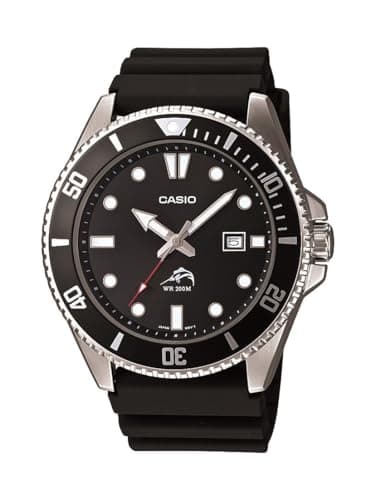
The diver. A unidirectional timing bezel, 200m, a screw-down crown, and lume you can read at depth. The Casio Duro delivers three of those four for about fifty dollars — no screw-down crown, which the page says plainly — and the full dive roundup ranks the serious ones.
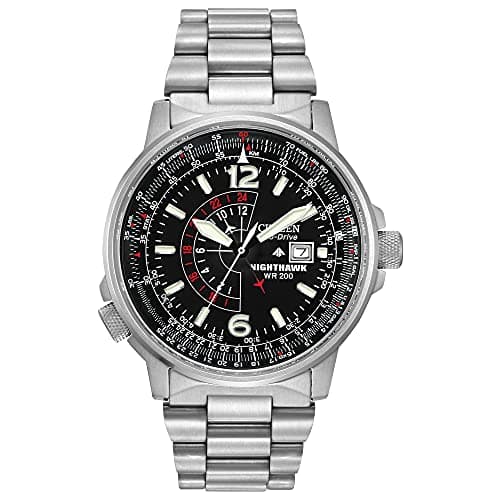
The pilot watch. Historically a navigation instrument: a slide-rule bezel for fuel, distance and conversion arithmetic, plus a second time zone. The Citizen Nighthawk is the most watch-for-money in the category, and its 200m rating on a pilot-styled case is almost absurdly over-specified, which is itself a sign of a brand specifying for capability.
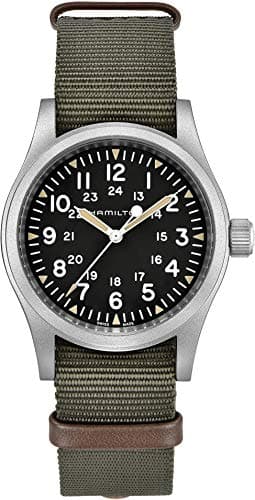
The field watch. The most stripped-down tool watch there is: matte case, high-contrast dial, nothing that is not time. Its whole history is military procurement, and the Hamilton Khaki Field Mechanical is the modern watch closest to the original brief — hand-wound, 38mm, no date, 80-hour power reserve.
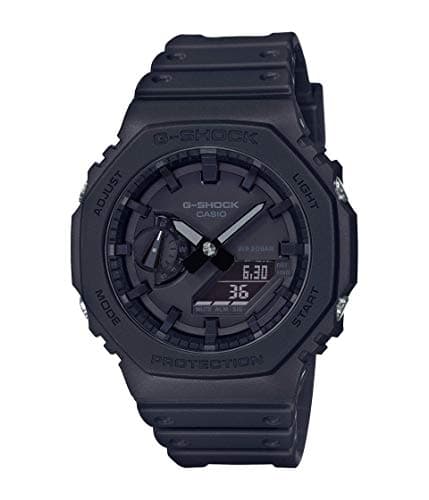
The modern impact watch. A category that did not exist before Casio invented it. The G-Shock GA-2100 is a 200m, shock-resistant, world-time instrument that costs less than a strap for a Swiss watch, and by every criterion on this page it is the most capable watch here.
Does a tool watch have to be mechanical?
No, and the opposite is closer to the truth. If the criterion is doing a job reliably, a quartz movement keeps better time, survives more abuse and needs less maintenance than an automatic — which is why three of the four watches above are quartz and why military procurement went quartz decades ago.
The counter-argument for mechanical is power. A hand-wound or automatic watch needs nothing but you, which matters in exactly the situations a tool watch exists for. A solar movement splits the difference: no battery to change, no winding, nothing to run out. Watches that need no battery covers both routes.
Should you buy one?
Honestly: buy a tool watch because the design is better, not because you need the function. Almost nobody times a decompression stop or computes fuel burn on a bezel. What you actually get from a real tool watch is a watch you can read instantly, wear in the rain, wash under a tap, and stop worrying about — and a design that was solved by engineers rather than drawn by a stylist. That is a good enough reason, and it is the honest one.
If a specific job is the reason, buy on the specification and ignore everything else. For work on a site, the work-watch page ranks on survival. For actual diving, only an ISO 6425 watch counts.