Skip to content
Lug Leather

Guides · Guides & Comparisons

Quartz vs Automatic Watches

One is a hundred times more accurate and costs a fraction as much. The other is why most people are interested in watches at all.

By Stephen V.Updated How we research
#ad

We earn a commission when you buy through our Amazon links, at no extra cost to you. It never affects our picks, and we say so when the cheaper watch is the better buy. How this works.

This is the first decision in buying a watch and it is usually made badly, because the arguments on both sides get overstated. Quartz is not "soulless" and automatics are not "better made." They are two different technologies with a clear and measurable split: quartz wins on performance, automatics win on everything that is not performance.

A quartz watch keeps time by passing a current through a quartz crystal that oscillates at a precise frequency. An automatic watch keeps time with a wound mainspring released through a balance wheel and escapement, and winds itself from the movement of your arm. That is the whole difference; everything below follows from it.

The short version: buy quartz if you want an instrument — better accuracy, lower cost, no servicing, and no watch that stops in a drawer. Buy automatic if you want the object — a mechanism you can have serviced indefinitely, a sweeping seconds hand, and something that is interesting rather than merely correct.

The short answer

Quick picks

#WatchBest forScorePrice
01
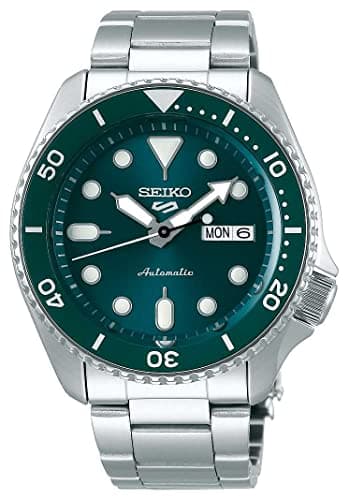
Seiko Seiko 5 Sports SRPD93
Seiko 5 Sports SRPD93

The default first automatic diver-style watch, and the direct heir to the beloved SKX.

Your first automatic
8.6
$280.00Amazon
02
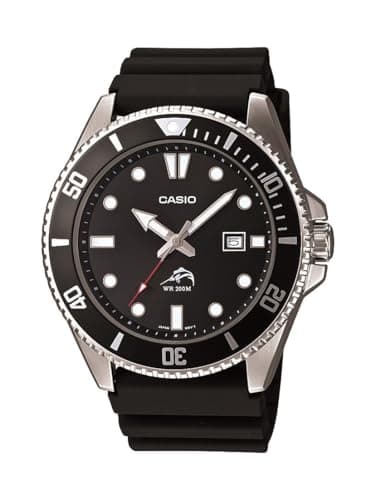
Casio Casio Duro MDV106
Casio Duro MDV106

The famous $60 200m quartz diver. Nothing at the price is more watch.

The best cheap diver alive
7.8
$66.26Amazon
03
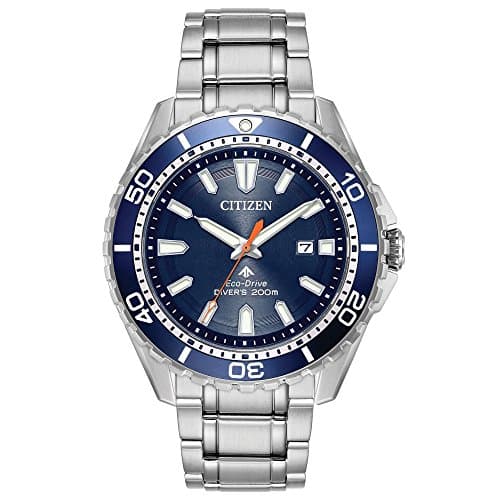
Citizen Citizen Promaster Dive Eco-Drive (BN0191)
Citizen Promaster Dive Eco-Drive (BN0191)

An ISO-compliant 200m diver that never needs a battery or a wind. The set-and-forget diver.

A no-maintenance dive tool
8.0
$356.25Amazon

#ad · Live prices from the Amazon Product API, as of Sep 5, 2026. Where we have no verified live price, we show none — we would rather leave a gap than print a number that has rotted.

Side by side

The spec table

Every published number that decides fit and function — including the lug width, so you know which strap fits before you buy.

WatchCaseLug-to-lugLug widthWater resMovementCrystal
Seiko 5 Sports SRPD9342.5mm46mm22mm100mSeiko 4R36 automaticHardlex
Casio Duro MDV10644mm48mm22mm200mQuartzMineral
Citizen Promaster Dive Eco-Drive (BN0191)45mm48.8mm22mm200m (ISO compliant)Citizen E168 Eco-Drive (solar)Mineral

In detail

The picks, in full

01
Seiko Seiko 5 Sports SRPD93

Your first automatic

Seiko 5 Sports SRPD93

42.5mm22mm lug100m4R36 automatic
8.6/10

The default first automatic diver-style watch, and the direct heir to the beloved SKX.

Legibility
9
Build
8
Movement
8
Versatility
9
Value
9

Pros

  • The 4R36 hacks and hand-winds — the two things the old SKX movement couldn't do
  • Genuinely great lume and the most recognizable dial in affordable watches
  • 22mm lugs open onto the biggest strap aftermarket there is

Cons

  • 100m water resistance, not the 200m of a true ISO diver — it is diver-styled, not a dive tool
  • Hardlex crystal scratches more easily than sapphire

Skip this one if…

you actually dive or want a screw-down-crown 200m tool watch. The 100m rating and non-diver spec mean this is a desk diver — step up to the Turtle or a Prospex for the real thing.

$280.00View on Amazon

$350.0020% off

Price as of Sep 5, 2026. Prices change — Amazon's is the one that counts.

#ad · we may earn a commission from this link to Seiko 5 Sports SRPD93

02
Casio Casio Duro MDV106

The best cheap diver alive

Casio Duro MDV106

44mm22mm lug200mQuartz
7.8/10

The famous $60 200m quartz diver. Nothing at the price is more watch.

Legibility
8
Build
6
Movement
7
Versatility
8
Value
10

Pros

  • A genuine 200m water-resistance rating for the price of a nice dinner
  • Quartz means it keeps better time than any of the automatics here and needs nothing from you
  • The unofficial 'Marlin' has a decade-long reputation as the internet's default cheap watch

Cons

  • The bezel action is scratchy and the bracelet is the first thing owners replace
  • No screw-down crown, so despite the 200m rating it isn't ISO-certified

Skip this one if…

you want a mechanical watch you can feel ticking. This is a quartz, and that is precisely why it is so accurate and so cheap — but it will never scratch the enthusiast itch.

$66.26View on Amazon

$84.9522% off

Price as of Sep 5, 2026. Prices change — Amazon's is the one that counts.

#ad · we may earn a commission from this link to Casio Duro MDV106

03
Citizen Citizen Promaster Dive Eco-Drive (BN0191)

A no-maintenance dive tool

Citizen Promaster Dive Eco-Drive (BN0191)

45mm22mm lug200m ISOEco-Drive
8.0/10

An ISO-compliant 200m diver that never needs a battery or a wind. The set-and-forget diver.

Legibility
9
Build
8
Movement
8
Versatility
7
Value
8

Pros

  • ISO-compliant 200m dive credentials with a screw-down crown and caseback
  • Eco-Drive runs on light — no battery to die mid-trip and no winding to remember
  • 22mm lugs, so it shares the strap drawer with every Seiko diver on this site

Cons

  • 45mm with a 48.8mm lug-to-lug — this is a big watch and it wears like one
  • Mineral crystal rather than sapphire at this price

Skip this one if…

your wrist is under about 7 inches. The 48.8mm lug-to-lug is the number that decides it, and it will overhang — the Orient Kamasu is the smaller 200m answer.

$356.25View on Amazon

$495.0028% off

Price as of Sep 5, 2026. Prices change — Amazon's is the one that counts.

#ad · we may earn a commission from this link to Citizen Promaster Dive Eco-Drive (BN0191)

Accuracy: quartz wins by roughly a hundred to one

Seiko rates its 4R36 automatic at approximately minus 35 to plus 45 seconds a day. A standard quartz movement is typically specified in seconds per month. That is not a close comparison and no amount of money closes it — a chronometer-certified mechanical watch is rated to within a few seconds a day, which a cheap quartz beats comfortably. If knowing the correct time matters, the decision is already made.

Maintenance: quartz is a battery, automatic is a service

An automatic needs periodic servicing — cleaning, fresh lubricant, new gaskets — typically quoted every five to ten years, at a cost that on an affordable watch can approach a meaningful fraction of the purchase price. A quartz watch needs a battery every few years, which on a water-resistant case should be done by someone who can reseal and pressure-test it. Solar quartz, like Citizen's Eco-Drive, removes even that.

Lifespan: this is where automatics earn their reputation

A mechanical movement is made of parts that can be cleaned, adjusted and replaced individually, so a well-kept automatic can run indefinitely — this is the genuine argument for buying one. A quartz movement is usually a sealed module that is replaced rather than repaired when it fails, and modules for older watches eventually stop being made. Over fifty years the automatic is the survivor. Over ten, both are fine.

Water resistance and toughness

Nothing about either technology limits water resistance, and the highest-rated watches on this site include both — the Casio Duro is a 200m quartz and the Seiko Turtle is a 200m automatic. Quartz does have a real durability edge in one respect: fewer moving parts to knock out of adjustment, which is why the toughest watches in the world, G-Shocks included, are quartz.

Cost, and where the money goes

At any given price a quartz watch has more budget left for the case, crystal and dial, because the movement costs a fraction of a mechanical one. That is why a sixty-dollar quartz can have a 200m case and a sixty-dollar mechanical cannot exist. It is also why, under about two hundred dollars, we consistently recommend quartz — you are buying a better watch, not a lesser one.

The one thing quartz cannot give you

A sweeping seconds hand and the knowledge that the thing on your wrist is a machine powered by your own movement. That is not a rational argument and it does not need to be. Most people who become interested in watches become interested in mechanical ones, and if that is you, no accuracy figure will change it — nor should it. Just buy the automatic knowing precisely what you are trading away.

What we would actually do

Own both, and stop treating it as a single decision. A quartz or solar watch for the days you need to not think about it, and an automatic for the days you want to. The two together cost less than one mid-tier Swiss watch, and it is the arrangement most people who own several watches end up with anyway.

How we picked

We do not run a testing lab

We compiled the published manufacturer specifications for every watch here — case size, lug-to-lug, lug width, water resistance, movement and crystal — did the wrist-fit and value math, and scored each pick against a published rubric. The scores are judgments from documented research — they are not measurements we took or wrist-time we logged, because we do not have these watches and we are not going to pretend we do. Where a spec could not be verified we wrote "data unavailable" rather than guessing.

Questions

Frequently asked

Is a quartz or automatic watch better?
Quartz is better as an instrument: roughly a hundred times more accurate, cheaper, tougher and needing no servicing. Automatic is better as an object: a mechanism that can be serviced indefinitely, a sweeping seconds hand and a watch powered by your own movement. Neither is objectively superior; they answer different questions.
How accurate is an automatic watch compared to quartz?
Seiko rates its 4R36 automatic at roughly minus 35 to plus 45 seconds a day. A standard quartz movement is typically specified in seconds per month. Even a chronometer-certified mechanical watch, rated to a few seconds a day, is beaten comfortably by an inexpensive quartz.
Do automatic watches need servicing?
Yes. Conventional guidance is cleaning, fresh lubricant and new gaskets roughly every five to ten years, and on an affordable automatic that cost can approach a meaningful fraction of the purchase price. A quartz watch needs a battery every few years instead, and a solar quartz needs effectively nothing.
Do automatic watches last longer than quartz watches?
Over decades, yes. A mechanical movement is made of individually replaceable parts and can be kept running indefinitely; a quartz module is usually replaced rather than repaired, and modules for older watches eventually go out of production. Over a ten-year horizon, both are fine.
Why do people prefer automatic watches if quartz is more accurate?
Because accuracy is not what they are buying. An automatic is a machine wound by your own movement, with a sweeping seconds hand and a mechanism that can be serviced forever. That is an aesthetic and emotional preference rather than a technical one, and it is a perfectly good reason.

Keep reading

Receipts

Sources

We do not run a testing lab, and we do not pretend to. Every spec above traces to a manufacturer listing or a named standard; where we could not verify something, we say so on the page rather than quietly leaving it out. Read our full method.