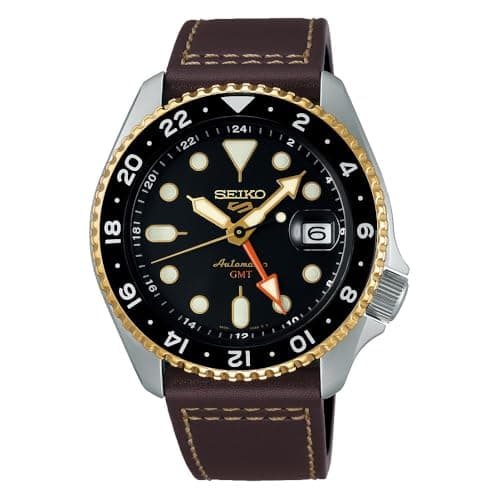
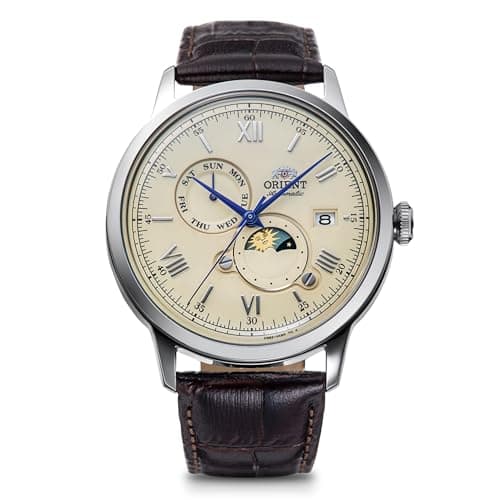
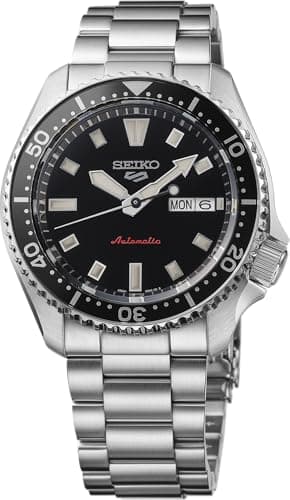
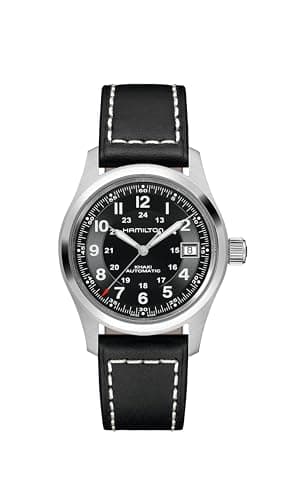
A thousand dollars is the ceiling of the sensible mechanical watch market. Under it you can buy a Swiss automatic with an eighty-hour power reserve and a sapphire crystal, an ISO 6425 certified dive watch, a genuine mechanical GMT, or an automatic with a moonphase. Above it, you are buying finishing and a name — not a watch that keeps better time.
That last point is worth sitting with. No mechanical watch at any price competes with a twenty-dollar quartz on accuracy. What you are buying here is the mechanism: a rotor that winds from the movement of your arm, a train of gears that can be serviced indefinitely, and a sweeping seconds hand. Those are good reasons. Better timekeeping is not one of them.
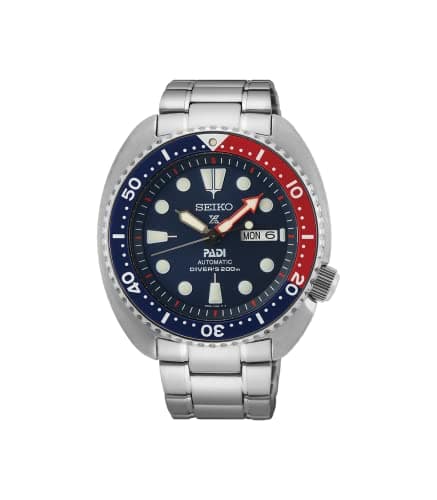
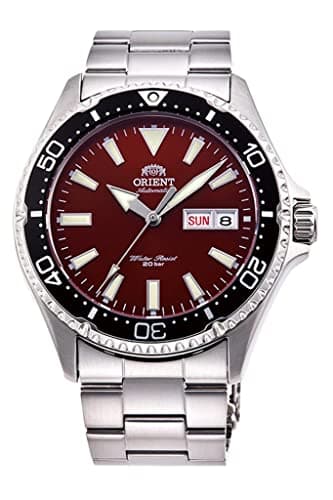
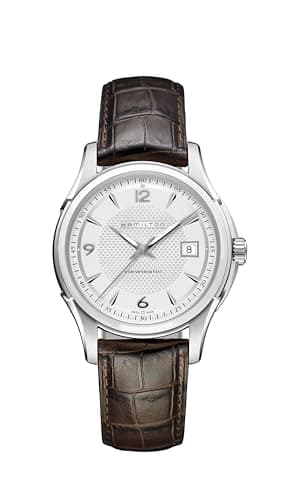
The short version: the Hamilton Khaki Field Automatic is the best all-round automatic here — Swiss, 38mm, sapphire, and an H-10 movement that runs eighty hours off the wrist. The Seiko Prospex Turtle is the certified dive tool. And the Orient Kamasu has a sapphire crystal and a 200m case for around a third of the budget, which is the value story of the whole bracket.
Power reserve is the specification that changed
Until recently an affordable automatic held about forty hours, which meant a watch taken off on Friday evening was stopped by Sunday. Hamilton's H-10 holds eighty hours. In practice that is the difference between a watch you have to reset every Monday and one you do not, and it is the single most useful improvement in affordable mechanical watches this decade. The Seikos and Orients here hold roughly forty hours, which is the older norm.
Hacking and hand-winding are non-negotiable
A hacking movement stops the seconds hand when you pull the crown, so you can set the time exactly against a reference. A hand-winding movement can be started without shaking the watch. Every automatic on this page does both — Seiko's 4R36 and 4R34, Orient's F6922 and F6B24, Hamilton's H-10. If you find a mechanical watch at this price that does neither, that is a movement from a previous generation and you should know it before you buy.
What Swiss actually buys you
At this price: a sapphire crystal as standard, better case and dial finishing, the eighty-hour reserve, and a name with resale value. What it does not buy is water resistance — the Hamilton Khaki Field Automatic is 100m against the Seiko Turtle's certified 200m, and the Jazzmaster only 50m — or accuracy, or a movement that is fundamentally more sophisticated. Both Hamiltons here are excellent watches; neither is excellent because it is Swiss.
Sapphire, Hardlex and mineral
Both Hamiltons and the Orient Kamasu use sapphire, which effectively does not scratch under normal use. The Seikos use Hardlex and the Orient Sun & Moon uses mineral, both of which survive daily life but pick up hairlines over years. It is the least glamorous line on a specification sheet and the one you will still notice in a decade — and the Kamasu proves it is available for around three hundred dollars.
Servicing, and what mechanical ownership actually costs
A mechanical watch needs servicing eventually — cleaning, fresh lubricant, new gaskets. The conventional guidance is roughly every five to ten years, and the cost is real: on an affordable automatic it can approach a meaningful fraction of what the watch cost new. Plenty of owners simply run them until they stop. Neither approach is wrong, but factor it in before you buy the more expensive watch on the basis that it will last forever.
Fit, as always, is lug-to-lug
The range here runs from the 38mm Hamilton with a 46.5mm lug-to-lug to the 45mm Seiko Turtle at 48mm. That is a wide spread and it matters more than any other difference on this page. Under about 6.5 inches of wrist the Turtle will overhang and the Hamilton will not. Every figure we could verify from a manufacturer is in the table above; a dash means it is not published and we would not guess.
How we picked
We do not run a testing lab
We compiled the published manufacturer specifications for every watch here — case size, lug-to-lug, lug width, water resistance, movement and crystal — did the wrist-fit and value math, and scored each pick against a published rubric. The scores are judgments from documented research — they are not measurements we took or wrist-time we logged, because we do not have these watches and we are not going to pretend we do. Where a spec could not be verified we wrote "data unavailable" rather than guessing.