A quartz dive watch keeps better time than any mechanical diver ever made, costs less to own, and is more likely to still be running in twenty years. It is also the option most enthusiast sites quietly skip past, because a battery is less romantic than a rotor. That is a bad reason to spend three times as much.
Everything below is a real diver rather than a diver-styled watch — a stated water-resistance rating in meters, a bezel that does something, and a case built to be taken into water. They are ranked on the specifications that decide it: the rating itself, whether the crown screws down, case size and lug-to-lug for fit, and what powers the thing.
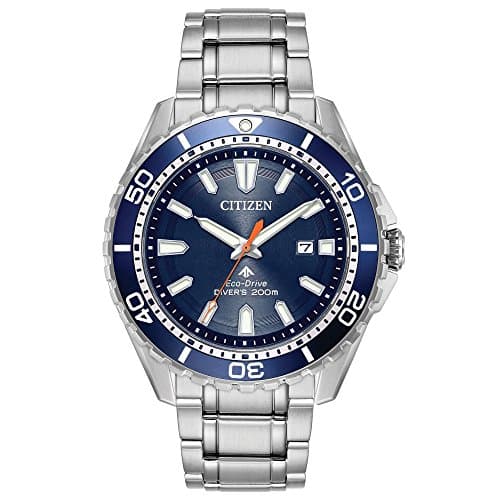
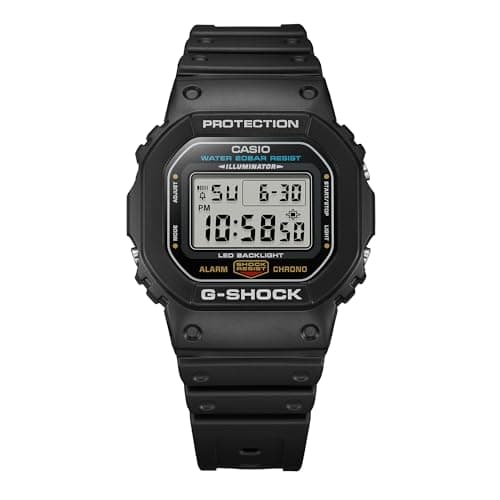
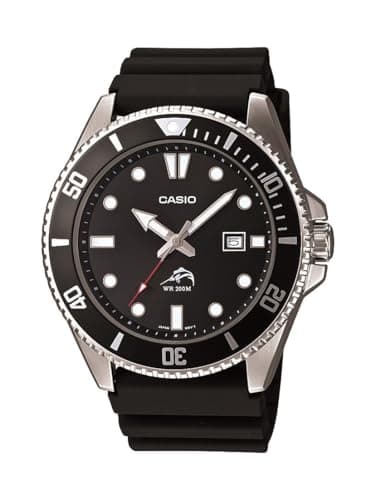
The short version: the Casio Duro MDV106 is rated to a genuine 200m and costs about sixty dollars, which makes it the best value in watches full stop. The Citizen Promaster Eco-Drive is the one to buy if you never want to think about a battery again. And the G-Shock DW-5600 is here because 200m and effectively unbreakable is a legitimate answer to the same question.
Quartz beats mechanical on every measurable axis
A good quartz movement runs to within about fifteen seconds a month. A good mechanical diver runs to within about fifteen seconds a day, and that is the specification Seiko and Orient publish for the 4R36 and F6922 — roughly minus 35 to plus 45 seconds daily. Quartz also has fewer parts to knock out of adjustment, which matters more in a watch you actually take into water and bang against ladders than in one that lives on a desk.
Where the mechanical divers genuinely win
Two places, and they are worth naming honestly. A mechanical watch can be serviced indefinitely, so a Seiko Prospex bought today can plausibly outlive its owner; a quartz module is usually replaced rather than repaired once it fails. And a sweeping seconds hand on a mechanical watch is a genuinely different object to look at than a ticking one. If either of those matters to you, buy the mechanical — just do it knowing what you are buying, which is the object rather than the performance.
Solar removes the one real quartz annoyance
The argument against quartz is the battery: a dead cell in a 200m case means a trip to a watchmaker who can reseal it properly, because a badly refitted caseback is how divers flood. Solar removes that entirely. Citizen's Eco-Drive charges from any light, including indoor light, and holds a substantial reserve in the dark — which is why the Promaster is the pick for anyone who wants a dive watch they can ignore for a decade.
200m, ISO 6425 and what the numbers mean
A rating in meters is a pressure rating, not a depth you can swim to. 100m is a genuine swim-and-shower seal. 200m with a screw-down crown is the real thing and is the threshold for the ISO 6425 standard, which additionally requires legibility in darkness, a unidirectional bezel and resistance to thermal shock and magnetism. The Citizen Promaster Eco-Drive here is built to ISO-compliant specification; the Casio Duro is rated to 200m but has no screw-down crown, so treat it as a swimming and snorkelling watch rather than a scuba tool.
Fit, and the number to check
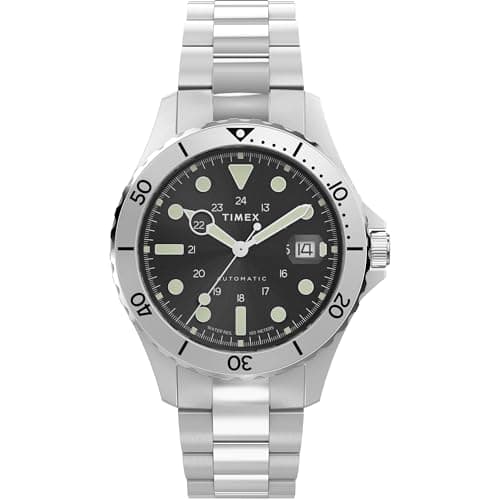
Lug-to-lug decides whether a watch fits, not diameter. The Casio Duro is 44mm across with a 48mm lug-to-lug, which is a lot of watch for a wrist under about 6.75 inches; the Citizen Promaster is 45mm and 48.8mm, more still. The Timex Navi XL is the small option here at 41mm, and the G-Shock's fixed resin band means it wraps rather than overhangs. All the figures we could verify are in the table above.
Budget the strap into the purchase
The Duro and the Citizen both take 22mm straps and the Navi XL takes 20mm, and in every case the supplied strap or bracelet is the weakest part of the package. A nylon or silicone strap costs under twenty dollars, survives salt water better than steel does, and changes how the watch wears more than any spec on this page. Our straps for diving guide ranks the ones that hold up.