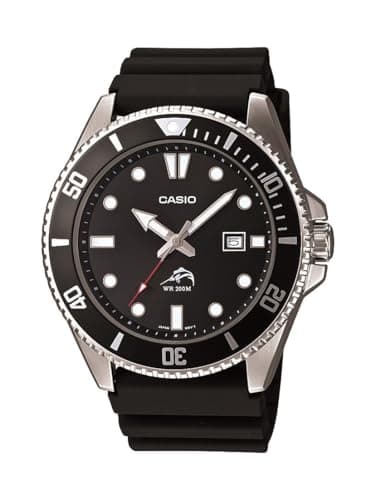
The Casio Duro MDV106 — Marlin, to the people who have owned one for a decade — is a 200-meter quartz dive watch that usually costs about sixty dollars. That sentence should not be true. Nothing else at any price offers this much capability per dollar, and the reason it does not get written about more is that there is very little to say beyond "yes, buy it."
A note on what this review is and is not. We do not own this watch and we did not test it. What follows is built from Casio's published specifications, the aggregated pattern of owner reports and the arithmetic of comparing it to its direct rivals — the method set out on how we review. Where a figure could not be verified, we say so.
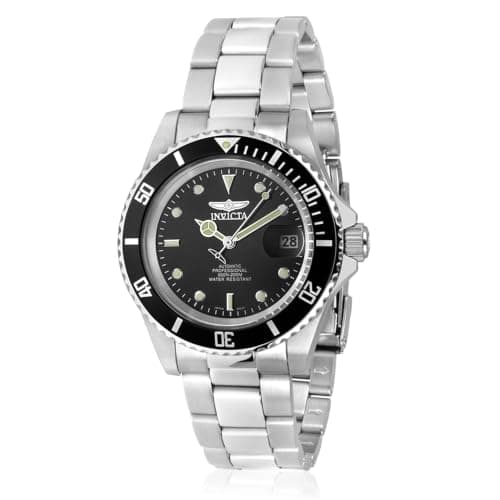
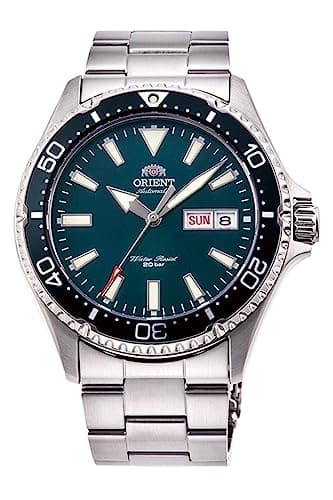
The verdict up front: buy it, then buy a strap for it, because the standard resin band is the only genuinely weak part. The two watches people cross-shop it against are ranked beside it below — the Invicta Pro Diver, which adds an automatic movement and a steel bracelet, and the Orient Mako III, which is what happens when you spend four times as much on the same idea.
The 200m rating is real, with one caveat
Casio publishes a 200-meter water-resistance rating for the MDV106 and the case is built for it — a solid caseback, a properly gasketed crystal and a unidirectional bezel. The caveat is that the crown does not screw down, which is a requirement for ISO 6425 certification and part of why the watch is not marked as a certified diver. In practice that makes it an excellent swimming, snorkelling and shower watch and a poor choice for scuba, where a screw-down crown is the difference between a sealed case and a flooded one.
Quartz is the right answer at this price
A sixty-dollar mechanical watch is a compromise; a sixty-dollar quartz watch is simply a watch. The Duro's movement runs to within seconds a month rather than seconds a day, asks nothing of you but a battery every few years, and is the reason the watch survives being genuinely ignored. Have the battery replaced by a watchmaker who can reseal and pressure-test the case, though, or the 200m rating stops being true the first time it is opened. If the choice is between this and a Seiko 5 Sports, our Seiko vs Casio page is the whole argument.
The specification sheet, honestly read
44mm across, 48mm lug-to-lug, 22mm lug width, mineral crystal, quartz. The case size is the main thing to check: 48mm lug-to-lug is a large watch and will overhang a wrist under about 6.75 inches. The mineral crystal will pick up scratches faster than sapphire — this is a watch you replace rather than restore, and at this price that is the correct relationship to have with it.
Spend twenty dollars on a strap immediately
The supplied resin band is the weakest component and the easiest to fix. The Duro takes a standard 22mm strap, which means the entire aftermarket is open to it — a NATO-style nylon for about ten dollars transforms how it looks and wears, and is more comfortable in salt water than resin. Our NATO strap guide and dive strap guide both rank options that suit it.
Duro or Invicta Pro Diver?
The Invicta gives you a genuine automatic — a real Seiko NH35A — a steel bracelet and a 40mm case with a 20mm lug width, for meaningfully more money. The Duro gives you better accuracy, no servicing and a spare sixty dollars. Buy the Invicta if you want to try a mechanical watch cheaply and are not put off by the brand's habit of printing list prices nobody pays; buy the Duro if you want the better tool.
Duro or Orient Mako III?
Not really a fair fight, and it does not need to be. The Mako III is a proper 200m automatic diver with an in-house Orient F6922 that hacks and hand-winds, a 41.8mm case that fits far more wrists, and finishing the Casio does not attempt. It also costs several times as much. The honest framing is that the Duro is the best sixty-dollar watch made and the Mako is one of the best watches under three hundred — both statements are true, and neither makes the other pointless.