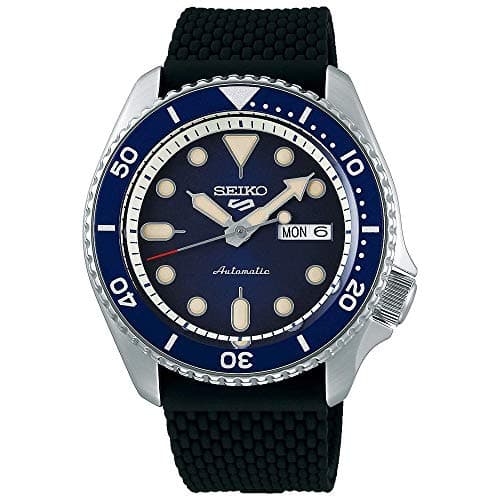
Seiko and Casio are the two Japanese brands most people buy first, and they are almost perfectly complementary. Seiko is a watchmaker in the traditional sense — it makes mechanical movements, it invented the quartz wristwatch, and its affordable line is built around automatic watches with real spring bars and real lug widths. Casio is an electronics company that entered watches in 1974 and went on to build the toughest wristwatch ever made; its affordable line is quartz, digital or ana-digi, and much of it has no lug width at all.
That makes the comparison easy to get wrong. Asked "Seiko or Casio?" the honest answer is: Seiko if you want a mechanical watch you can put straps on; Casio if you want a watch that survives everything and costs less than a strap. The one place they genuinely overlap is the affordable diver — the Seiko 5 Sports against the Casio Duro, at roughly a quarter of the price — and that is the head-to-head worth having.
Below we go through movements, durability, the strap question that this site exists for, and price, then rank the two strongest watches from each brand at live prices. One note on scope: we cover the attainable lines both brands sell on Amazon in depth — Seiko 5 and Prospex, G-Shock and the Duro — not Grand Seiko or Casio's premium MR-G, which are different arguments at different prices.
Who they are
Seiko has made timepieces since the 1890s, produced Japan's first automatic day-date in the 1963 Seiko 5, and in 1969 sold the world's first quartz wristwatch, the Astron. It is fully vertically integrated: movements, cases, crystals and lume are all made in-house. Casio was a calculator company that sold its first watch, the Casiotron, in 1974, and in 1983 launched the G-Shock DW-5000C after engineer Kikuo Ibe set out to build a watch that would survive a ten-meter drop, resist water to ten bar and run for ten years on a battery — the "Triple 10." Everything Casio makes descends from that engineering-first approach.
Movements: mechanical against quartz
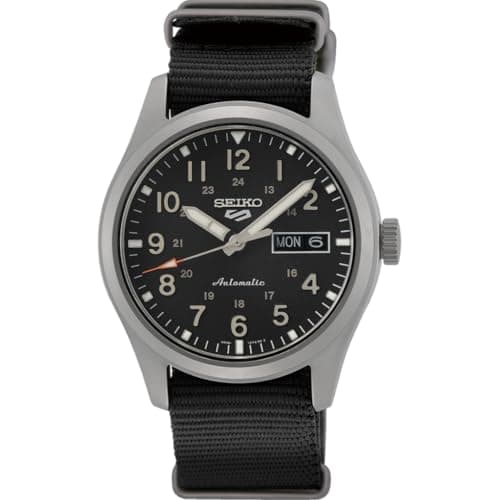
Every affordable Seiko worth buying is an automatic — the 4R36 in the Seiko 5 Sports, the 4R35 and 4R36 in Prospex — and that is the reason to buy one. You are paying for a mechanical movement that hacks, hand-winds, and can be serviced for decades, at a price that is close to the floor for the technology. Our quartz vs automatic page covers what that buys you and what it costs in accuracy.
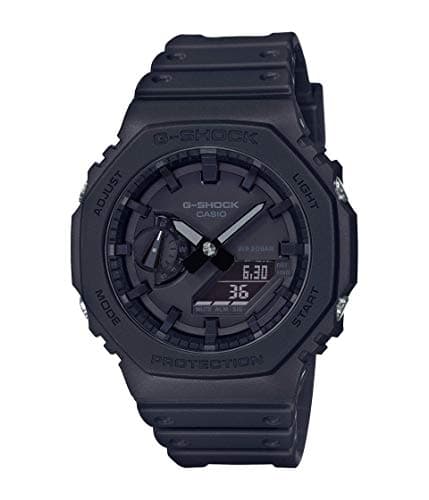
Every affordable Casio is quartz, and the best of them are better quartz than the price suggests: the GA-2100 is rated to about ±15 seconds a month and runs three years on a battery, and the Duro's module is the sort of thing that runs for years and then costs a few dollars to re-battery. If you want a watch that is simply right and never needs attention, Casio wins outright. If you want a watch with a beating heart, Seiko is the only one of the two that sells one.
Durability: Casio wins, and it is not a contest
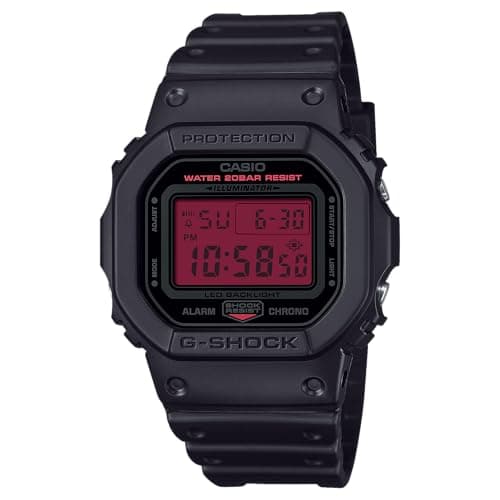
A G-Shock is built around shock resistance as the design goal, with the module suspended inside the case, and a 200m rating on every model here. Nothing Seiko sells under $500 is designed to be dropped, and a mechanical movement, however good, is a precision instrument full of small moving parts. Seiko divers are tough by mechanical standards — the Prospex Turtle is a genuine ISO diver — but the question "which survives a fall onto concrete" has one answer.
The crystal question cuts the same way. Seiko 5 watches use Hardlex, a hardened mineral glass; Casio's cheaper models use plain mineral glass, and the G-Shock's bezel is designed to keep it off the ground. Neither brand puts sapphire on its affordable watches, which is the one specification Orient beats both on.
Straps: the Seiko advantage this site exists for
A Seiko has lugs and spring bars. A 22mm strap fits a Seiko 5 Sports, a Turtle, a Samurai or a Kamasu, and the aftermarket for Seiko divers is the largest of any watch category on earth — bezels, dials, hands, straps, bracelets. Our 22mm strap roundup is, in practice, a Seiko strap roundup.
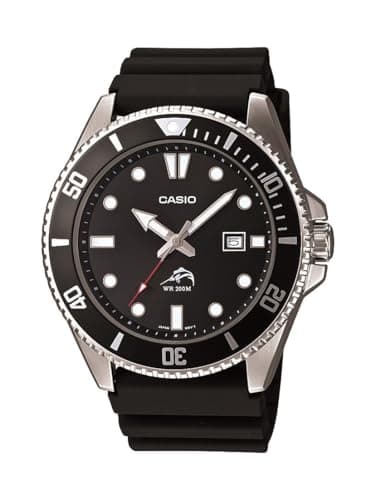
Most G-Shocks have no lug width. The GA-2100 and the DW-5600 use fixed resin bands that attach to the case with screws, and the strap options are Casio's own replacements or adapter kits that convert the case to accept a 22mm or 24mm strap. It works, and there is a cottage industry of adapters, but it is nothing like the freedom of a spring bar. The exception is the Duro, which has proper 22mm lugs and is the one Casio you can treat like a Seiko for straps — which is part of why we like it so much.
The head-to-head: Seiko 5 Sports vs Casio Duro
This is the comparison people actually mean. The Duro MDV106 is a 44mm quartz diver with a genuine 200m rating and a screw-down crown for roughly a quarter of the Seiko's price. The Seiko 5 Sports SRPD is a 42.5mm automatic diver-style watch rated 100m with a push-pull crown. On paper the Casio has the better dive specification at a quarter of the price; in the hand, the Seiko has a mechanical movement, far better lume, and a case that will still be serviced in thirty years. Our Duro review and SRPD review go through each. We rank the Seiko first here because the question is Seiko vs Casio, not cheapest diver; on a strict value-for-money basis the Duro is one of the two or three best buys in watches.
Price
Casio's range starts with the F-91W at roughly the price of a strap and, for the watches here, stays under about $100. Seiko's affordable line starts north of $200 and the Prospex divers run into the several hundreds. There is almost no price overlap, which is the clearest sign these are different purchases. Our best Casio watches and best Seiko 5 watches pages rank each brand's catalog on its own.
The verdict
Buy Seiko if you want a mechanical watch, want to change straps, want the best lume in affordable watches, or want a watch that reads as a watch in a room full of people who notice. Buy Casio if you want something that survives a building site, a deployment or a toddler, if you want to spend under $100, or if you never want to think about it again. And if you can only buy one and you want one of each quality, buy the Duro — it is the only Casio with a real dive rating and real lugs, and it costs less than the strap you will put on the Seiko.