No brand does more for less money than Casio, and it is not close. The Duro is a genuine 200-meter dive watch for around sixty dollars. The F-91W is a design classic that costs about twenty. The G-Shock is the toughest watch ever put into mass production. All of that is real, all of it is cheap, and none of it pretends to be anything else.
What Casio does not do is charm. The finishing is functional, the resin is resin, and no Casio will ever be described as beautiful by someone who is not already a fan. If that is fine with you, this is the most rational brand on this site.
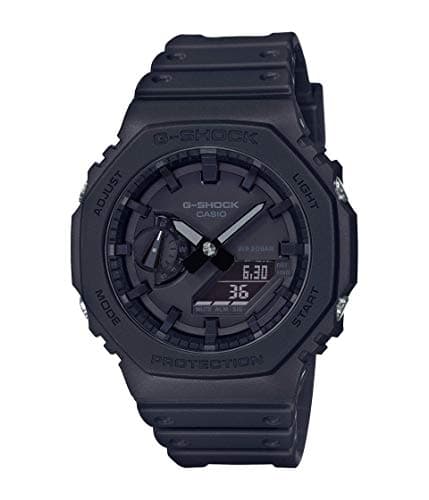
The short version: the Duro MDV106 is the best value in watches full stop — 200m, quartz, sixty dollars. The GA-2100 is the G-Shock for people who thought G-Shocks were too big. And the F-91W is twenty dollars for a watch that will still be running in a decade.
The Duro is the one everybody should own
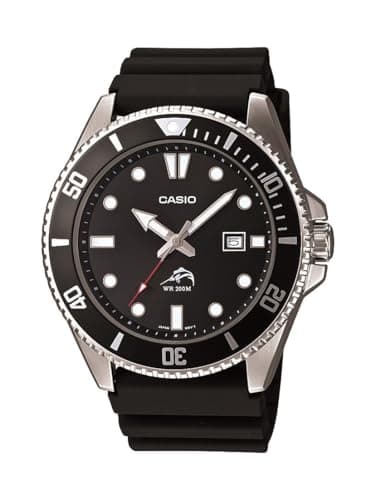
A 44mm quartz dive watch rated to a real 200 meters, with a unidirectional bezel and a 22mm lug width, for the price of a takeaway meal for two. It has no screw-down crown, so it is not ISO-certified, and the bezel action is scratchy — but as a watch you can swim, snorkel and shower in without a moment's thought, nothing else at any price is better value. Buy one, put a nylon strap on it, and stop worrying about your watch.
The G-Shock question: DW-5600 or GA-2100?
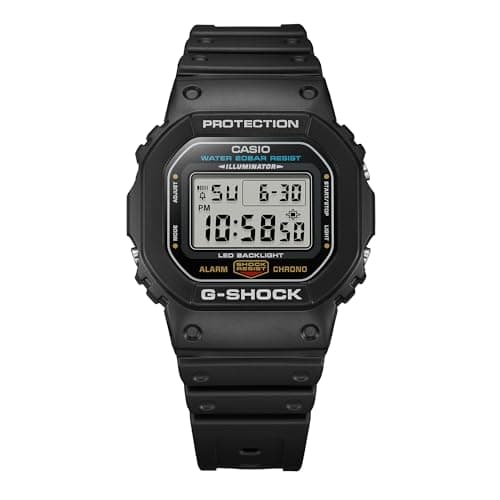
The DW-5600 is the original square: digital, 200m, genuinely shock-resistant, and the purest expression of what a G-Shock is. The GA-2100 is the analog-digital octagonal one — 11.8mm thick, which is thin enough to wear under a shirt cuff, with world time across 31 zones and the same 200m rating.
Buy the DW-5600 if you want the icon and the pure digital readout. Buy the GA-2100 if you want a G-Shock that works in an office. Neither takes a standard strap — both use G-Shock-specific bands — which is the one place they fall outside this site's strap ecosystem. Both have full reviews: the DW-5600 review covers the difference between the versions on sale, and the GA-2100 review covers module 5611.
The vintage digitals are not a joke
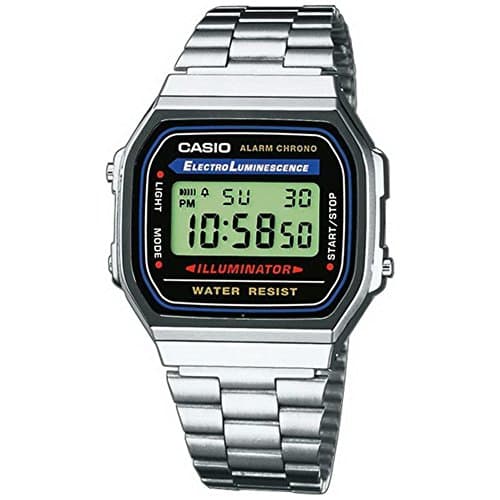
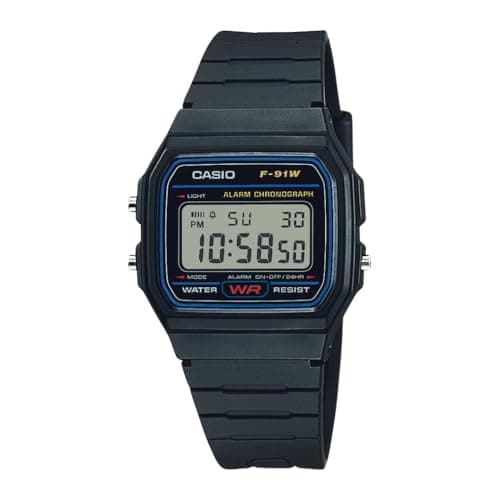
The F-91W and the A168 are twenty and thirty dollars respectively, weigh almost nothing, run for years on a battery, and have an alarm, a stopwatch and a backlight. The F-91W is the best-selling watch design in history. They are rated to 30m, which means splashes only, and the resin will eventually crack — at which point you buy another one. As objects to actually wear, they are far better than the price suggests.
Solar and the MTP-S120L
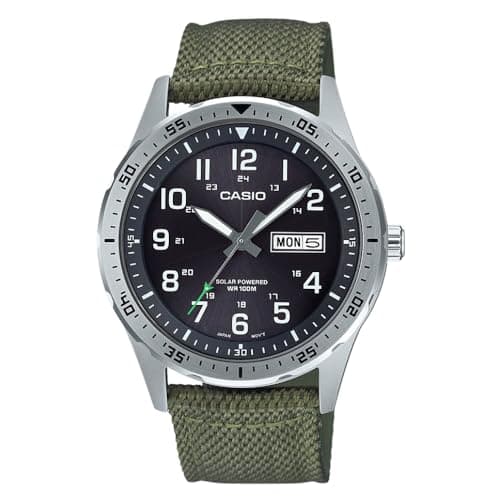
Casio's solar analog field watch is the quiet pick here: 100m water resistance, a screw-on caseback, a day-date, a 22mm nylon strap and no battery to replace, for around a hundred dollars. Its one flaw is the 49mm lug-to-lug, which is long for a 42mm watch and will overhang a smaller wrist. Check that number before buying.
Edifice: the dressier end
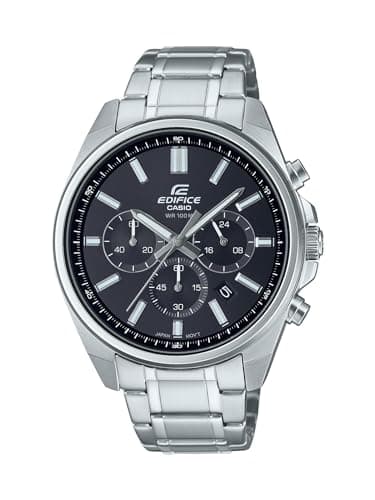
Edifice is Casio's attempt at a grown-up steel watch, and the chronograph here is a genuine working stopwatch rather than a decorative multi-eye dial. It is the Casio to buy if you want something that reads as a conventional watch across a table. It is also the least distinctive thing the company makes — you are buying it for the function and the price, not because it is a Casio.
The strap caveat, and how to work around it
This is the one place Casio sits awkwardly on a site built around lug widths. The G-Shocks and the vintage digitals use fixed or proprietary bands, so the strap drawer does not apply to them. The Duro (22mm), the MTP-S120L (22mm) and the Edifice all take standard straps and benefit enormously from one — a nylon strap on a Duro is the single cheapest transformation available in watches.
Casio dominates one category so completely that the ranking is effectively an internal one — the non-smart digital field is on the best digital watches.
The brand this one is actually cross-shopped against is Timex, and the two barely build the same watch: Timex vs Casio separates them on water resistance, night legibility and whether you can fit a standard strap, which is where the square G-Shock loses.