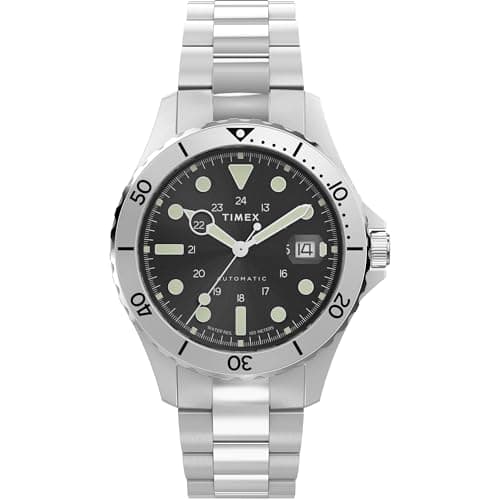
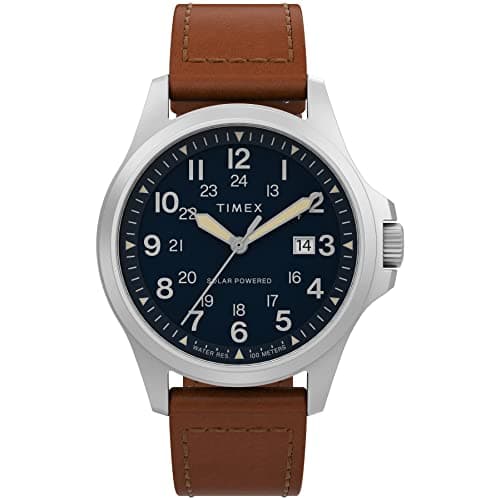
Timex has spent a century making watches that cost very little and work anyway, and for most of that time the story ended there. What has changed in the last few years is the top of the range: the Expedition North line arrives with sapphire crystals, screw-down crowns and solar movements at prices where the competition is still fitting mineral glass.
That makes Timex genuinely interesting rather than merely cheap. There is now a Timex that out-specifies a Swiss field watch costing three times more, and there is still a Timex that costs forty-five dollars and is the best watch anyone could buy for that money.
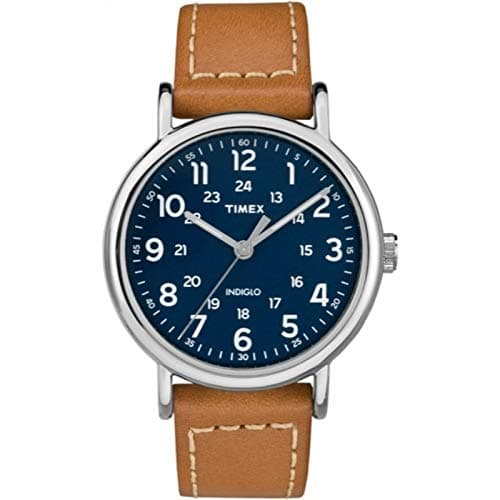
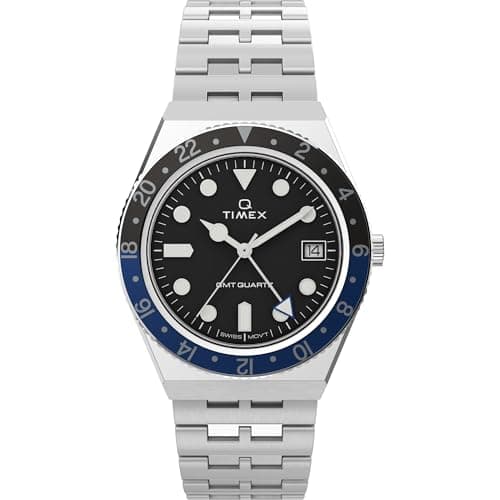
The short version: the Expedition North Field Post Solar is the best watch Timex makes — sapphire, 100m, screw-down crown, solar. The Weekender is the fifty-dollar strap-swapping classic. And the Q GMT is a genuine second-timezone watch at 38mm for a fraction of what a mechanical GMT costs.
The Expedition North line changed the brand
Sapphire crystals and screw-down crowns are not what Timex was known for. The Expedition North Field Post Solar has both, plus 100m water resistance and a solar movement that removes the battery entirely — a specification set that beats Swiss mechanical field watches at three times the price on every practical measure. If you only look at one Timex, look at this one.
Indiglo is a genuine advantage
Every watch here except the Marlin has Indiglo: an electroluminescent panel behind the dial that lights the whole face evenly when you press the crown. It is better than luminous paint for actually reading the time at night, because it does not need charging in light first and does not fade after a few hours. No watch above $300 on this site has anything like it.
The Marlin is the odd one out, deliberately
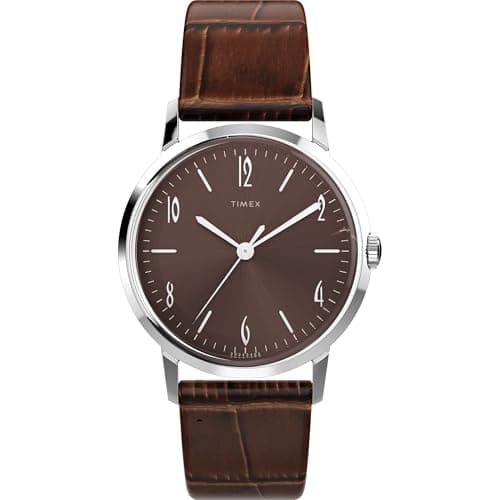
A 34mm hand-wound mechanical watch with an acrylic crystal and 30m water resistance is not a practical purchase, and that is the point. It is a faithful reissue of a 1960s Timex, it needs winding every day, and it is genuinely one of the few watches on this site that suits a small wrist without compromise. Buy it as a second or third watch, not as your only one.
Where Timex is honestly weak
Finishing. Up close, the cases, hands and dial printing are plainer than watches costing two or three times as much, and nothing about the presentation feels precious. Water resistance at the cheap end is also low — the Weekender is 30m, which means splashes rather than swimming — and the Navi XL, despite the dive-watch styling, is 100m without a screw-down crown and is not a dive watch.
None of these watches are economically repairable beyond a battery change either. That is the trade you are making at the price, and it is a fair one as long as you are not expecting an heirloom.
Strap swapping is half the value
Timex builds most of its watches around 20mm lugs and, on several models, quick-release bars. That means a Weekender and three straps costs under a hundred dollars and gives you what feels like three watches — the best value proposition in the whole hobby, and one no expensive brand can match simply because the base watch costs so little.
What to buy for what
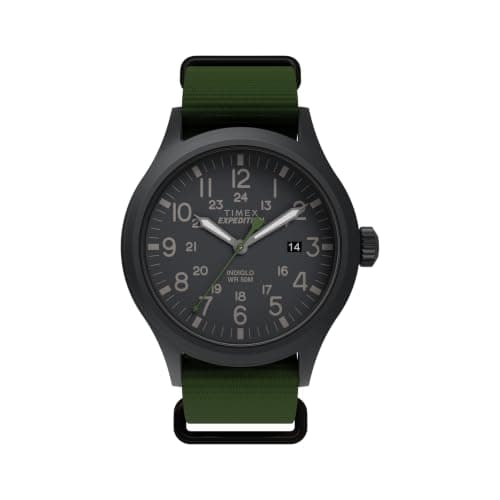
One watch for everything: the Expedition North. Cheapest good watch: the Expedition Scout at around fifty dollars, which is rated to 50m and is the more sensible sibling of the Weekender. Second timezone: the Q GMT. A watch with character rather than capability: the Marlin. Vintage skin-diver looks without the price: the Navi XL, as long as you treat the 100m rating honestly.
Timex against the brands people cross-shop
Two comparisons cover almost every question that arrives here. Seiko vs Timex is the mechanical question — and it contains the surprise that the Expedition North out-specifies every affordable Seiko on crystal and crown sealing. Timex vs Casio is the cheap-watch question, which comes down to analog against digital and whether the watch can take a standard strap at all. At model level, Timex Expedition vs Weekender settles the pair above.