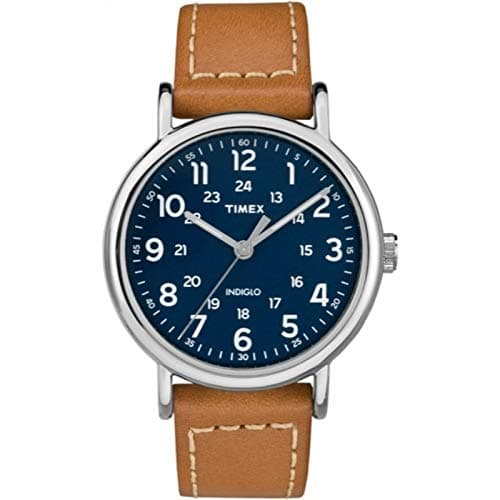
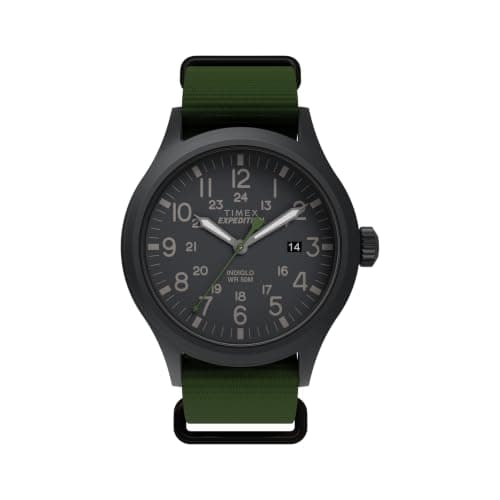
These two watches are the reason the phrase “cheap field watch” means anything at all. Both are 40mm. Both take a 20mm strap. Both are quartz, both carry the plain high-contrast dial the category is built on, and in a product photograph most people cannot tell them apart. The gap between them is small enough that nobody should agonise over the money. So the question people actually ask — which one — comes down to three differences, and only three.
Difference one: water resistance, 50m against 30m
The Expedition Scout is rated to 50m. The Weekender is rated to 30m. Neither is a swimming watch the way a diver is, but the gap matters more than the two numbers suggest, because 30m is the rating at which we would keep a watch away from the pool entirely — it covers rain and hand-washing and not much else. 50m is more forgiving of a careless day: a splashed sink, a downpour, a kayak. If this is going to be the watch on your wrist every day, including the days you did not plan, that is the specification that decides it. What these ratings do and do not promise is set out on watch water resistance explained.
Difference two: mineral against acrylic
The Expedition Scout has a mineral crystal. The Weekender has acrylic. Acrylic is plastic: it is effectively shatterproof, it gives a vintage warmth to a dial, and it scratches if you look at it wrong — though unlike mineral, those scratches polish out at home with a tube of plastic polish and two minutes. Mineral resists the day-to-day scuffing acrylic collects, and when it finally is marked, it stays marked. Neither is sapphire. If you want sapphire on a Timex, that is the Expedition North further down this page. The whole three-material argument is on sapphire vs mineral crystal.
Difference three: what the strap is for
This is the one almost nobody mentions, and it is the one that tells you who each watch is really for. The Weekender is designed around slip-through straps — the nylon runs under the case in a single piece, and changing it is a five-second job with no tools at all. That is why it has spent years as the watch people buy when they want to own ten straps rather than one watch. The Expedition Scout is the more conventional object: a watch you fit a strap to and then leave alone. Both are 20mm, so one drawer serves both — see the best 20mm straps for the field of options and straps for field watches for the canvas and nylon this look was built on.
Where the two are genuinely the same
Size.Both are 40mm, a touch above the historically correct 36–40mm field proportion but comfortable on most wrists. Movement. Both quartz, both more accurate than any mechanical watch on this site, both running for years on a battery. Lug width. Both 20mm, the most common width there is. Finishing. Both plain up close, because that is what this price buys. And both are light enough that you stop noticing them, which is the real argument for a cheap field watch as a first watch.
The honest summary
If you are buying one watch, buy the Expedition Scout: it is more watch for very little more money, and the extra 20m of water resistance is the difference between a watch you think about and a watch you do not. If you already own something you take seriously and you want a cheap platform for nylon, canvas and leather experiments, the Weekender is the better toy and has been for a decade. There is no version of this comparison where the price difference should decide it.
If neither one is quite right
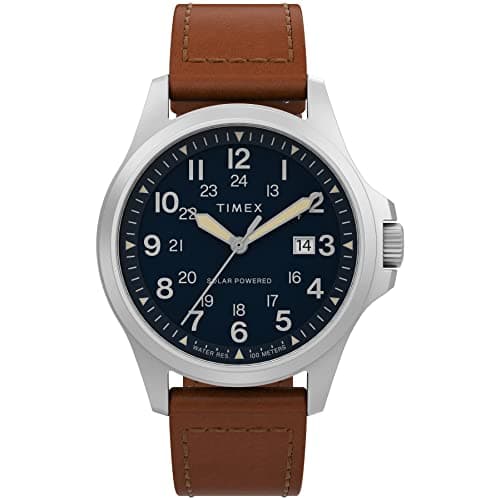
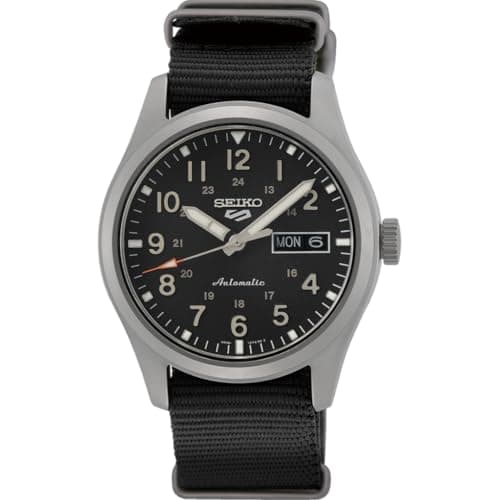
Two upgrades sit directly above this pair and they go in opposite directions. The Timex Expedition North Field Post Solar is the practical one: 41mm, 100m, a sapphire crystal, a screw-down crown and caseback, and a solar movement that never needs a battery. It is the same brand and the same category with all three complaints about the Scout removed. The Seiko 5 Sports Fieldis the romantic one: a 39.4mm mechanical watch with Seiko's 4R36 automatic and 100m of water resistance, for people who want the rotor rather than the accuracy. Both cost real money next to a Weekender, and both are on best field watches under $500.
Which one for a first watch
The Expedition Scout, nearly always. It is the one that does not need a second watch behind it. The Weekender earns its place when the watch is deliberately disposable — a holiday watch, a watch for someone who will lose it, or a cheap canvas-and-nylon playground beside something better. Our ranking of the whole bracket is best cheap field watches, and the full category, Hamiltons included, is the best field watches.
What we are not claiming
We do not own these watches and we have not swum with either of them. Every figure above is a published Timex specification for the exact listing we link to, and the spec table marks anything we could not verify with a dash rather than a guess. There are no scores here from wrist-time we did not have. Our method is on how we review.