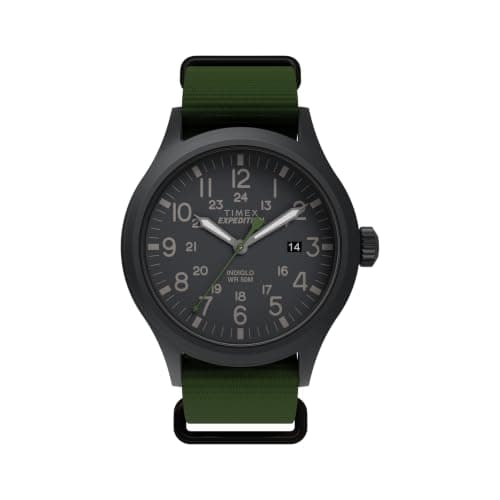
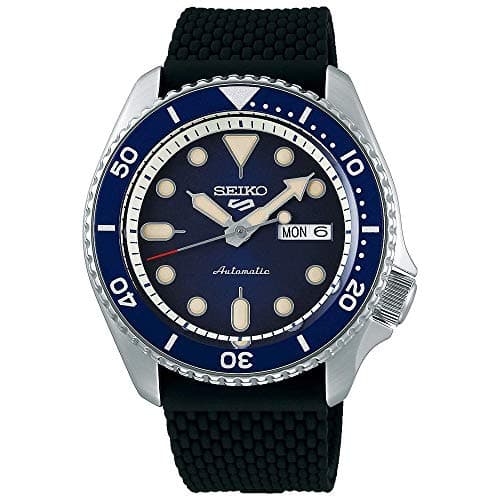
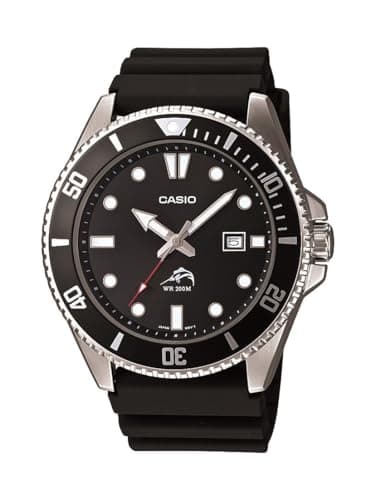
The advice people are usually given is a fraction: one month's salary, two weeks' pay, some number invented by somebody selling watches. It is useless, because it tells you nothing about what the money buys. Here is the version we would give a friend: what each band actually adds, in the order the upgrades arrive, and where they stop arriving.
Under $100: more than you would think
This is the bracket people underestimate. Casio and Timex both build watches here with specifications that would have been impressive at any price forty years ago. You can buy a 200m quartz diver with a screw-down crown — the Casio Duro — for less than a good leather strap. You can buy a plain, legible 40mm field watch with 50m and a mineral crystal. You can buy a 200m shock-resistant G-Shock.
What you give up: case finishing, which is functional rather than attractive up close; mineral or acrylic crystals instead of sapphire; a mechanical movement, in almost every case; and resale value, which is zero. What you do not give up is accuracy, because quartz beats every mechanical watch on this page. If money is tight or this is a watch for a teenager or a worksite, stop here with a clear conscience — best watches under $200 ranks the whole bracket.
$100 to $350: the value band, and where most people should buy
This is where the meaningful upgrades land, and they arrive quickly. A mechanical movement you could still have serviced in twenty years. 100m or 200m water resistance with proper sealing. On some watches, a sapphire crystal — the Orient Kamasu has one at the lower end of this band, which remains the best single argument in affordable watches. Better bracelets, better dials, better hands.
This is the band we would point almost anyone to for a first serious watch. The Seiko 5 Sports SRPD93 is the default: a 4R36 automatic that hacks and hand-winds, 100m, a 42.5mm case and the largest aftermarket of any watch here. Our rankings for the band are best watches under $300 and best automatic watches under $500.
$350 to $800: finishing, Swiss movements, and the 80-hour reserve
What the next few hundred dollars buys is mostly not capability. It is finishing — case edges, dial printing, hand polishing — the Swiss-made designation, sapphire as standard, and on Hamilton's H-10 and H-50 movements an 80-hour power reserve that doubles what Japanese automatics at half the price offer. That reserve is the one upgrade in this band with a daily, practical payoff: a watch taken off on Friday is still running on Monday. The argument is on what power reserve means.
Note what does not improve. Accuracy does not; a $20 Casio is still better. Water resistance usually does not — the 50m hand-wound Hamilton is rated for less water than a $65 Casio Duro. Toughness does not. You are buying an object rather than a tool, and that is a perfectly good reason to buy. The band is ranked on best luxury watches under $1,000.
Above $1,000: outside what this site covers, and why
We rank dive, field and tool watches you can buy from a normal retailer, and the specification curve above a thousand dollars flattens hard: more finishing, more brand, in-house movements, better bracelets. If you want a watch at that level, buy it because you want that specific watch, not because you expect it to keep time better or survive more. It will not.
The three rules we would actually give
One: spend on the spec that matches your life. If you swim, buy water resistance and a screw-down crown before anything else. If you are hard on things, buy a sapphire crystal. If you rotate watches, buy the long power reserve. If none of those apply, you need less watch than you think.
Two: budget for straps. A $150 watch with three good straps is a more useful object than a $300 watch on the band it came on, and it costs less. That is not a slogan — it is the cheapest upgrade in watches, and it is why the strap drawer gets as much space on this site as the watches do.
Three: buy one watch, not three. The commonest expensive mistake is three $200 watches bought over a year when one $400 watch was the answer. The second commonest is a first watch so expensive the owner is afraid to wear it.
A sanity check before you spend
Four questions, in this order. Does it fit? Check lug-to-lug against your wrist, not case diameter — what size watch for your wrist has the method. Will it survive your week? Water resistance explained sets the floor. Do you want to wind it? If not, buy quartz or solar — quartz vs automatic. Can you restrap it? A watch with a standard 20mm or 22mm lug width has a second life; one with an integrated band does not.
Where the real value sits right now
On this site, the best value per dollar is at two points. The first is the Casio Duro, which gives you a genuine 200m diver with a screw-down crown for the price of a mid-range strap. The second is the Seiko 5 Sports line, which is where a real mechanical movement with a global service network becomes affordable. Everything between them is a matter of taste more than capability. If you are starting from nothing, best watches for beginners is the page to read next, and best value watches ranks the whole site on exactly this question.
What this page is
It is judgment, labelled as judgment. The specifications in the table are published manufacturer figures for the exact listings linked, and prices come from the live price layer with the date they were checked — we do not type prices into our own copy, because they change. What each bracket “should” cost is our opinion from ranking these watches against one another, not a market measurement. Our method is on how we review.