Ask what size watch to buy and you will be told a diameter: 38mm for a small wrist, 40mm is the safe default, 42mm and up for a big one. The advice is not useless, but it is shopping by the one dimension that does not touch you. The case diameter is the width of the dial side; the part that decides whether a watch sits flat or seesaws is how far the lugs reach down the sides of your wrist.
The picks below are ordered by size rather than merit — smallest first, largest last — in the same way our field watch size guide ranks field watches on their measurements. Every figure in the table is a published manufacturer specification for the exact reference we link; where a brand does not publish a lug-to-lug measurement, the table prints a dash rather than a guess.
Three things to settle before the chart. One: wrist circumference is the input, measured with a tape measure, not estimated. Two: lug-to-lug is the output you shop by. Three: thickness and weight decide whether you keep wearing the watch after the first week, and almost nobody checks them.
The chart, by wrist size
Measure first, then read the row. These are our brackets, built from the published specifications of the watches we rank rather than from an industry standard, and they are deliberately generous at the top — plenty of people happily wear more watch than this, and the point of a chart is to tell you where you stop having to think about it.
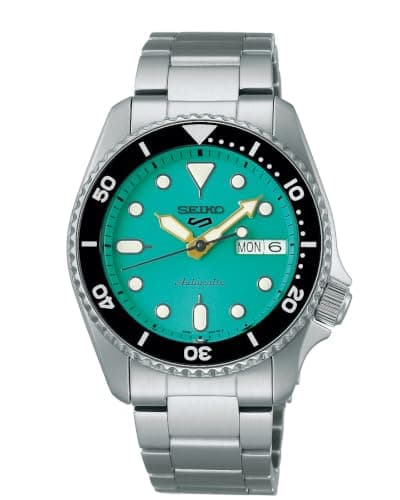
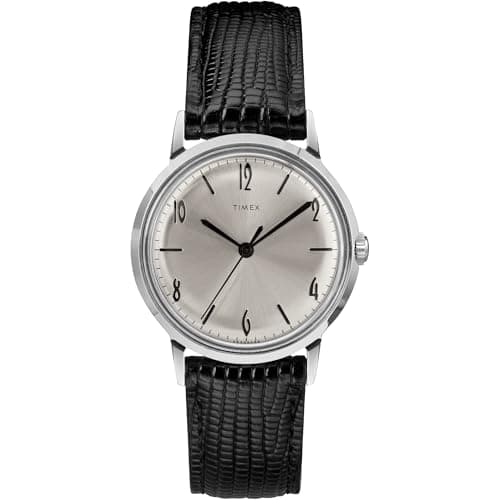
Up to 6 inches (152mm). Target 34mm to 38mm cases and keep lug-to-lug at or under roughly 44mm. The 34mm Timex Marlin and the 38mm Seiko 5 Sports SRPK33, with its 44.2mm lug-to-lug, are the two picks here. Avoid anything with a 46mm-plus span regardless of what the diameter says.
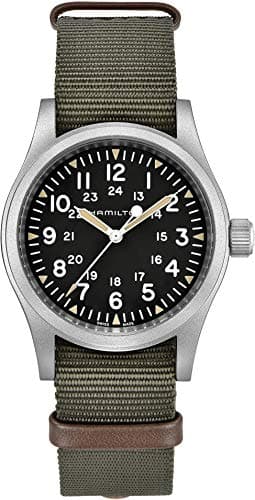
6 to 6.5 inches (152-165mm). 38mm to 40mm, lug-to-lug up to roughly 46mm. This is the range where the 38mm Hamilton Khaki Field Mechanical lands — a small case with a 46.5mm span, so it is a bigger-wearing watch than its diameter suggests.
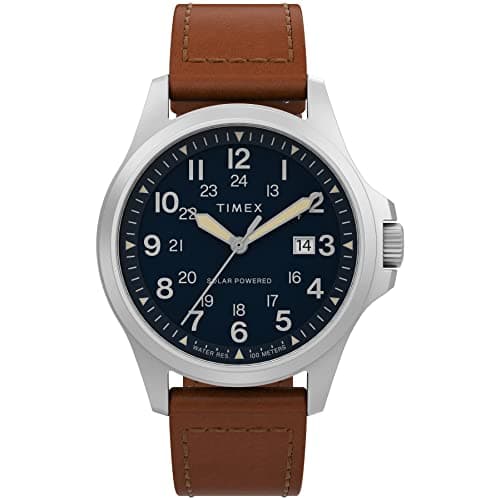
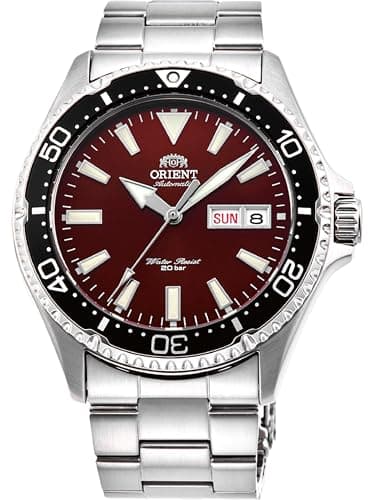
6.5 to 7 inches (165-178mm). The widest market in watches: 38mm to 42mm, lug-to-lug up to roughly 48mm. Almost everything on this site works here, including the 41.8mm Orient Kamasu at 46.8mm and the 41mm Timex Expedition North.
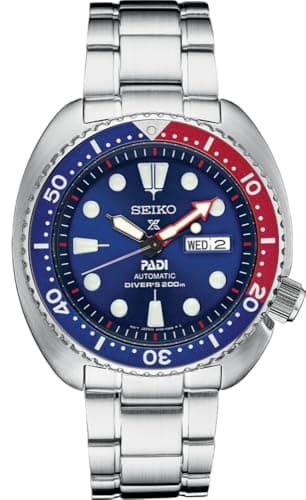
7 to 7.5 inches (178-190mm). 40mm to 44mm, lug-to-lug up to roughly 50mm. The 45mm Seiko Prospex Turtle belongs here and wears better than its diameter because its lug-to-lug is only 48mm — a cushion case with the lugs tucked in.
7.5 inches and over (190mm+). You can wear anything on this site, and the risk inverts: a 36mm watch on an 8-inch wrist looks deliberate rather than accidental, which is fine if that is the look you want. The large-wrist field is ranked on the best dive watches for large wrists.
Why lug-to-lug beats diameter, with real numbers
The clearest proof is in the table above. The Hamilton Khaki Field Mechanical is a 38mm watch with a 46.5mm lug-to-lug. The Orient Kamasu is a 41.8mm watch with a 46.8mm lug-to-lug. On paper the Hamilton is nearly four millimeters smaller; across your wrist they are the same watch.
It happens because lug design is a style decision independent of case size. The Hamilton is a military field design with long straight lugs that reach out from the case. The Kamasu is a diver with short, downturned lugs that curve into the wrist. Two watches, two philosophies, one span.
The same arithmetic explains why the 45mm Seiko Turtle gets recommended to people with 7-inch wrists: its cushion case has effectively no protruding lugs, so the 48mm span is barely longer than the 38mm Hamilton's. And it explains the extreme case — the Casio G-Shock DW-5600, a square whose 48.9mm case length sounds absurd and which fits almost every wrist, because the band leaves the case at the very ends of that measurement and nothing overhangs at all.
Thickness: the dimension that decides whether you keep wearing it
Diameter and lug-to-lug decide whether a watch fits. Thickness decides whether you enjoy it. A case over roughly 13mm will catch the cuff of a shirt, and on a thin wrist a tall case raises the center of gravity so the watch rocks when you move your hand.
This is where dive watches pay for their water resistance: a 200m case needs a thicker crystal, a deeper case back and a taller crown tube, and the millimeters have to go somewhere — watch water resistance explained covers why. A dress watch gets away with 8 to 10mm because it is sealed against rain and nothing more.
Weight compounds it. The same case on a steel bracelet versus a nylon strap is a different watch on a borderline-sized wrist, which is the cheapest fix on this entire page: if a watch is at the top of your range, put it on a lighter strap. Our NATO strap rankings are full of straps that take 30 to 40 grams off a watch for the price of a sandwich, and a single-pass NATO also holds the case flatter against the wrist than a two-piece strap does.
Strap width is not a separate decision
Lug width scales with case size, roughly half the diameter: a 38mm watch is usually 20mm, a 42mm diver is usually 22mm, a 34mm vintage reissue is often 18mm. That is why a watch that fits your wrist tends to look right on the strap it comes with, and why fitting a 22mm strap to a 36mm case reads as wrong even when the strap technically fits.
The exact figure for your watch is never a guess — our lug width chart lists it by model, and how to measure a watch strap covers measuring it yourself with a ruler. One sizing-specific note: strap length matters as much as width at the small end of the range. Under about a 6.25-inch wrist, standard-length leather straps leave a long tail flapping past the keeper, and a short or compact strap is worth seeking out.
Ignore "men's" and "women's" sizing
Those labels are marketing categories, not measurements, and they are the single most common reason people buy the wrong size. A 36mm watch is a 36mm watch; it does not know who bought it. Plenty of watches sold as women's have 30mm cases that are genuinely too small to read at a glance, and plenty sold as men's are 44mm slabs that no 6-inch wrist should carry.
Shop the measurement. If a 36mm field watch is what fits and looks right, buy the 36mm field watch from whichever shelf it is on. The only legitimate size-related constraint is dial legibility: below roughly 34mm, hands and markers get small enough that reading the time quickly in bad light becomes a real compromise — which is also the argument for high-contrast dials and good lume, covered on what lume is and how it works.
What we would buy, by wrist size
Under 6 inches: the 34mm Timex Marlin if you want something dressy, or the 38mm Seiko 5 Sports SRPK33 if you want an automatic with a 44.2mm span. 6 to 6.5 inches: the Hamilton Khaki Field Mechanical — 38mm, sapphire, and the best-made watch on this list.
6.5 to 7 inches: the Orient Kamasu for a 200m automatic at 46.8mm, or the Timex Expedition North if you want solar power and never want to think about a battery. 7 inches and up: the Seiko Prospex Turtle, which is the most watch on this page and the one that justifies a bigger wrist.
And if you want to compare the two automatics in the middle of that list directly, we did it on Orient Kamasu vs Seiko 5 SRPD — two watches with nearly identical measurements and very different specifications.