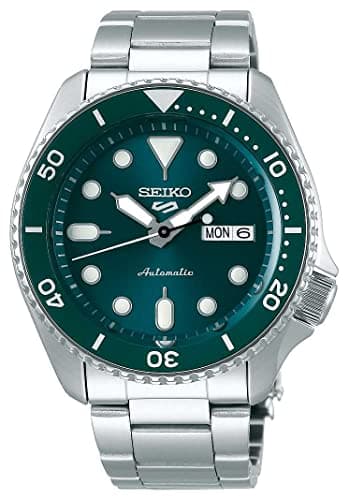
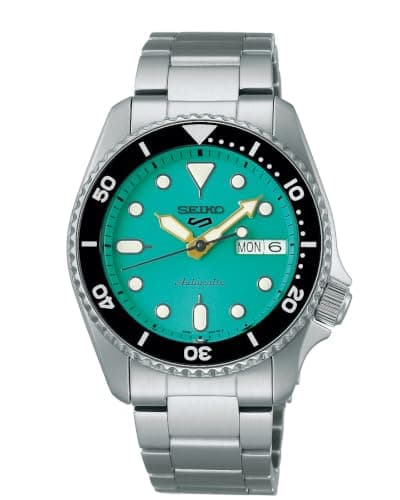
If you have been told your wrist is too small for a dive watch, you have almost certainly been given the wrong number. Case diameter — the 42mm or 45mm on the box — is the figure everyone quotes and it is not the one that decides fit. The measurement that decides whether a watch sits on your wrist or hangs off it is lug-to-lug: the distance from the tip of the top lugs to the tip of the bottom lugs.
The rule is simple and it works. Measure the flat top of your wrist across, in millimeters. A watch whose lug-to-lug is less than that number will sit flat. A watch whose lug-to-lug exceeds it will overhang, and no amount of "it wears smaller than it looks" will fix that. For most wrists between 6 and 6.75 inches around, the usable ceiling is roughly 46 to 48mm of lug-to-lug.
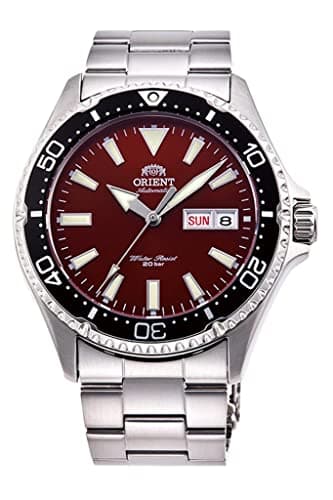
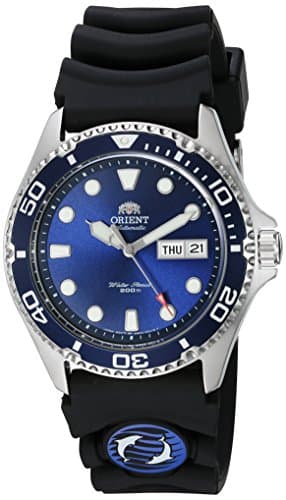
That is why the ranking below looks different from every other dive list on this site. The Seiko 5 Sports SRPK33 takes the top spot on a 44.2mm lug-to-lug — the shortest here by a clear margin — with the Orient Kamasu just behind it at 46.8mm, and the Kamasu adds a sapphire crystal and a real 200m rating the Seiko does not have. Read both columns in the table: diameter, then lug-to-lug.
How to measure your wrist properly
Two measurements, one minute. First, circumference: wrap a soft tape (or a strip of paper you then measure) around your wrist just past the wrist bone, snug but not tight. That number tells you strap length. Second, and more usefully, flat width: lay a ruler across the top of your wrist where a watch sits and read the width in millimeters. That number is your lug-to-lug ceiling. A 6.25-inch wrist is usually about 45–48mm across the top.
Why lug-to-lug beats diameter every time
Two watches with identical 42mm cases can have wildly different lug-to-lug figures depending on how long and how steeply curved the lugs are. The Seiko Prospex Turtle is a notorious example in reverse: it is a 45mm watch with a 48mm lug-to-lug because the cushion case has almost no lugs at all, so it wears far better than the diameter implies. Conversely a 40mm watch with long, flat lugs can look enormous. Diameter tells you how the dial reads; lug-to-lug tells you whether it fits. If you want the brackets by wrist measurement rather than by watch — what a 6-inch, 6.5-inch or 7-inch wrist can carry, across every category on this site — they are on what size watch to buy for your wrist.
Case thickness is the third number
Dive watches are thick because water resistance requires it, and thickness is what makes a watch catch on a cuff. A slimmer wrist tends to make a tall watch look top-heavy. If two watches on this page have similar lug-to-lug figures, take the thinner one — you will wear it more.
Strap width changes the look more than you expect
A narrower lug width visually slims a watch. Three of the picks here use 20mm lugs rather than the 22mm that dominates the dive category, and on a smaller wrist that difference is genuinely visible. It also means these watches share a strap drawer with field watches rather than with big divers — see our 20mm strap picks and the lug width chart before you order.
A note on tapered and single-pass straps
If a watch is borderline, the strap can rescue it. A single-pass nylon strap adds a fraction of height but keeps the profile tidy; a thick padded leather strap makes a borderline watch worse. On a small wrist, keep the strap thin and the watch does more of the work.
How we picked
We do not run a testing lab
We compiled the published manufacturer specifications for every watch here — case size, lug-to-lug, lug width, water resistance, movement and crystal — did the wrist-fit and value math, and scored each pick against a published rubric. The scores are judgments from documented research — they are not measurements we took or wrist-time we logged, because we do not have these watches and we are not going to pretend we do. Where a spec could not be verified we wrote "data unavailable" rather than guessing.