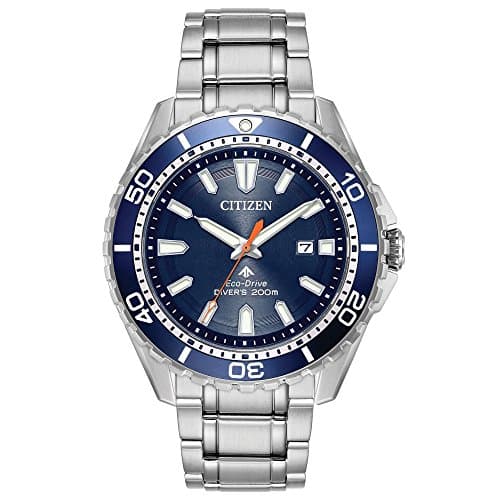
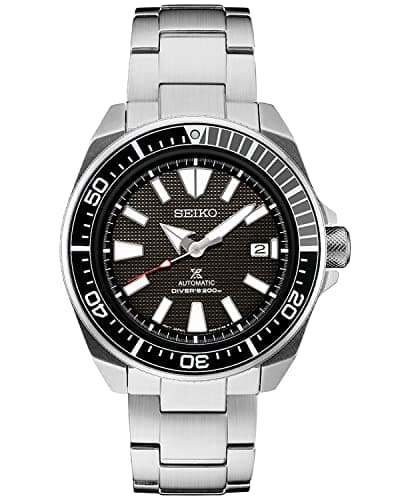
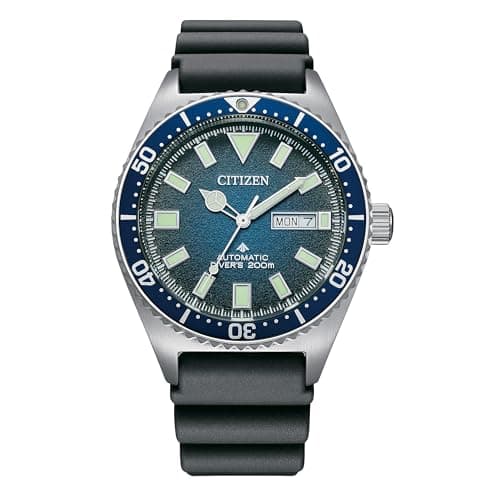
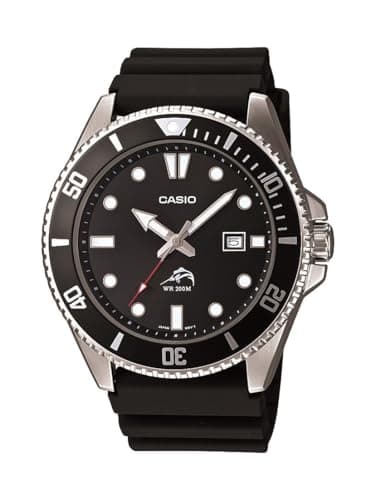
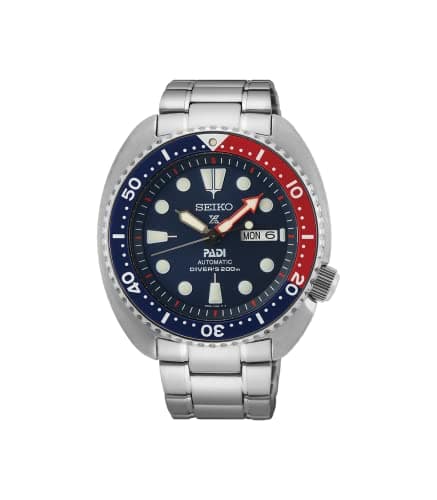
Almost every watch guide written in the last five years has been about watches getting smaller. That is genuinely good news for most people and completely useless if your wrist is 7.5 inches or more, where a fashionable 38mm case looks like a lost cufflink. This page ranks the divers that fill a large wrist properly.
The measurement that matters is lug-to-lug — the length from the top of the upper lugs to the bottom of the lower ones. It, not diameter, decides how much of your wrist a watch covers. A 45mm Seiko Turtle with short downturned lugs measures 48mm lug-to-lug; a 44mm slab with straight lugs can measure more. Every figure we could verify is in the table above, and where a manufacturer does not publish one we have written a dash rather than guessing.
The short version: the Seiko Prospex Turtle is the best large diver under $500 and one of the great cushion cases. The Citizen Promaster Dive Eco-Drive is the biggest watch here at 45mm and 48.8mm lug-to-lug, and never needs a battery. And the Casio Duro wears large for about sixty dollars, which makes it the cheapest way to find out whether you actually like a big watch.
Measure your wrist before you shop
Wrap a tape measure — or a strip of paper you then hold against a ruler — around your wrist just past the wrist bone, where the watch will actually sit. Under about 6.5 inches is a small wrist and you want our small-wrist page instead. Around 7 inches is average. From roughly 7.5 inches up, everything on this page will sit correctly and most of the fashionably small watches will not.
Lug-to-lug is the number, diameter is the marketing
Diameter is what gets printed on the box; lug-to-lug is what determines whether the watch overhangs. As a working rule, a watch fits when its lug-to-lug is comfortably shorter than the flat top of your wrist. Large wrists have more flat area, which is exactly why the 48mm-plus watches here work — and why the same watches are a bad recommendation for someone at 6.5 inches, however much they want one.
Case height and how a big watch actually wears
A large diameter with a modest height reads as substantial; a large diameter with a tall case reads as a hockey puck and catches on cuffs. Cushion cases like the Turtle's disguise both, because the lugs curve down hard and pull the strap around the wrist rather than out from it. If you have tried a big watch and disliked it, the height and the lug geometry are usually the culprit rather than the width.
Big wrists need long straps, and that is a real cost
Four of the five picks here use a 22mm lug width, which is the most common size on divers and the easiest to shop for. The catch is length: a standard strap is cut for wrists between roughly 6 and 8 inches, so above about 7.75 inches you want a strap sold in a long option, or a NATO, which is longer by design and adjusts across a wide range. Our 22mm strap guide covers the options, and our measuring guide explains how to work out the length you need.
Do not buy diameter for its own sake
A 45mm watch is not a better watch than a 41mm one, and the specification sheet proves it — the 41.8mm Orient Kamasu on our under-$500 roundup has a sapphire crystal that none of these five do. Buy the bigger case because it suits your wrist and you like how it looks, not because it sounds like more watch for the money. On specification, it usually is not.
What actually separates these five
Two things, and neither is size. The first is the movement: the Seikos are mechanical automatics, the Citizen Promaster Eco-Drive is solar quartz, the Duro is a battery quartz. The second is the crystal — every watch here uses Hardlex or mineral rather than sapphire, which is the one place this bracket consistently compromises. Expect hairline scratches over the years on all five.
How we picked
We do not run a testing lab
We compiled the published manufacturer specifications for every watch here — case size, lug-to-lug, lug width, water resistance, movement and crystal — did the wrist-fit and value math, and scored each pick against a published rubric. The scores are judgments from documented research — they are not measurements we took or wrist-time we logged, because we do not have these watches and we are not going to pretend we do. Where a spec could not be verified we wrote "data unavailable" rather than guessing.