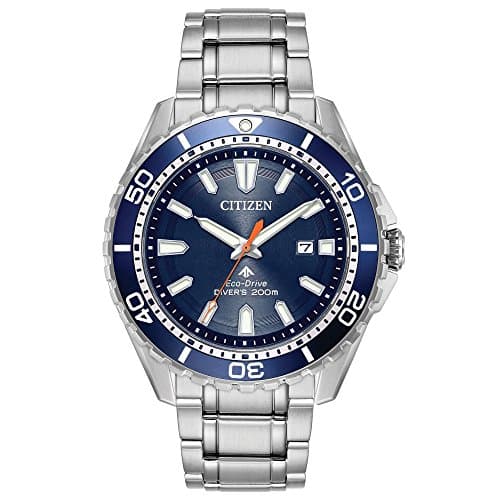
The Citizen Promaster Dive Eco-Drive is the answer to a question most dive-watch buyers do not know they are asking: what if the watch that is rated for scuba never needed anything from you at all? No winding, no battery, no wearing it to keep it running. Citizen's published specification for the BN0191-55L is a 45mm stainless case, a 200M/20Bar rating marked for scuba diving, a 22mm lug width and the E168 Eco-Drive movement, which runs on light.
A note on what this review is and is not. We do not own this watch and we did not dive with it. What follows is built from Citizen's published specifications, the arithmetic of comparing it to its direct rivals, and the method set out on how we review. Where a figure is not published — and there is one here that matters — we say so rather than filling the gap.
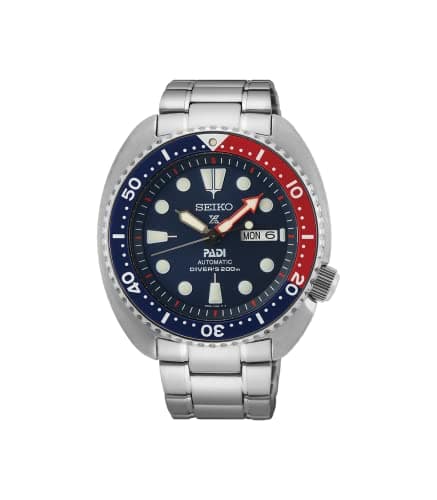
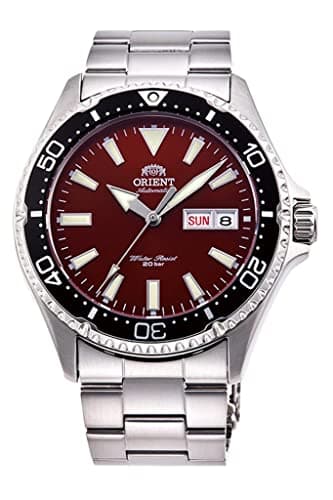
The verdict up front: if your wrist can carry it, this is the most self-sufficient dive watch on this site, and the solar movement is not a gimmick but the entire argument. The catch is size. At 45mm across with a 48.8mm lug-to-lug, it is a large watch and it wears like one. The two watches people cross-shop it against are ranked beside it below — the Seiko Prospex Turtle, which is the certified automatic at roughly the same footprint, and the Orient Kamasu, which is smaller, has a sapphire crystal and usually costs less.
One more option exists that is the same watch in a different metal: Citizen also sells this diver as the BN0200-56E in Super Titanium, with the same E168 movement, the same 200m rating and the same 22mm lugs for a good deal less weight and a good deal more money. We set the two against each other on titanium vs stainless steel watch, which is the cleanest version of that comparison anyone can run.
What "ISO compliant" actually buys you
Most watches sold as divers are not. A 200m number stamped on a caseback is a pressure rating; a dive watch in the formal sense is built to ISO 6425, which asks for a great deal more — a unidirectional bezel that cannot be knocked forward, legibility at distance in the dark, a means of telling at a glance that the watch is still running, and a case sealed well enough to survive being taken to depth repeatedly. Citizen markets the Promaster line as ISO-compliant and rates this reference at 200M/20Bar for scuba, which puts it in a different category from the 200m-rated watches that carry no such marking.
In practice, that is the difference between a watch you can swim in and a watch you could actually dive with. Our explainer on what makes a dive watch a dive watch walks through the standard in full, and how to read the bezel covers the part of it you would actually use.
Eco-Drive is the whole point
Strip away the dive credentials and the reason to choose this over an automatic is the movement. The E168 is a light-powered quartz caliber: it charges from any light source, keeps quartz accuracy rather than mechanical accuracy, and by Citizen's own description does not need a routine battery change. Set against an automatic, that removes three chores at once — no winding, no wearing it to keep it running, and no watchmaker visit every few years to replace a cell in a case that then has to be resealed and pressure-tested.
One honest gap: Citizen does not publish a power-reserve figure for this reference on its product page, so we do not print one. Eco-Drive watches store a charge and run in the dark, but we are not going to invent a number for how long. If the exact reserve matters to you, ask Citizen before buying.
45mm, and a 48.8mm lug-to-lug — read this first
This is the number that decides whether you should buy this watch, and it is not the diameter. Lug-to-lug is the distance from the tip of the upper lugs to the tip of the lower ones, and it is what determines whether a case sits flat or hangs off the sides of your wrist. The Promaster measures 48.8mm — the longest figure we have verified for any diver on this site.
Lay a ruler across the flat top of your wrist and read the width in millimeters. If that number is under about 48mm, this watch will overhang. On a wrist of roughly seven inches and up it sits properly and the size reads as intent rather than accident. Our large-wrist ranking sorts the whole category on exactly this measurement, and the small-wrist page does the same in the other direction if the answer turns out to be no.
The mineral crystal is the real compromise
Not the size, and not the quartz movement — the crystal. Citizen fits mineral glass here, which is impact-resistant but scratches far more readily than sapphire. That matters more on a dive watch than on a desk watch, because the bezel edge and the crystal are the two parts that meet door frames. The Orient Kamasu ranked below has a sapphire crystal at a lower price, which is the single most awkward fact in this comparison and one we are not going to bury.
The counter-argument is that mineral is cheap to replace and sapphire is not, and that a scratched crystal on a working tool is not the tragedy enthusiasts make of it. Both things are true. If you want the watch to still look new in five years, the Kamasu is the better buy; if you want the watch that asks least of you, this one is.
Promaster or Seiko Prospex Turtle?
The closest fight here, and it comes down to movement philosophy rather than quality. The Turtle is a fully ISO 6425automatic on Seiko's 4R36 — it hacks, it hand-winds, and it is the watch with the deeper enthusiast following and the cushion case that people either love or do not. It is also 45mm with a 48mm lug-to-lug, so it is not the smaller option, and it costs meaningfully more on current prices.
Buy the Turtle if the mechanical movement is the reason you want a dive watch at all, and you accept servicing as part of owning one. Buy the Promaster if you want the same capability with nothing asked in return. Our Turtle review covers that watch on its own terms.
Promaster or Orient Kamasu?
The value question. The Kamasu is 41.8mm with a 46.8mm lug-to-lug, which fits a substantially wider range of wrists, adds a sapphire crystal, uses Orient's in-house F6922 automatic — and typically sells for less than the Citizen. On paper it wins on almost every line except one.
That one is the dive rating. The Kamasu is a genuine 200m watch, but it is not marked as an ISO-compliant diver the way the Promaster is, and it is an automatic, which means it needs winding or wearing to keep time. If you want a smaller, prettier watch that happens to be water-resistant to 200m, the Kamasu is the better object — see our Kamasu review. If you want a scuba watch you can leave in a drawer for a year and still find running, that is not what an automatic does.
22mm lugs, so the strap drawer is already open
The Promaster ships on a steel bracelet and takes a standard 22mm strap — the same width as the Seiko divers, the Casio Duro and most of the tool watches on this site, which means one 22mm strap purchase covers several watches. On a wrist where the 48.8mm lug-to-lug is borderline, a supple rubber or nylon strap will wear better than the bracelet, because it lets the case sit down rather than holding it proud. Our dive strap guide and 22mm strap ranking both cover options that fit it.