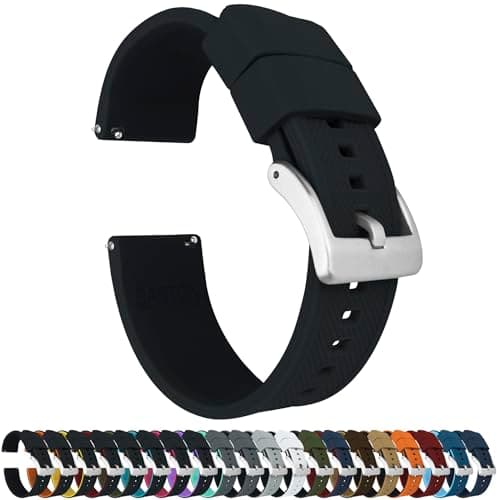
A dive watch is only as trustworthy as what holds it to your wrist. Water resistance is about the case; staying on your arm is about the strap. For anything that genuinely gets wet — swimming, snorkelling, diving, or just a summer of the pool — there are exactly two right answers: rubber or single-pass nylon. Everything else is a compromise, and leather is not a compromise, it is a mistake.
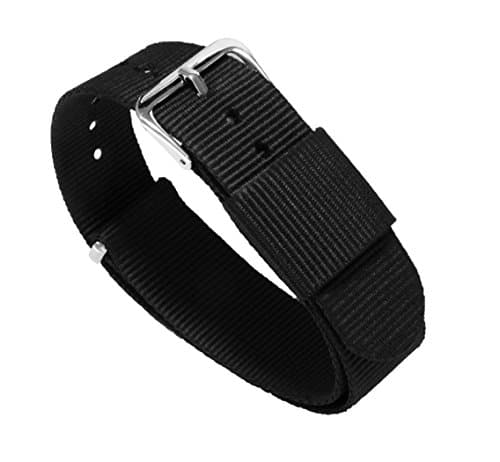
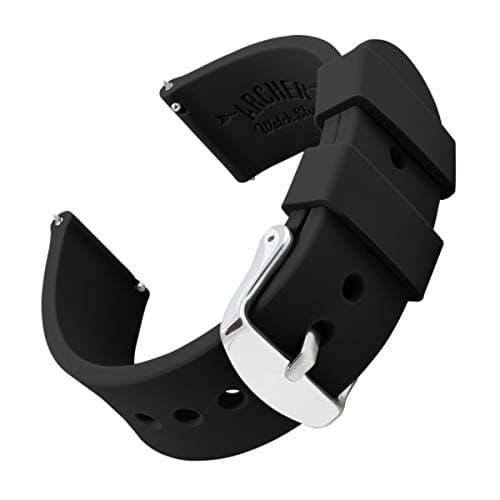
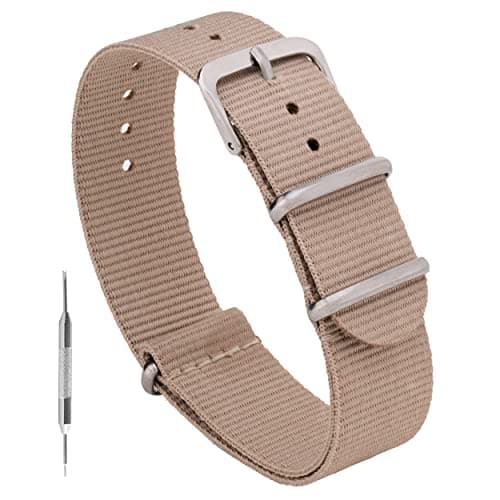
The two materials solve different problems. Rubber is genuinely waterproof, rinses clean, dries instantly and grips a wet wrist. Single-pass nylon — the NATO design — threads under the caseback so that if a spring bar fails, the watch is still captured on the strap rather than falling to the bottom. That failure mode is rare, but it is the reason the design exists and the reason military divers used it.
Our pick for most people is the Barton Elite Silicone: waterproof, soft, quick-release, and made in every width a dive watch uses. If your priority is the security of a pass-through strap, the Barton Ballistic Nylon is the one to buy.
Why single-pass nylon is genuinely safer
A conventional two-piece strap attaches to each side of the watch with a spring bar. If one spring bar fails, the watch falls off. A single-pass NATO threads through both lug gaps and runs underneath the caseback in one continuous piece — if a spring bar lets go, the strap is still threaded through the other side and the watch stays on your wrist. That is the entire design rationale, and it is why NATO straps are associated with military and dive use rather than fashion.
Rubber's advantage: it does not hold water
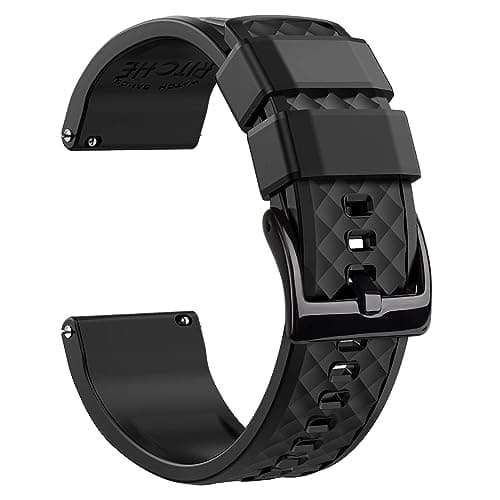
Nylon dries quickly but it does hold water while you are wearing it, which on a long day means a damp wrist. Rubber holds none. For pool and beach use — and especially for salt water — rubber is the more comfortable and more hygienic choice, and it takes a rinse better than any woven strap. If you are choosing purely on wet comfort, buy rubber — and if you want the pattern divers wore in the 1960s, the tropic and waffle straps are the perforated rubber originals.
What about a dive extension?
Proper dive straps include an extension so the watch fits over a wetsuit sleeve. None of the straps here are wetsuit-extension straps, and we are saying that plainly: these are the right straps for swimming, snorkelling and everyday water, and for recreational diving over bare skin. If you dive in a thick suit you need a dedicated extension strap or a bracelet with a diver's ratcheting clasp, and that is a different purchase.
Never leather, and here is why
Water breaks down the tanning and the adhesives in a leather strap. It will stretch, then stiffen, then crack, and it will smell long before it fails. This is not snobbery — a good leather strap is one of the best purchases in watches, and putting it in a pool wastes it. Keep leather for dry days and swap to rubber in seconds with quick-release bars.
Salt water care
Rinse the watch and strap in fresh water after every sea swim — including working the bezel under the tap, because salt crystals are what make a bezel grind. Nylon should be dried fully before storage or it will smell. Rubber needs nothing beyond the rinse. Do this and the strap outlasts the watch.
Get the width right first
Most dive watches are 22mm — every Seiko diver on this site, the Casio Duro and the Orient Kamasu included. The Citizen Promaster and Invicta Pro Diver are 20mm. Check the spec table on the watch page, or use the lug width chart before you order.
How we picked
We do not run a testing lab
We compiled the published manufacturer specifications for every watch here — case size, lug-to-lug, lug width, water resistance, movement and crystal — did the wrist-fit and value math, and scored each pick against a published rubric. The scores are judgments from documented research — they are not measurements we took or wrist-time we logged, because we do not have these watches and we are not going to pretend we do. Where a spec could not be verified we wrote "data unavailable" rather than guessing.