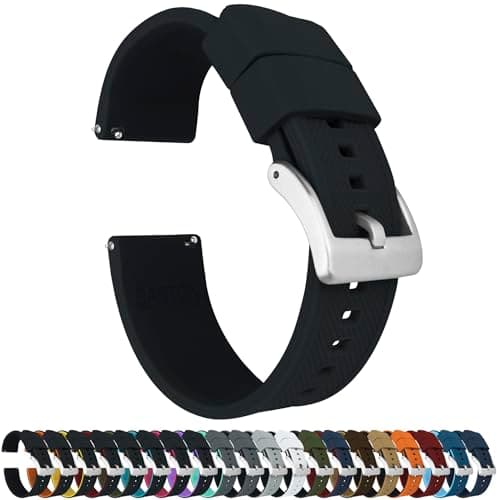
Summer is hard on watch straps for three reasons, and only one of them is water. Sweat soaks into anything absorbent and stays there. Sunscreen contains oils and chemicals that break down leather faster than almost anything else you will put on your wrist. And heat makes any strap that does not breathe genuinely uncomfortable within an hour.
The answer is to keep a summer strap and swap to it, which with quick-release bars takes about ten seconds. There is no single right material — it depends on whether your summer involves the pool (rubber), long hot days (nylon), or hiking and outdoor work (canvas). All three are ranked below.
If you buy one strap, make it the Barton Elite Silicone: it is waterproof, soft, and you can rinse the entire summer off it under a tap. If you would rather have something breathable that never feels sticky, the Barton Ballistic Nylon is the better pick and costs less.
The sunscreen problem nobody mentions
Sunscreen is the single worst thing you can get on a leather strap. The oils soak into the grain, the chemicals attack the finish, and the result is a strap that goes dark, stiff and smells within one holiday. It also marks light-colored rubber. The practical fix is to put sunscreen on first, let it absorb, then put the watch on — and to keep leather off your wrist entirely on beach days.
Nylon versus rubber in heat
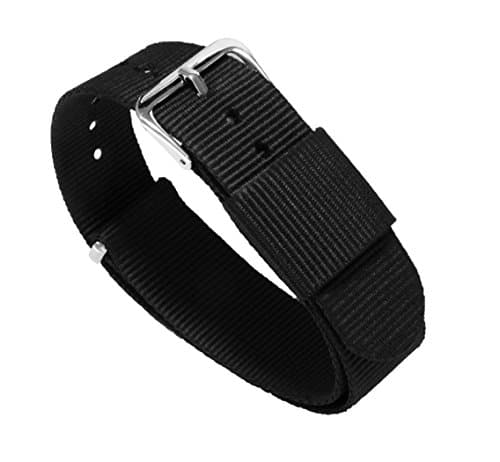
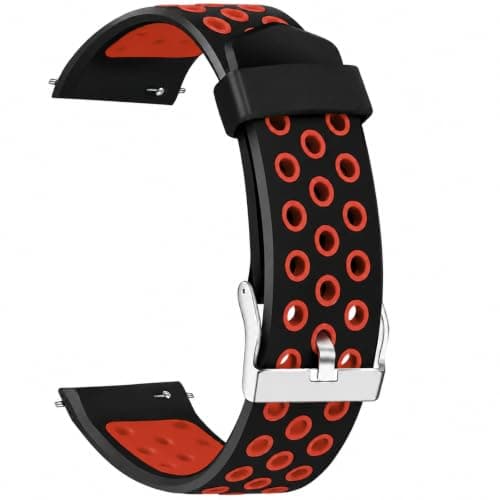
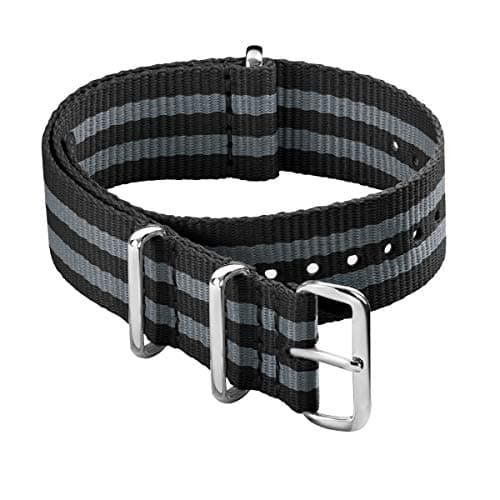
Nylon breathes: air moves through the weave, so your wrist stays cooler and the strap does not trap sweat against skin. Rubber does not breathe, but it is completely non-absorbent, so nothing soaks in and it rinses clean in seconds. The rule of thumb: choose nylon for dry heat and long days, rubber for anything involving water. If your summer is humid, nylon is usually the more comfortable of the two — and the most comfortable nylon of all in heat is a perlon, whose open braid breathes better than a NATO and adjusts as your wrist swells.
Where canvas fits
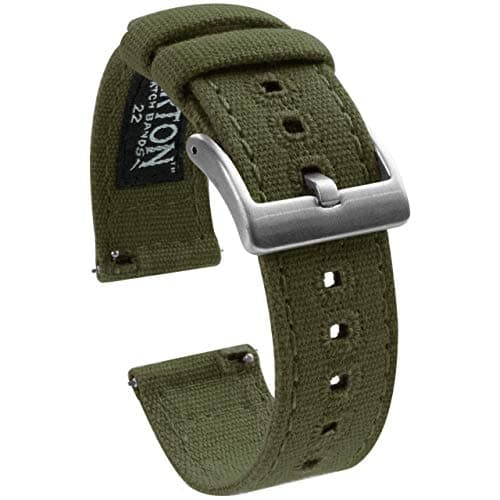
Canvas is the outdoors answer — heavier and more structured than nylon, with a look that suits a field watch far better than either alternative. It breathes well and it survives abuse. What it does not do is dry quickly, so it is the wrong strap for swimming and the right one for a hot hike. The Barton canvas strap here is also one of the few made in odd widths (19, 21 and 23mm). If you want the fabric look on a watch that does go in the water, a rubber-lined sailcloth strap is the answer — the leather-lined ones are not.
Why the color matters more in summer
A light-colored strap genuinely runs cooler in direct sun than a black one, and it also hides salt and sunscreen residue better. The trade-off is that light nylon and light rubber both show dirt faster. Gray, khaki and navy are the practical middle ground, which is why they dominate the summer colorways every brand sells.
The five-second swap that makes this work
None of this is worth doing if changing a strap is a chore. Quick-release bars — a small lever on the underside of the strap — let you swap without tools and without scratching the lugs, and four of the five picks here have them. That is what turns "I should really change my strap" into something you actually do in June and reverse in September. See how to change a watch strap if you have not done it before.
Sizing
Check your lug width before ordering — the gap between the lugs, in millimeters. Most divers are 22mm and most field watches 20mm, and the lug width chart lists dozens of specific models. Summer straps are cheap enough to buy two colors; they are not cheap enough to buy the wrong size twice.