A rubber strap is the most practical thing you can put on a watch. It is waterproof, it does not care about sweat, it rinses clean under a tap, and it costs less than a decent lunch. If you swim, work out, live somewhere hot, or simply do not want to think about your watch, this is the material — and modern silicone is soft enough that you can wear it all day without noticing.
The four picks below all use quick-release spring bars: a tiny lever on the underside that lets you fit or remove the strap in seconds with no tools and no scratched lugs. That feature is the difference between changing straps on a whim and changing them never, and at this price there is no reason to buy a rubber strap without it.
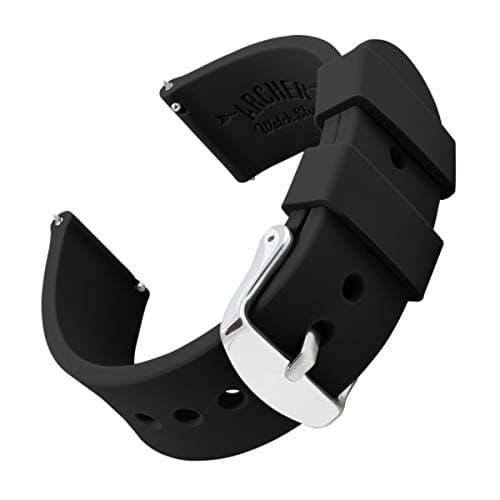
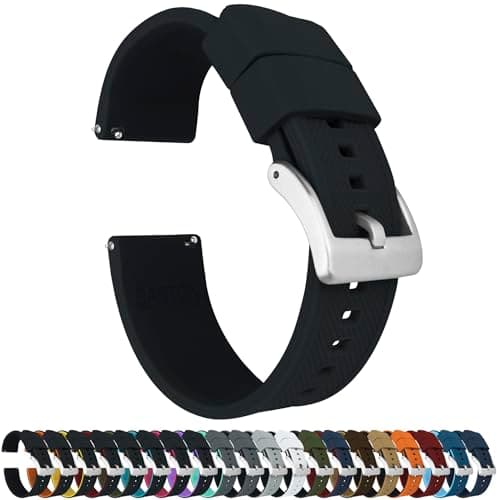
Before anything else, get the width right. Measure the gap between your lugs in millimeters or look your model up in the lug width chart — most divers are 22mm, most field watches 20mm. The Barton Elite Silicone is the all-round pick; the Archer is the softest and the only one here made in 19 and 21mm.
Silicone, FKM and "rubber": what the words mean
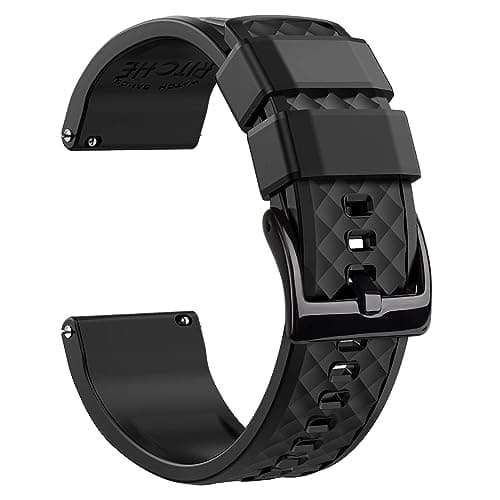
Almost everything sold as a rubber watch strap at this price is silicone — a soft, flexible synthetic that is waterproof, hypoallergenic for most people, and cheap to mold in any color. FKM (fluoroelastomer) is the premium alternative used on high-end dive straps: firmer, denser, far more resistant to UV, chemicals and heat, and several times the price. For a watch you swim and sweat in, silicone is genuinely enough. FKM is what you buy when a strap has to survive salt water and sun for years — and the classic dive patterns in FKM, the tropic and the waffle, have their own ranking at best tropic and waffle straps.
The lint problem, and how to solve it
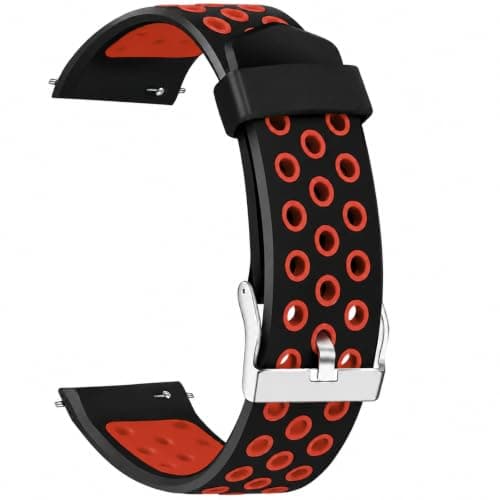
Every silicone strap attracts dust and lint — it is a property of the material, not a defect in any particular brand. The fix takes ten seconds: rinse it under warm water and wipe it with a damp cloth. Straps with a textured rather than glossy surface (the Vetoo here) show it less. Anyone claiming their silicone strap does not attract lint has not worn one.
Soft versus firm compounds
This is the real difference between the picks. Softer silicone (Archer, Barton Elite) feels better against skin immediately and drapes around the wrist rather than standing off it. Firmer silicone (the budget end) is more durable and holds its shape, but takes weeks to break in and can feel plasticky at first. If you are buying one rubber strap to live on a watch you love, spend the extra few dollars on the softer compound.
Watch out for the widths that are not made
The most common ordering mistake is assuming every brand makes every size. They do not. Vetoo stops at 22mm, so a 24mm diver is out. Archer is the only pick here that makes 19mm and 21mm, which matters if you own an Orient Bambino (21mm) or certain Tissot and Longines references. Check the widths column above before you order, not after.
Rubber on a leather-strap watch
Do it. A rubber strap on a dress-leaning automatic looks far better than most people expect and turns a fragile watch into a summer one. The reverse is also worth knowing: a leather strap on a diver in July is how you ruin a leather strap. Keeping one rubber and one leather strap for the same watch is the cheapest way to double a collection — see the leather picks for the other half.
Care, briefly
Rinse in fresh water after salt water or chlorine, dry it before you put it away, and keep it out of prolonged direct sun when you are not wearing it — UV is what eventually hardens silicone. Do that and a good rubber strap outlasts several leather ones.
How we picked
We do not run a testing lab
We compiled the published manufacturer specifications for every watch here — case size, lug-to-lug, lug width, water resistance, movement and crystal — did the wrist-fit and value math, and scored each pick against a published rubric. The scores are judgments from documented research — they are not measurements we took or wrist-time we logged, because we do not have these watches and we are not going to pretend we do. Where a spec could not be verified we wrote "data unavailable" rather than guessing.