There are only two questions that matter when you buy a strap: what is it made of, and how does it attach? Everything else — color, stitching, buckle finish — is decoration. This page answers both questions for every strap type you are likely to meet, so you can read a listing and know exactly what you are getting.
Before any of it, get the lug width right. It is the gap between the lugs in millimeters, it is almost always an even number, and a strap that is 1mm off simply will not fit. Measure it with a ruler or look your watch up in the lug width chart.
Construction: how a strap attaches
Two-piece. The classic arrangement: a separate piece on each side of the watch, each held by a spring bar. Sits the watch flat against your wrist and slides under a cuff most easily. If a spring bar fails, the watch falls off.
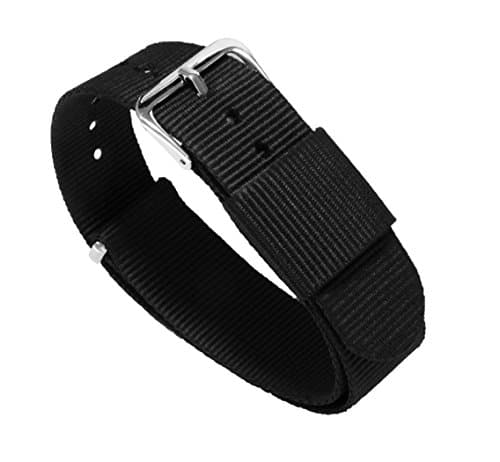
NATO (single-pass). One continuous strip threaded through both lug gaps and under the caseback, with a second short keeper strip. Because the strap passes under the watch, a failed spring bar cannot drop it. Sits a couple of millimeters higher and reads casual. Needs no tools at all.
Zulu. A heavier-duty NATO variant, usually thicker nylon with rounded rather than squared hardware and typically fewer keepers. Tougher, bulkier, and a favorite on large divers.
Quick-release. Not a strap type but a fitting: a tiny lever on the spring bar that lets you fit or remove a two-piece strap in seconds with no tools and no scratched lugs. It is worth a few dollars on every strap you buy, and it is the single feature that determines whether you actually swap straps or merely intend to.
Materials
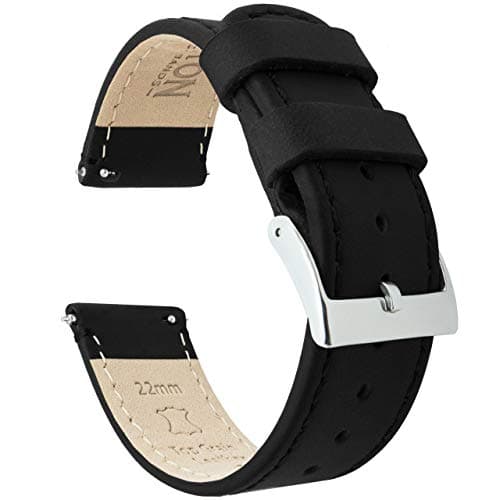
Leather. The dressiest option and the most comfortable once broken in. Grades matter: full-grain is the top layer of the hide and ages best; top-grain is sanded and more uniform; genuine leather is a legal term for the lowest usable grade and is usually bonded scraps. Specialty tannages worth knowing: Horween (a well-regarded US tannery) and crazy horse (an oiled finish designed to scuff and patina). Leather hates water.
Ballistic nylon. Tough, washable, cheap, available in every color, and the standard NATO material. Breathes well in heat. The default practical strap.
Seatbelt nylon. A tighter, smoother weave than ballistic — a little dressier and slicker to the touch, usually a little pricier.
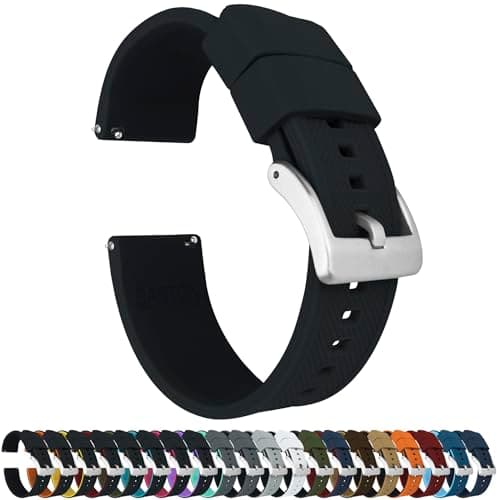
Silicone and rubber. Waterproof, washable, the correct answer for anything wet. Soft compounds are more comfortable; firmer ones last longer. Attracts lint, always.
FKM rubber. The premium dive-strap material — denser than silicone and far more resistant to UV, heat and chemicals. Several times the price and worth it only if a strap will live in sun and salt water.
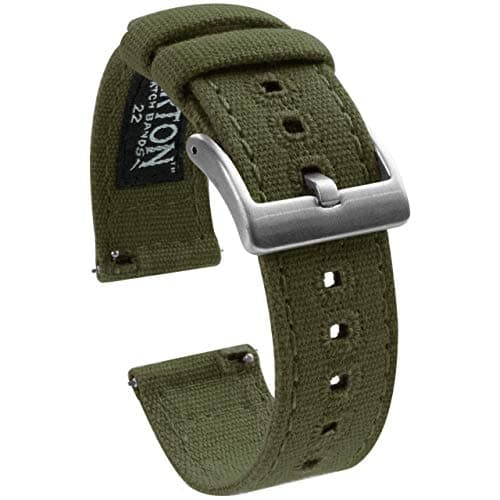
Canvas. Structured cotton weave, usually embroidered for strength. The right look for a field watch, breathes well, and takes abuse — but holds moisture and dries slowly, so not a swimming strap.
Sailcloth. A stiff, dense weave (or an embossed synthetic) with the texture of a yacht sail, over a leather or rubber lining — the dress strap for a diver. The lining is the whole decision: rubber-lined sailcloth can be swum in, leather-lined cannot. Ranked by lining on our best sailcloth straps page.
Perlon. A woven synthetic mesh, extremely light and breathable, fastened by a pin through the weave rather than into punched holes — which means infinite adjustment rather than fixed sizes. Excellent in heat, and the answer if a strap is always half a hole out. Ranked on our best perlon straps page.
Steel mesh (Milanese) and bracelets. Metal is technically a bracelet rather than a strap. Mesh is comfortable and breathable, adjusts continuously instead of by punched holes, and comes in two very different weaves — the fine Milanese kind and the coarse shark mesh; our best mesh and Milanese straps ranks both. A solid-link bracelet is the dressiest and heaviest option and is sized by removing links rather than by a buckle — our best watch bracelets ranking covers end-link fit, clasps and how to size one.
Which type for which watch
Dive watch: rubber or a single-pass NATO. Both handle water, and the NATO adds the fail-safe. See the dive strap picks.
Field watch: canvas, ballistic nylon or a rugged oiled leather — all three suit it, which is why the field watch is the best strap-swapping watch made.
Dress watch: smooth full-grain or top-grain leather in a dark color, on a two-piece fitting so it sits flat under a cuff.
Chronograph or pilot watch: leather or a heavier nylon. Watch out for integrated cases — several pilot watches cannot take a standard strap at all.
The three-strap rotation
One watch and three straps is a complete collection and costs less than a second watch: a leather for the office, a NATO or canvas for the weekend, and a rubber for summer and water. Buy all three in your lug width with quick-release fittings and you have three watches for the price of one strap drawer — and because each one gets days off to dry, all three last longer than any single strap worn daily would. See how long watch straps last for the numbers by material, and how to clean a watch strap for the method that gets you there — including the one material that must never be soaked.
Hardware, and why it shows
Buckles and keepers are the visible metal on a strap, and cheap hardware undoes an otherwise good strap instantly. Brushed 316L stainless is the safe default: it matches most watch cases and does not look plated. Polished chrome-finish hardware on a tool watch is the fastest way to make it look cheap.
Length, and the sizing nobody checks
Straps come in standard and long lengths, usually quoted as two figures (the strap side and the buckle side, in millimeters). If you are consistently on the last hole, buy the long version rather than a wider strap. Perlon sidesteps this entirely because the pin goes through the weave anywhere. See how to measure a watch strap.
Tapered or straight?
A tapered strap is wider at the lugs than at the buckle — 22mm down to 20mm, say. It looks more considered and sits better on a slimmer wrist. A straight strap is the same width throughout and reads more utilitarian, which suits a field watch or a NATO. Neither is better; just know that the number in the listing is always the lug end.
And then the colour
Construction decides what the strap does; colour decides what the watch looks like. Once you have picked a material, the shortest route to the right shade is what colour watch strap goes with everything, which works dial by dial and ends with a three-strap set that covers every occasion.