Spend any time in watch forums and you will be told that FKM is the only rubber worth buying. It is a genuinely better material than silicone in several measurable ways. It is also several times the price, sold by a much smaller set of makers, and often unavailable in the width you need — which is why this page compares the two honestly and then ranks what you can actually buy today.
FKM is a fluoroelastomer — a synthetic rubber originally developed for seals in aerospace and chemical plant, where it has to survive fuel, solvents and heat. Silicone is a different synthetic rubber entirely, softer and far cheaper to mold, and it is what almost every affordable "rubber" watch strap is actually made of, whatever the listing says.
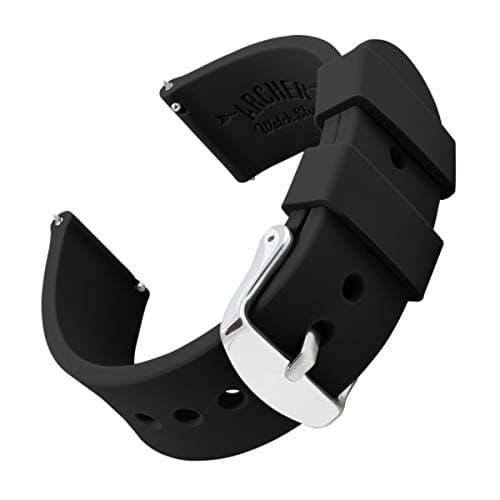
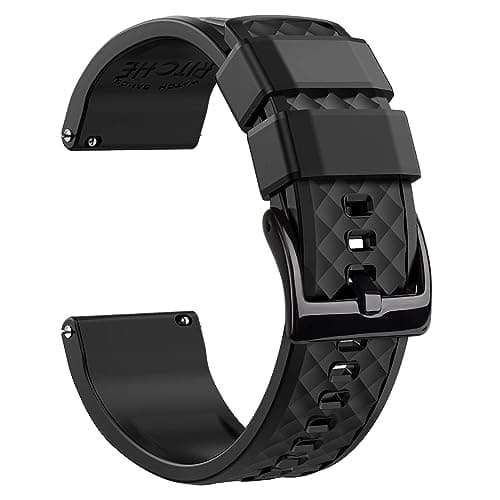
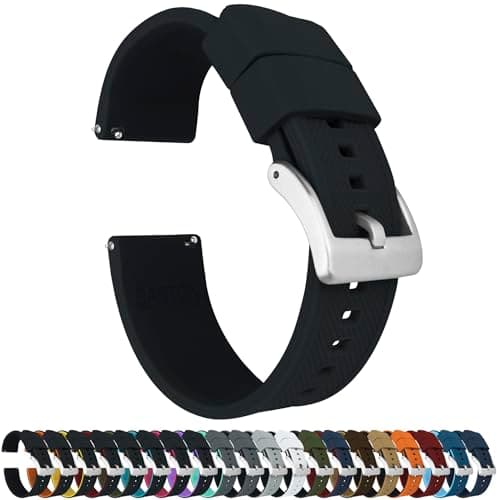
To be clear about what is below: the three straps we rank here are silicone, not FKM. We rank only products we can verify, and at this price the verified straps are silicone. FKM straps we can stand behind do now exist on our retail partner at a higher price — the tropic and waffle patterns — and they are ranked on our best tropic and waffle straps page. Read this page first to know exactly what the premium buys.
The dust problem is the difference you will notice first
Silicone attracts lint and dust. It is a surface-energy property of the material rather than a manufacturing fault, which is why every silicone strap does it and no amount of money fixes it — a black silicone strap in a pocket picks up whatever is in that pocket. FKM has a denser, less tacky surface and stays visibly cleaner. If you have owned a silicone strap and been annoyed by exactly this, that annoyance is the single strongest argument for FKM.
Chemical and heat resistance
This is what FKM was invented for. Fluoroelastomers resist oils, fuels, solvents and sustained heat far better than silicone does, which is why they are used for seals in engines and chemical handling. On a wrist that translates into a strap that shrugs off sunscreen, insect repellent and chlorine — the three things that degrade a cheap rubber strap fastest. Silicone tolerates all three but does not love them.
Feel and flexibility
Silicone wins here for a lot of people, and it is worth saying so. It is softer, more flexible and more immediately comfortable, particularly in cold weather where FKM can feel stiff until it warms up. FKM feels denser and more substantial, closer to the rubber straps fitted to expensive dive watches. Neither is objectively better; they are different textures at different prices.
Durability, and how long each actually lasts
Both outlast leather by a wide margin in water and sweat, which is the reason to buy either one. FKM lasts longer under chemical attack and UV exposure; silicone will eventually go slightly tacky or lose a little elasticity after years of hard sun and chlorine. In practice, a twenty-dollar silicone strap replaced every few years costs less than one FKM strap and does the same job for most people.
The PFAS question, answered honestly
FKM is a fluoropolymer, so it belongs to the broad chemical family that PFAS regulation concerns itself with, and that has generated real discussion among watch buyers. What we can say honestly is limited: we are not a materials laboratory, we have not tested any strap, and we are not going to make a safety claim in either direction that we cannot support. If this matters to you, our guide to silicone watch band safety sets out what the primary sources actually say and where the genuine uncertainty lies.
What to buy, practically
If you want a waterproof strap today, in a standard width, for around twenty dollars, buy silicone — the three below are the ones we would put on a watch we cared about, and the Archer covers odd widths like 19mm and 21mm that almost nothing else does. If the dust attraction genuinely bothers you, or the strap will live in sunscreen and chlorine, FKM is worth seeking out from a specialist maker and paying several times as much for.