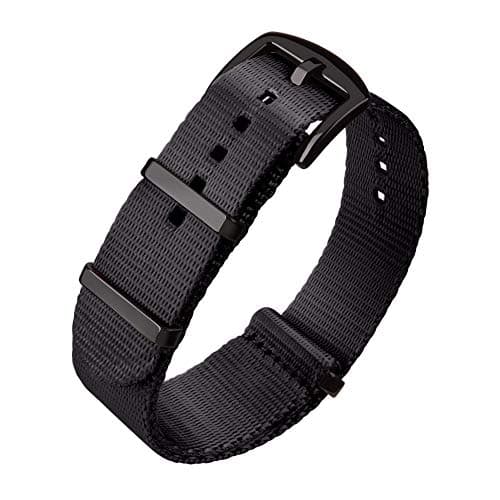
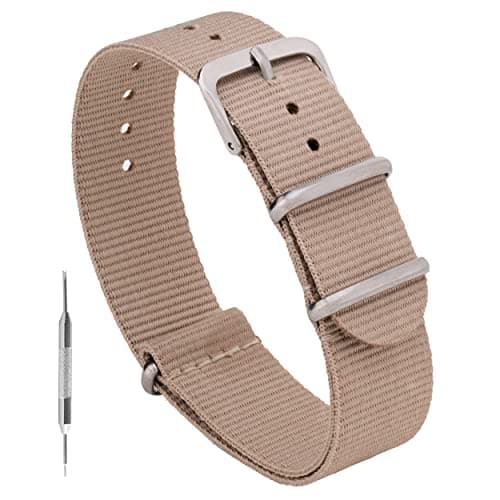
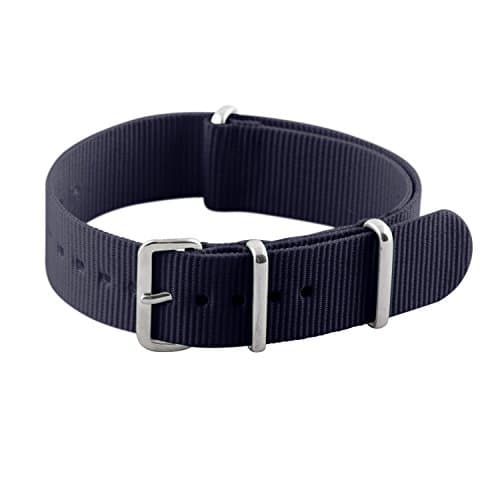
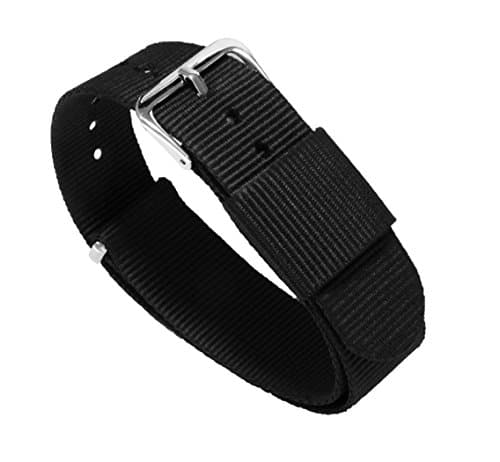
A NATO and a Zulu are both nylon straps that pass underneath the watch, and at a glance they are the same thing. The differences are in the hardware and the weight: a NATO uses flat, thin rectangular hardware and has a second short strap sewn on that folds back over the tail; a Zulu uses thick, rounded hardware, heavier webbing, and typically no second layer.
That is genuinely most of it. Which you want comes down to how heavy the watch is, whether you mind the extra height under the caseback, and how you feel about the folded tail that NATOs are known for.
There is also a third option that a lot of buyers end up preferring once they know it exists: the single-pass strap, which keeps the security of the pass-through design without the extra layer of nylon under the watch. We cover it below.
What both designs share, and why it matters
Both pass through both spring bars and underneath the caseback, so the watch is held twice over. If one spring bar fails, the watch slides along the strap instead of falling off your wrist. That is the reason the design exists — it was issued for exactly this — and it is the single best argument for a nylon pass-through strap on any watch you actually care about.
Both are also washable, dry quickly, cost very little and come in every color there is. Neither is meaningfully better than the other in the water.
The hardware, which is the real difference
NATO hardware is flat and rectangular, usually thin brushed or polished steel. It sits low against the wrist and reads as understated, and it is the correct look on a smaller or dressier watch.
Zulu hardware is round in section and considerably chunkier — the rings look like heavy loops rather than flat buckles. It reads as more rugged, it stands up to rougher use, and on a large dive watch it is proportionate in a way NATO hardware sometimes is not. It is also heavier, which some people like and others notice all day.
The extra keeper — the thing people actually argue about
A classic NATO has a second, shorter piece of nylon sewn near the buckle that the tail folds back through. It exists so the loose end is secured, and it is why a NATO has that double-layer look under the caseback. It also adds height, and it means the watch sits a little further off your wrist.
On a slim field watch that is a non-issue. On a tall dive watch — the Seiko Turtle is the usual example — it can push an already-high watch to the point of catching on cuffs. That is the practical reason people move to Zulus or single-pass straps, rather than any aesthetic argument.
The single-pass option
A single-pass strap has no second layer at all: one piece of nylon goes through both spring bars, under the caseback, and buckles. You get the full security of the pass-through design and the lowest possible profile. The trade is that you have to remove the strap entirely to change it, and there is no second keeper to secure the tail.
For most people with a modern, chunky watch, this is the one to buy. It is the design that solves the actual complaint about NATOs without giving up what makes them worth wearing.
Which to buy for which watch
For a field watch or anything under about 40mm, a standard NATO looks right and the extra height does not matter. For a large diver, either a Zulu — whose heavier hardware suits the case — or a single-pass strap, whichever profile you prefer. For a dress watch, neither: nylon is a casual material and no hardware choice changes that.
Whatever you choose, get the width right first. Most divers take 22mm and most field watches 20mm; our lug width chart has the figure for dozens of models.