A watch strap is a consumable and a watch is not, which is the single most useful thing to understand about owning one. The range is wide: a leather strap worn every day in a hot climate can be finished inside a year, while a solid-link steel bracelet will comfortably outlive the watch it came on. Everything else sits between those two, and the variable that moves the number most is not quality — it is how often the strap gets wet.
Nobody publishes a lifespan figure for a strap, and anyone who gives you an exact one is guessing. What follows is a realistic ordering by material, the specific component that fails in each, and the four signs that mean the strap is done. Where a maker publishes a relevant specification — thickness, hardware grade, construction — we have quoted it, because those are the figures that actually predict wear.
By material, longest to shortest
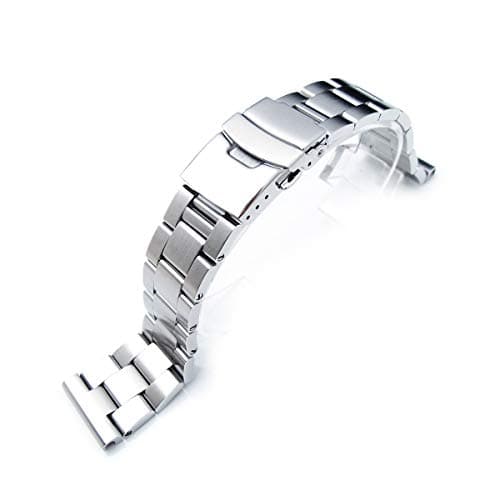
Steel — effectively indefinite. A solid-link 316L bracelet has nothing in it to perish. What wears is the clasp and, on cheap bracelets, the friction pins holding the links. This is why the screw-fixed construction on the MiLTAT Boyer matters: screws can be removed and replaced, friction pins deform. A woven mesh strap is similar, with the sliding or folding clasp as the component that eventually loosens.
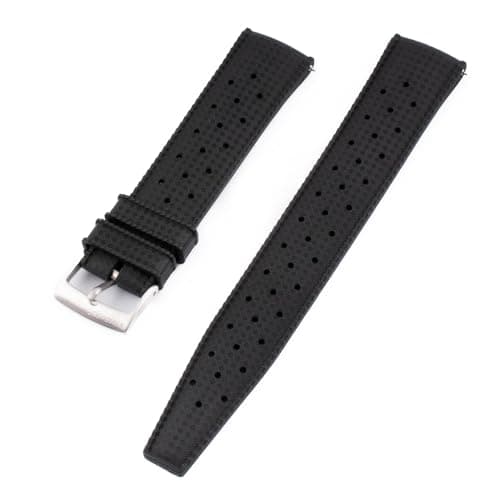
FKM rubber — years, and the best of the flexible materials. Fluoroelastomer is the compound makers reach for precisely because it does not go tacky in heat, does not take on odour and resists sunscreen and salt. What eventually gets it is UV and ozone over a long time, plus the spring-bar holes stretching. The StrapHabit tropic here is the best-documented example — genuine FKM, 3 to 5mm thick, 316L hardware — and thickness is the specification that most predicts how long a rubber strap stays serviceable.
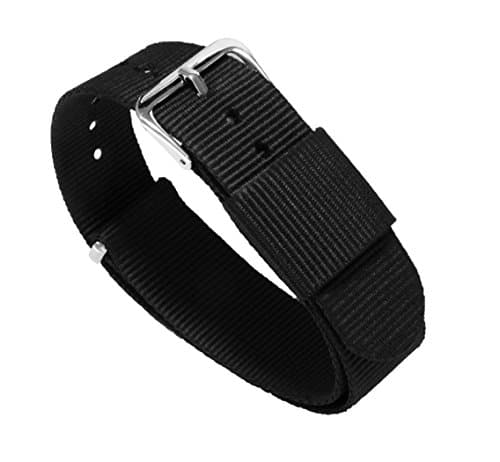
Nylon — years, for pennies. Ballistic nylon is extremely tough and takes water, sweat and washing indefinitely. What fails is not the weave: it is the buckle hole you use every day, which elongates and eventually tears, and the stitching at the keepers. The honest point is that at the price of a NATO this barely matters — it is the one strap material you can treat as genuinely disposable.
Silicone — a year or several, depending on compound. Softer silicone is more comfortable and wears faster; it picks up lint, can hold odour, and over time can go slightly tacky or chalky. Replace it when that starts; it does not reverse.
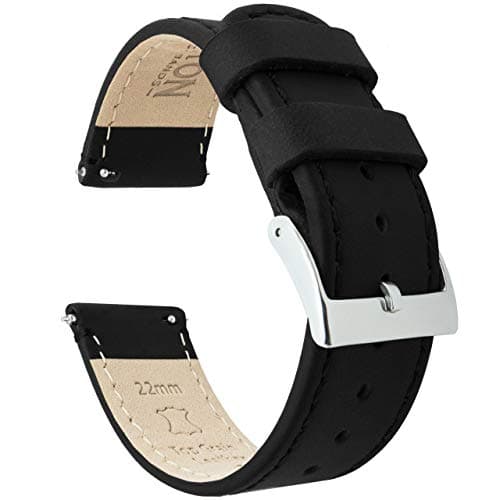
Leather — the shortest, and the most variable. Daily wear in a warm climate, with sweat, is hard on leather, and a cheap thin strap can be stiff and cracked at the fold inside a year. A better hide, worn in rotation and kept out of water, lasts several. Leather is the only material on this page that is damaged by normal use rather than merely aged by it.
The four signs it is time to replace
1. The spring-bar hole has elongated. This is the failure that actually drops a watch. On leather and nylon, the hole the spring bar passes through widens with use; once it is oval rather than round, the strap can release the bar under load. Check it whenever you change the strap — it is the one inspection worth making a habit.
2. Cracking at the fold. On leather, the bend where the strap comes off the lug and turns down the wrist is where the hide dries, hardens and splits. Once a crack is visible there, the strap is on a countdown and conditioner only slows it.
3. The buckle hole has torn or gone oval. Everyone wears a strap on the same hole, and that hole takes the load every single day. An elongated hole means a watch that slides, and a torn one means a watch on the floor.
4. The surface has changed. Rubber going tacky or chalky, silicone developing a permanent film, nylon fraying at the cut ends, steel with a clasp that no longer clicks shut with authority. None of these recovers.
What actually shortens a strap's life
Water, on the wrong material. This is the dominant factor. Leather and canvas absorb; nylon, rubber and steel do not. Chlorine, salt and sunscreen are the three specific aggressors, and the fix for all of them is a same-day fresh-water rinse — covered properly in how to clean a watch strap.
Heat and UV. A car dashboard, a radiator, a hairdryer. Leather cracks, rubber hardens, dyed nylon fades. Nothing on this page should be dried with heat.
Wearing one strap every day. Boring but true: a strap that gets a day off to dry out lasts substantially longer than one worn continuously, and a leather strap worn in rotation with a rubber one can last several times as long as the same strap worn daily. This is the real argument for owning two or three quick-release straps rather than one — rotation is cheaper than replacement.
Wearing it too tight. A strap compressed against skin all day cannot breathe or dry, and it takes the load on one hole permanently. Fit guidance is here.
Is a more expensive strap a longer-lasting strap?
Within a material, usually yes, and the mechanism is specific rather than vague. A thicker rubber strap has more material between you and the spring bar. A screw-adjusted bracelet can be taken apart and reassembled where a friction-pin one degrades every time. A 316L buckle does not corrode where a plated one does. Hardware grade and published thickness are the two specifications that predict lifespan, which is why the pages on this site keep quoting them.
Across materials, no. A forty-dollar leather strap worn daily in the heat will be finished long before a twelve-dollar nylon one. If longevity is what you are optimising for, buy the right material first and worry about the grade second.
The sensible strategy
Own a steel bracelet or an FKM rubber strap as the one that never needs thinking about, and a cheap nylon strap as the one you treat as disposable. Keep leather for the days the watch stays dry, buy it on quick-release bars so swapping is frictionless, and accept that it is the one piece you will replace periodically. That rotation costs less than a single mid-range strap and every piece in it lasts longer for being part of it.