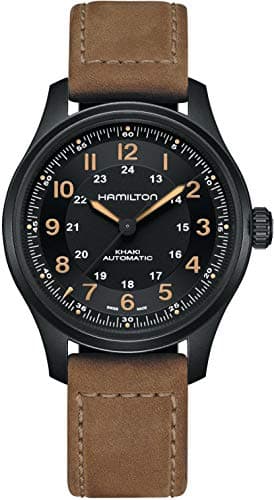
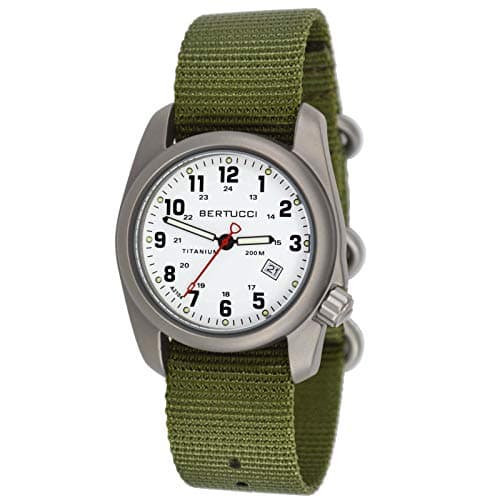
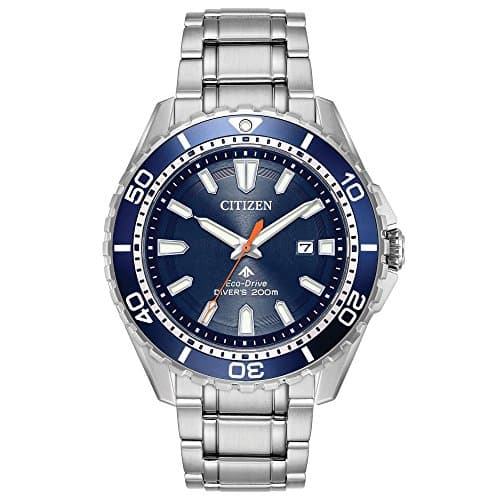
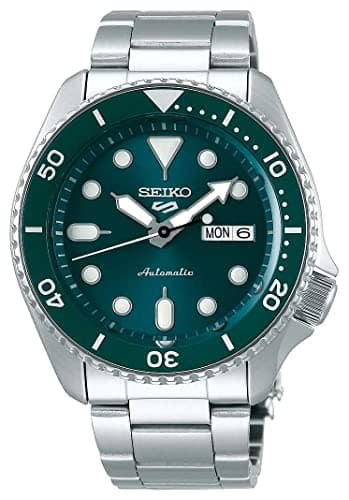
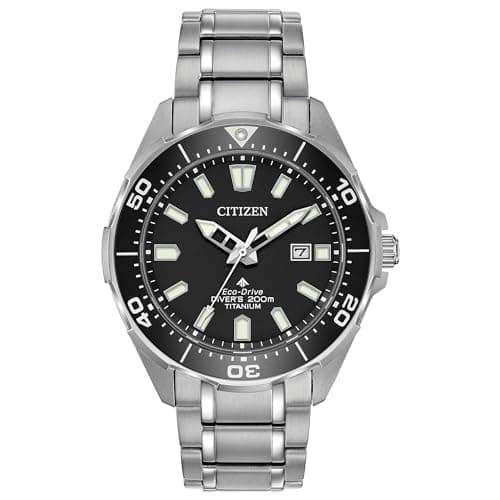
Almost every titanium-versus-steel article compares two different watches and then credits the difference to the metal. We can do better than that here, because Citizen sells the same diver in both: the BN0200-56E in Super Titanium and the BN0191 in stainless steel. Same E168 Eco-Drive, same 200m ISO-compliant rating, same mineral crystal, same 22mm lug width, same screw-down crown. Change the metal and nothing else, and the comparison finally means something.
What follows is built from published material datasheets and from Citizen's and Hamilton's own specification pages — not from wrist time. We do not own these watches, and where a figure is a manufacturer's marketing claim rather than an independent measurement, we say which it is. That is the method described on how we review.
The order we judged this in: weight (the only difference everyone agrees on), how each metal ages (where the popular story is backwards), skin contact and nickel (the reason some people have no choice), appearance, and finally price, because titanium is a premium and it is worth knowing what you are buying with it.
Weight: the difference is real and it is large
This is the one claim that holds up without qualification. Published datasheets put the density of commercially pure grade 2 titanium at 4.51 g/cm³ and 316L stainless steel at about 8.00 g/cm³. For an identical case and bracelet, that is roughly a 44% reduction in mass. Citizen's own marketing figure for Super Titanium is "40% lighter than stainless steel," which is the same claim rounded conservatively.
Worth a small honesty note: Citizen is not consistent about it. Some of its own pages say Super Titanium is around half the weight of stainless steel, while others say 40% lighter. The datasheet arithmetic lands between the two, closer to the 40% figure, so that is the number we use.
What that buys you in practice is a big watch you can forget about. The Hamilton Khaki Field Titanium is a 42mm automatic that wears like a much smaller one, and the Citizen Promaster titanium diver is a 44mm ISO diver that stops announcing itself by lunchtime. If a steel diver has ever slid around your wrist or left a dent in your forearm, this is the fix — and note what it does not fix: footprint. A 44mm titanium watch still covers 44mm of wrist. Weight and size are separate problems, and only one of them is solved here. The other one is solved on best dive watches for small wrists.
Scratches: the popular story is backwards
You will read that titanium is tougher than steel. As a bulk structural material that is a fair statement about strength-to-weight. As a statement about the surface of your watch case it is wrong: untreated titanium scuffs and galls more readily than hardened stainless, and it picks up marks on edges and bracelet links faster. The registry entries above say so — the Hamilton's honest con is exactly this.
This is why Citizen does not sell untreated titanium at all. Its Super Titanium is surface-hardened with a proprietary treatment the company calls Duratect, and Citizen's published claim is that the result is five times harder than stainless steel. That is a manufacturer claim and we have found no independent testing of it, so treat it as directional rather than a measurement — but the direction is the point: treated titanium is a different proposition from raw titanium, and it is the main reason Citizen's titanium watches earn their premium where some others do not.
The practical read-across. A steel case is the predictable one: it will collect hairlines, and a watchmaker can refinish brushed steel at a bench for modest money. Untreated titanium marks sooner and is harder to refinish cleanly, because the gray oxide surface is part of the look. Surface-treated titanium like Citizen's is the most scratch-resistant of the three by its maker's claim, and the one you cannot have refinished at all if you do get through it. None of this touches the crystal, which is the part of a watch you actually scratch most — that question is sapphire vs mineral crystal, and both Citizens here use mineral.
Nickel, and the people who have no choice
316L — the stainless alloy watch cases are made from — is an austenitic steel alloyed with roughly 10 to 14% nickel according to the published datasheets. Nickel is one of the most common contact allergens there is, and a steel caseback against sweat all day is a fair test of it. Commercially pure titanium contains no nickel, which is why titanium is the standard recommendation for anyone whose wrist reacts to a steel watch.
Citizen makes a related point about its own process: it says the Duratect treatment also guards against nickel and metal allergies, because the processing of titanium can otherwise undermine the material's hypoallergenic behavior. Again, that is Citizen's claim about Citizen's product. If a reaction to steel is why you are reading this page, titanium is the answer and the specific treatment matters less than the base metal.
One claim we are not going to repeat
Titanium is often said to "wear warmer" than steel — to feel less cold on a winter morning. It is a widely reported owner impression and it may well be real, but we have not found a manufacturer specification or a published test that quantifies it for watch cases. So we are leaving it as an impression rather than listing it as a property. You are allowed to want it; just do not pay for it.
Appearance: gray and matte against bright and sharp
Titanium reads darker and grayer than steel, with a flatter, more matte surface even when brushed, and it takes a mirror polish much less convincingly. On a tool watch that is a feature — the Bertucci A-2T looks like equipment because it is gray, light and deliberately unfinished. On a dress watch it is usually a drawback, which is a large part of why the category stayed steel: a polished steel bezel and a sharp bevel catch light in a way titanium does not. If a bright, jewelry-like finish is what you want from the watch, steel is the correct metal and you can see the difference on our best affordable dress watches picks.
One more appearance point in titanium's favor on a bracelet watch: because the bracelet is so much lighter, it does not drag the case around your wrist as you move. The watch stays where you put it. That reads as better fit, and it is really just weight again.
Price: what the premium actually costs
Here is where the control pair earns its keep. The titanium BN0200-56E and the steel BN0191 are the same watch mechanically, and the titanium one sits in a higher price bracket. Street prices move, so we do not type them here — the figures on the cards above come from Amazon's API with a timestamp — but the shape of it is stable: you pay a real premium for the metal and you get no extra capability for it. Same movement, same rating, same crystal, same lugs.
That is the whole decision, stated plainly. Titanium is a comfort and skin-contact upgrade, not a performance upgrade. If the weight of a steel diver has never bothered you and steel has never irritated your wrist, the steel version is the better buy and the difference is better spent on a couple of good straps — which, on a 22mm diver, will change how the watch wears far more than the case metal does.
So which should you buy?
Choose titanium if the watch is 42mm or larger, if you wear one watch every day and all day, if you have ever reacted to a steel caseback, or if you want a genuine dive watch that disappears on the wrist. Prefer a surface-treated titanium like Citizen's if you are hard on watches.
Choose stainless steel if you want the lowest price for the specification, if you want a brighter and more formal finish, if you want the watch to be refinishable in ten years, or if you are buying something in the 38 to 40mm range where the weight was never a problem to begin with. For most buyers reading this site, that is still the right answer — which is why almost every pick on best dive watches under $500 is steel.
A note on the third metal you will see
Resin and carbon-composite cases — the Casio G-Shock approach — beat both metals on weight and shrug off impacts in a way neither does, at the cost of looking like what they are. If weight is your actual complaint and you do not need a metal watch, that is a cheaper solution than titanium and we rank those separately on best digital watches.