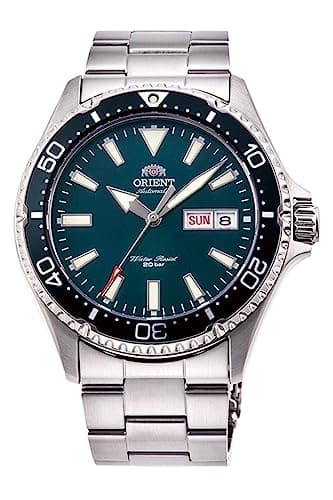
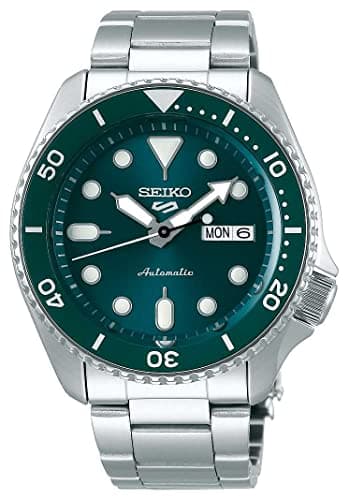
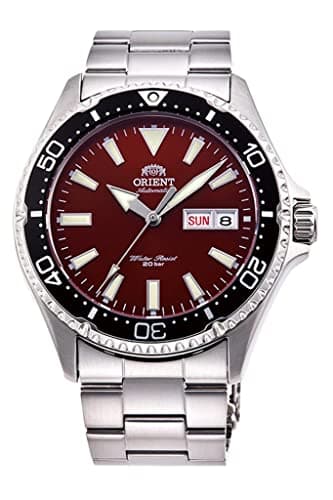
The Orient Kamasu is the watch we point people to when they say the words "best value dive watch" and mean it. It is a genuine 200-meter automatic diver with a screw-down crown, a unidirectional bezel, an in-house Japanese movement that hacks and hand-winds — and a sapphire crystal, which at this price is close to unheard of. It costs less than a Seiko 5 that has none of those things.
A note on what this review is and is not. We do not own this watch and we did not test it. What follows is built from Orient's published specifications, the aggregated pattern of owner reports, and the arithmetic of comparing it against its direct rivals — which is exactly the method described on how we review. Where we could not verify a figure, we say so rather than filling it in.
The verdict up front: the Kamasu is the diver to buy if you want the most capable watch for the money and you do not need the Seiko name on the dial. The two watches most people cross-shop it against are ranked alongside it below — the Orient Mako III, which is the same watch with a mineral crystal for less, and the Seiko 5 SRPD, which is the more famous watch with a worse spec sheet.
The sapphire crystal is the headline, and it deserves to be
Crystal is the part of a watch you scratch. Mineral glass and Seiko's Hardlex are hard enough to survive normal life but will eventually pick up hairlines from doorframes and desk edges. Sapphire is second only to diamond in practical hardness and simply does not scratch under normal use. It is the single durability upgrade you notice most over years of ownership, and it is the reason the Kamasu is worth the small premium over its own sibling, the Mako III, which is otherwise the same watch.
The F6922 movement, in plain terms
Orient — which is owned by Seiko Epson — builds its own movements, and the F6922 in the Kamasu does everything the equivalent Seiko 4R36 does. It hacks, meaning the seconds hand stops when you pull the crown so you can set the time precisely. It hand-winds, so you can start it without shaking it. It is an automatic, so wearing it keeps it running. There is no functional gap between this and the Seiko movement it competes with.
Size and fit
At 41.8mm across with a 46.8mm lug-to-lug, the Kamasu is one of the more wearable genuine divers on the market — noticeably more accommodating than the 45mm Seiko Prospex Turtle or the 44mm Casio Duro. If your wrist is around 6.5 inches this is close to the sweet spot. It uses a 22mm lug width, so it shares straps with almost every Seiko diver.
Where it genuinely falls short
Two places, and both are real. The bracelet and clasp are a clear step below Seiko's at the same price — the end links and the stamped clasp are where Orient saved the money that paid for the sapphire. Most owners swap the bracelet, which softens the criticism but does not remove it. Second, service and dealer support in the US is thinner than Seiko's. If you want a watch you can walk into a shop with in ten years, that is a genuine point against.
Kamasu or Mako III?
The Mako III is mechanically the same watch — same 200m case, same F6922 — with a mineral crystal instead of sapphire, for less money. If the gap between them is small, buy the Kamasu; sapphire is worth more than the difference. If the Mako is substantially cheaper on the day you look, it is a perfectly good watch and nobody will know.
Kamasu or Seiko 5 SRPD?
On specification this is not close. The Kamasu gives you 200m against the Seiko's 100m, sapphire against Hardlex, and a screw-down crown the Seiko does not have. The Seiko gives you the more famous dial, a bigger aftermarket, better resale and a stronger service network. Buy the Kamasu for the watch; buy the Seiko for the ecosystem. We take that decision apart separator by separator — crown, crystal, movement and lug-to-lug — on Orient Kamasu vs Seiko 5 SRPD.