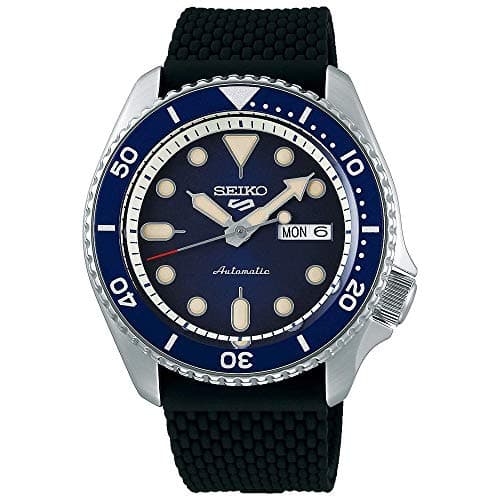
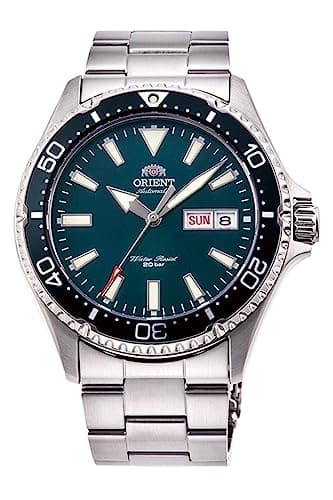
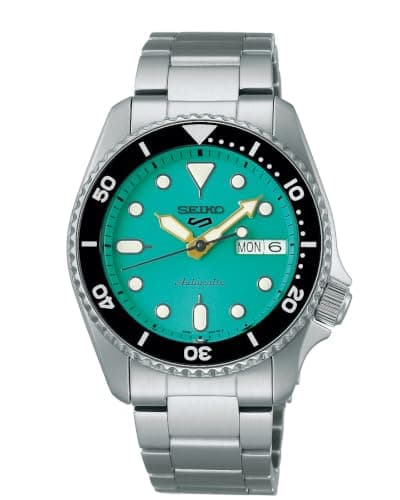
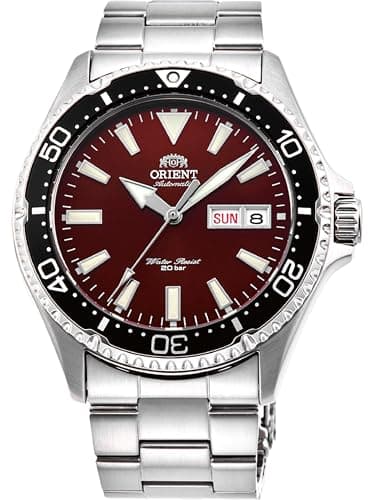
This is the most common cross-shop in affordable watches. Someone decides they want a Japanese automatic diver for about three hundred dollars, two names come back — Seiko 5 Sports and Orient Kamasu — and the forums split down the middle. The split is real but the reasons usually given for it are not, so here is the version built from what the two manufacturers actually publish.
We do not own either watch and we did not pressure-test anything. The figures below are Orient's and Seiko's published specifications for the specific references we link, read side by side, using the method on how we review. Two watches in the same spec table is the clearest comparison this site can offer, which is why the table above is the heart of the page.
The short version: the cheaper-feeling watch is the better instrument. The Kamasu is the one with the dive credentials and the harder crystal; the Seiko is the one with the ecosystem, the recognition and the resale. Four separators decide it, in this order — water resistance and crown, crystal, movement, then size — and after that it comes down to which of the two problems you would rather have.
Separator one: 200m and a screw-down crown against 100m without one
This is the decisive difference and it is the one most buyers never hear. Orient publishes 200m for the Kamasu with a screw-down crown at 3 o'clock and a unidirectional 120-click bezel. Seiko publishes 100m for the SRPD and the crown does not screw down — it is held by a gasket alone.
The crown is the only deliberate hole in a watch case. A screw-down crown closes it mechanically; a push-pull crown relies on a gasket staying compressed and on you never catching it on a sleeve. That is why 100m without a screw-down crown honestly means "swim in it confidently" while 200m with one means "stop thinking about it." Watch water resistance explained sets out what each rating is tested for, and what is a dive watch covers the rest of the formal requirements.
Seiko is not hiding anything here. The SRPD is sold under the 5 Sports line, not Prospex, and Seiko does not call it a diver's watch. It is a watch that looks like the SKX it replaced, and the SKX was a 200m watch with a screw-down crown — the full account of what changed is on Seiko SKX vs SRPD. If you will swim in the watch weekly or snorkel in it on holiday, this separator alone settles the page.
Separator two: sapphire against Hardlex
The Kamasu ships with a sapphire crystal. The SRPD ships with Hardlex, Seiko's proprietary hardened mineral glass. At this price that is a genuinely unusual win for Orient — sapphire normally starts a tier up.
Why it matters in practice rather than on paper: the mineral that scratches watch crystals is quartz, which is what sand and most grit is made of, and it sits at 7 on the Mohs scale. Mineral glass is around 5 to 6, Hardlex is a little tougher, and sapphire is 9. That is the whole argument — grit scratches everything except sapphire. The full version, including what sapphire costs you in glare and brittleness, is on sapphire versus mineral crystal.
Hardlex is not a scandal. It is tougher than ordinary mineral glass, Seiko has used it for decades, and plenty of SRPDs are a decade old with clean crystals. But a scratch on a crystal is permanent and sits directly between you and the dial, and the Kamasu removes the problem for the same money.
Separator three: the movements are closer than the badges suggest
Orient's F6922 and Seiko's 4R36 do the same things. Both are automatic, both hack (the seconds hand stops when you pull the crown, so you can set the watch to the second) and both hand-wind from the crown. Orient publishes 22 jewels and roughly 40 hours of reserve for the F6922; the 4R36 runs at 21,600 vibrations an hour with roughly forty hours as well. Both carry a day and a date at 3 o'clock.
Neither manufacturer publishes a tight accuracy rating at this price, and anyone quoting you an exact figure for your watch is guessing. Expect either to run inside roughly fifteen to twenty-five seconds a day, settling with wear and position — and if that number startles you, read quartz versus automatic before you buy a mechanical watch at all. Both can also be regulated by a watchmaker, which is the part of mechanical ownership nobody mentions.
Orient is owned by Seiko Epson, so this is not even a fight between companies. It is a fight between two product lines inside the same group, and that is the real reason the specifications are so close: the brand strategy, not the engineering, is what differs. Seiko versus Orient takes that argument up to the brand level.
Separator four: size, and the number that actually decides it
The case diameters are almost identical — 41.8mm for the Kamasu, 42.5mm for the SRPD — and almost identical diameters tell you almost nothing. The number that decides whether a watch fits is lug-to-lug: Orient publishes 46.8mm, Seiko 46mm.
So they wear the same, and both are a medium-large watch. Under roughly a 6.5-inch wrist either will overhang; the measurement and what to do about it are on what size watch to buy for your wrist, and if the answer is "both are too big" the Seiko 5 Sports SRPK33 ranked fourth here is the 38mm version of the same watch with a 44.2mm lug-to-lug. The small-wrist field in full is on the best dive watches for small wrists.
The tiebreaker nobody puts in a spec table: the aftermarket
Both watches take 22mm straps, so the strap drawer is not a separator — anything on our 22mm strap rankings fits both. What is a separator is everything beyond straps.
The Seiko has the largest accessory ecosystem of any affordable watch on earth: aftermarket bezel inserts, chapter rings, hands, crystals, and dozens of bracelets cut specifically for the SKX and SRPD case, which is why we built a whole page of straps for Seiko divers and why it carries the one warning that matters — Seiko's lug holes are cut for a thicker spring bar than most straps ship with, explained on the spring bar size guide.
The Orient has straps and almost nothing else. Nobody machines a bezel insert for a Kamasu. If modifying the watch is part of the appeal, that decides the page on its own — and in the other direction from the specifications.
Service, resale and the bit that is not about the watch
Seiko's US service and dealer network is larger, parts are easier to get, and a second-hand SRPD sells in a day. Orient's network is thinner, which matters in five years rather than next week, and a used Kamasu takes longer to move. Neither is a reason not to buy a Kamasu, but both are real costs and we would rather name them than pretend the spec table is the whole story.
Brand recognition is the last one, and it cuts both ways. Nobody at work will know what an Orient is. Some people consider that a feature.
What about the Mako III?
Ranked third here because it is the honest cheaper answer. The Mako III is the same 200m case and the same F6922 movement with a mineral crystal instead of sapphire, usually for less. If the Kamasu's argument appeals but the price does not, the Mako III keeps the dive credentials — the screw-down crown and the 200m rating — and gives up the crystal. That is a better trade than buying a watch with no screw-down crown.
What we would buy
If the watch gets wet: the Kamasu. 200m, a screw-down crown and sapphire for the same money as a 100m watch with mineral-family glass is not a close call. If you want to modify, flip or accessorize it: the SRPD, every time. If you want the dive credentials for less: the Mako III. If both are too big: the 38mm Seiko 5 Sports SRPK33.
And if you came here to find out whether either is a bad watch, neither is. This is a comparison between two of the best-value mechanical watches on sale, which is why both of them rank on the best dive watches under $500 and the best automatic dive watches.