Skip to content
Lug Leather

Dive · Dive Watches

Orient Kamasu vs Mako III

Two watches, one case, one movement, and a single specification between them. Here is exactly what that difference is worth.

By Stephen V.Updated How we research
#ad

We earn a commission when you buy through our Amazon links, at no extra cost to you. It never affects our picks, and we say so when the cheaper watch is the better buy. How this works.

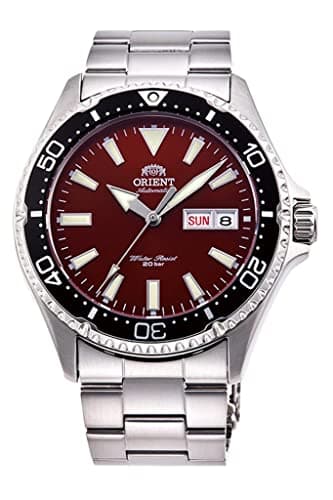
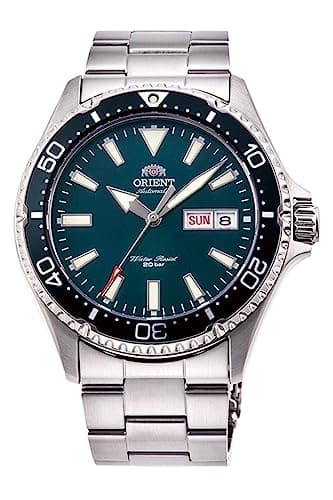
This is one of the cleanest comparisons in affordable watches, because there is almost nothing to compare. The Orient Kamasu and the Orient Mako III share a case size, a water resistance rating, a screw-down crown, a unidirectional bezel and the same in-house F6922 automatic movement. The meaningful difference is the crystal: sapphire on the Kamasu, mineral on the Mako III.

So the question is not really "which watch is better" — the Kamasu is, marginally and by exactly one specification. The question is whether the price gap between them on the day you are shopping is worth that specification. Our answer is usually yes, and we will show the reasoning rather than assert it.

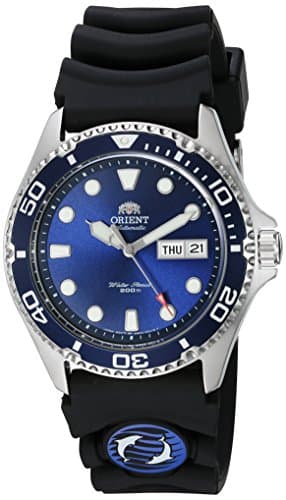
We have ranked a third watch alongside them: the Orient Ray II, the slightly older, plainer-dialed sibling on the same platform. It is worth knowing about because it periodically undercuts both, and because if you dislike the Kamasu's busier dial it is the restrained alternative.

The short answer

Quick picks

#WatchBest forScorePrice
01
Orient Orient Kamasu
Orient Kamasu

A 200m automatic diver with a sapphire crystal at a price that shouldn't allow it.

The value pick
8.6
$329.84Amazon
02
Orient Orient Mako III
Orient Mako III

The Kamasu's near-identical twin — same case, mineral crystal, a little cheaper.

Kamasu value on a tighter budget
8.2
Check price →
03
Orient Orient Ray II
Orient Ray II

The plainer-dialed sibling in the same 200m case — clean applied markers, day-date at three.

A cleaner dial
7.8
$269.98Amazon

#ad · Live prices from the Amazon Product API, as of Sep 5, 2026. Where we have no verified live price, we show none — we would rather leave a gap than print a number that has rotted.

Side by side

The spec table

Every published number that decides fit and function — including the lug width, so you know which strap fits before you buy.

WatchCaseLug-to-lugLug widthWater resMovementCrystal
Orient Kamasu41.8mm46.8mm22mm200mOrient F6922 automaticSapphire
Orient Mako III41.8mm47mm22mm200mOrient F6922 automaticMineral
Orient Ray II41.5mm47mm22mm200mOrient F6922 automaticMineral

In detail

The picks, in full

01
Orient Orient Kamasu

The value pick

Orient Kamasu

41.8mm22mm lug200mF6922 · sapphire
8.6/10

A 200m automatic diver with a sapphire crystal at a price that shouldn't allow it.

Legibility
8
Build
8
Movement
8
Versatility
9
Value
10

Pros

  • Sapphire crystal — the one durability upgrade most worth having — at a sub-$300 price
  • The F6922 hacks and hand-winds, matching Seiko's 4R36 feature-for-feature
  • 41.8mm case and 46.8mm lug-to-lug fit a wider range of wrists than the bigger Seikos

Cons

  • The bracelet and clasp are a step below Seiko's on the same shelf
  • Orient's dealer and service network is thinner than Seiko's in the US

Skip this one if…

brand recognition matters to you. Orient is Seiko-owned and superb value, but nobody at the bar will know the name the way they know Seiko.

$329.84View on Amazon

Price as of Sep 5, 2026. Prices change — Amazon's is the one that counts.

#ad · we may earn a commission from this link to Orient Kamasu

02
Orient Orient Mako III

Kamasu value on a tighter budget

Orient Mako III

41.8mm22mm lug200mF6922 · mineral
8.2/10

The Kamasu's near-identical twin — same case, mineral crystal, a little cheaper.

Legibility
8
Build
7
Movement
8
Versatility
9
Value
9

Pros

  • Same excellent F6922 movement and 200m case as the Kamasu
  • Usually the cheapest way into a genuine Orient automatic diver

Cons

  • Mineral crystal instead of the Kamasu's sapphire — the one reason to spend a little more
  • Very close to the Kamasu, so the decision is really just crystal vs price

Skip this one if…

the Kamasu is only a few dollars more when you look. For that gap you get sapphire, and sapphire is the upgrade you'll appreciate every time you knock the watch on a doorframe.

Check price on Amazon →

No buyable offer at the last price check (Sep 5, 2026). We show nothing rather than a stale number.

#ad · we may earn a commission from this link to Orient Mako III

03
Orient Orient Ray II

A cleaner dial

Orient Ray II

41.5mm22mm lug200mF6922 automatic
7.8/10

The plainer-dialed sibling in the same 200m case — clean applied markers, day-date at three.

Legibility
8
Build
7
Movement
8
Versatility
8
Value
8

Pros

  • The same proven 200m automatic platform in a slightly more restrained dial
  • Strong lume and a comfortable case shape

Cons

  • Mineral crystal
  • Older reference — availability and colorways are patchier than the Kamasu

Skip this one if…

you want the newest of Orient's divers. The Kamasu is the current, sapphire-equipped evolution of this exact watch.

$269.98View on Amazon

Price as of Sep 5, 2026. Prices change — Amazon's is the one that counts.

#ad · we may earn a commission from this link to Orient Ray II

What is actually identical

Both watches use a 41.8mm stainless case rated to 200 meters with a screw-down crown and a unidirectional 120-click bezel, a 22mm lug width, and Orient's F6922 automatic — which hacks, hand-winds, carries a day and date, and holds roughly forty hours of reserve. The lug-to-lug figures are within a millimeter of each other. On the wrist, in the dark, or in the water, you would not be able to tell them apart.

What sapphire is actually worth

Crystal hardness is the specification that decides how a watch looks after three years, not how it performs on day one. Mineral glass is hard enough to shrug off most contact and soft enough that doorframes, granite worktops and car keys eventually leave hairlines on it. Sapphire is dramatically harder — in practical terms it does not scratch during normal wear, and it is the reason a well-used sapphire watch still looks new while a mineral one looks used.

The trade-off is real but small: sapphire is more brittle, so a hard enough impact that would chip a mineral crystal can crack a sapphire one. In everyday wear this almost never decides anything. If you want a watch that still looks sharp in five years, sapphire is the single best specification to pay for at this price, ahead of the movement, the bracelet and the bezel.

The case where the Mako III wins

Buy the Mako III when the gap is genuinely large — when the Kamasu has drifted up and the Mako is sitting well below it, which happens regularly. You are getting the same 200m case and the same movement, and a mineral crystal is not a defect; it is what almost every watch under $300 uses, including several we rank highly. The money saved buys two good straps, which will change how you feel about the watch far more than the crystal will.

The other case for the Mako III is if you are hard on watches in a way that involves impact rather than abrasion — building work, boat work, anything where a knock is more likely than a scuff. Mineral's greater toughness genuinely matters there.

Where the Ray II fits

The Ray II is the same 200m platform with a cleaner, less busy dial and a slightly smaller 41.5mm case. It uses mineral glass like the Mako, and as an older reference its availability and colorway choice are patchier. Buy it if you prefer the restrained dial or if it turns up cheaper than either of the others; do not go hunting for it on the assumption it is somehow the connoisseur's choice, because mechanically it is the same watch.

What none of them fix

All three ship on the same bracelet, and it is the weak point of the package — the end links and the stamped clasp are visibly where Orient saved the money that paid for the case and movement. This is not a reason to avoid any of them; it is a reason to budget twenty or thirty dollars for a strap. All three are 22mm, so one strap fits whichever you buy.

The second shared caveat is service support. Orient is owned by Seiko Epson and the movements are well understood, but the US dealer and service network is thinner than Seiko's. If walking into a shop with the watch in ten years matters to you, that is a genuine point in Seiko's favor rather than a difference between these two.
How we picked

We do not run a testing lab

We compiled the published manufacturer specifications for every watch here — case size, lug-to-lug, lug width, water resistance, movement and crystal — did the wrist-fit and value math, and scored each pick against a published rubric. The scores are judgments from documented research — they are not measurements we took or wrist-time we logged, because we do not have these watches and we are not going to pretend we do. Where a spec could not be verified we wrote "data unavailable" rather than guessing.

Questions

Frequently asked

What is the difference between the Orient Kamasu and the Mako III?
The crystal, and effectively nothing else. Both are 41.8mm, 200m, screw-down-crown automatic divers using Orient's in-house F6922 movement with a 22mm lug width. The Kamasu has a sapphire crystal; the Mako III has mineral glass and costs a little less.
Is the Orient Kamasu worth the extra over the Mako III?
Usually, yes. Sapphire is the specification you notice over years of ownership — it is what keeps a watch looking new — and the premium is typically small. Buy the Mako III instead when the gap is unusually wide on the day you look, or if your risk is hard impacts rather than scratches, since mineral glass is more forgiving of a sharp knock.
Do the Kamasu and Mako III use the same movement?
Yes, both use Orient's in-house F6922 automatic, which hacks and hand-winds, shows day and date, and holds roughly forty hours of power reserve. There is no functional difference in the movement between the two watches.
Which is better, the Orient Ray II or the Kamasu?
The Kamasu, on specification — it is the newer reference with a sapphire crystal on the same 200m platform. The Ray II's argument is its cleaner, plainer dial and a slightly smaller 41.5mm case; if you prefer the look, it is a perfectly good watch. As an older model its availability is less consistent.
Do the Kamasu, Mako III and Ray II take the same straps?
Yes. All three use a 22mm lug width, so any 22mm strap fits whichever you choose — and 22mm is the most abundant size in the aftermarket, shared with almost every Seiko diver. That makes the bracelet, which is the weakest part of all three watches, the easiest thing to fix.

Keep reading

Receipts

Sources

We do not run a testing lab, and we do not pretend to. Every spec above traces to a manufacturer listing or a named standard; where we could not verify something, we say so on the page rather than quietly leaving it out. Read our full method.