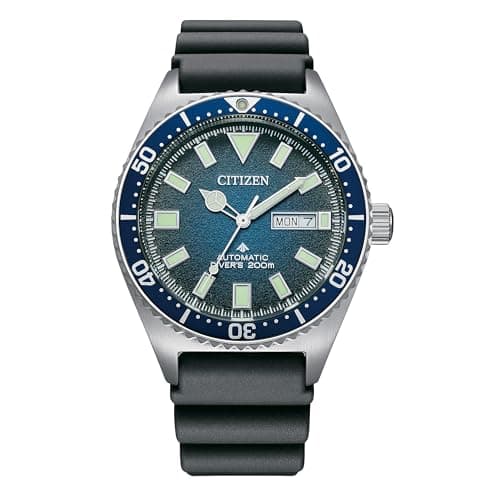
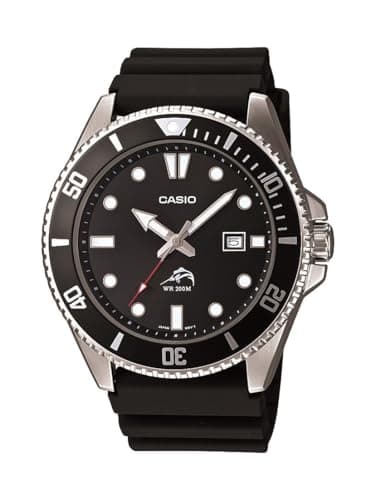
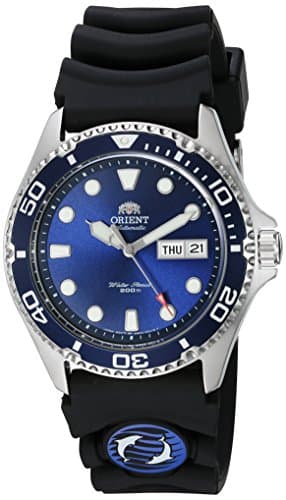
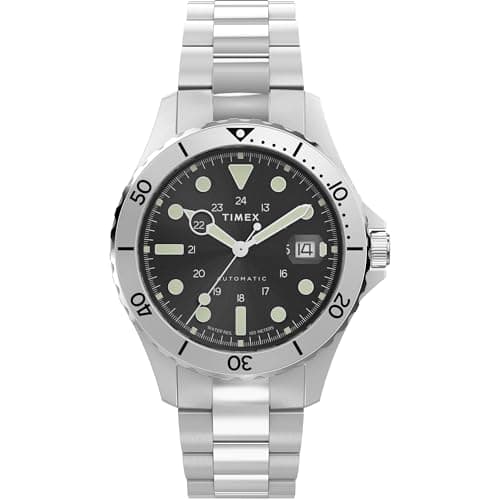
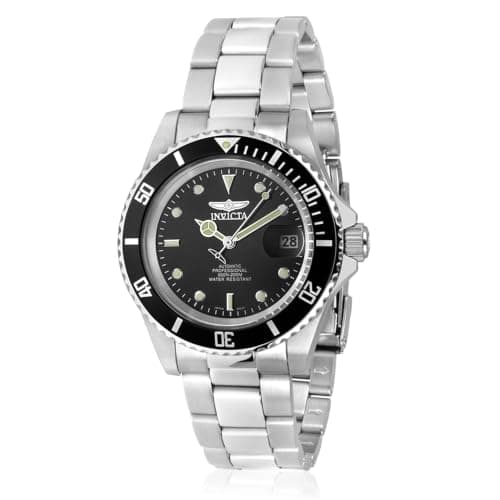
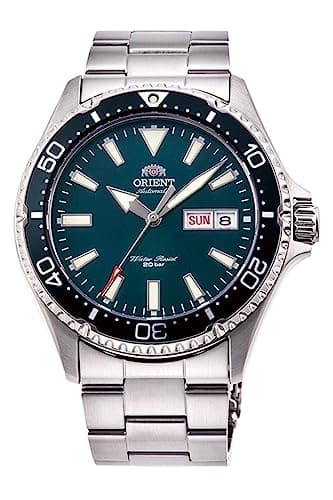
Three hundred dollars is the most interesting number in dive watches. Below it, most of what you find is styling — a rotating bezel bolted to a watch that would flood in a swimming pool. At and just under it, something changes: you can buy a genuine 200-meter automatic diver with a screw-down crown and an in-house Japanese movement, and still have change for two straps.
The picks below are ranked on the specifications that decide whether a dive watch is a dive watch — water-resistance rating, whether the crown screws down, movement and crystal — and on the two numbers that decide whether it fits you: lug-to-lug and lug width. All six are in the spec table further down, side by side.
The short version: the Orient Mako III is the best watch here, a real 200m automatic with Orient's own F6922 movement for well under the cap. The Citizen Promaster Dive Automatic is the one to buy if you want 20mm lugs and a slimmer strap. And the Casio Duro at around a tenth of the budget is the reminder that a 200m rating has never actually been expensive.
One honest caveat about a price-capped list: street prices move. Every number on this page comes from Amazon's API and is stamped with the date we last checked it, so if a pick has drifted above $300 on the day you read this, you will see that rather than a figure we typed in months ago.
What $300 actually buys that $100 does not
Two things, and only two things. The first is a mechanical movement: an Orient F6922 or a Seiko NH35 that hacks, hand-winds and can be serviced indefinitely. It does not keep better time than the quartz below it — it keeps considerably worse time — but it is the object enthusiasts are actually buying. The second is a screw-down crown, which is the difference between a watch rated to 200m on paper and a watch you would take past the shallow end without a second thought.
What $300 does not buy, reliably, is a sapphire crystal. The Orient Kamasu manages it just above this cap and is the single best argument for stretching; everything in this tier uses mineral glass or Hardlex. If scratch resistance is the thing you care about most, spend the extra rather than buying twice.
Automatic or quartz at this price?
This is the tier where the question is genuinely live, because the quartz option is not a compromise. The Casio Duro is rated to a real 200m, keeps time to a few seconds a month rather than a few seconds a day, needs nothing from you, and costs roughly a fifth of the automatics above it. On any measure of performance it wins.
The automatics win on everything that is not performance: the sweep of the seconds hand, the weight, the display caseback, the fact that the watch is powered by your own movement and will still run in forty years with servicing. That is a real thing to want and we are not going to pretend otherwise — but it is worth being clear-eyed that you are paying for the experience, not the accuracy.
Read the lug-to-lug, not the diameter
The spread in this group is wider than the case sizes suggest. The Casio Duro is 44mm across with a 48mm lug-to-lug — a big watch. The Invicta Pro Diver is 40mm and the most wearable thing here for a smaller wrist. The two Orients sit at 41.5 to 41.8mm with a 47mm lug-to-lug, which is close to the sweet spot for a 6.75-inch wrist. Measure yours, then read the lug-to-lug column above rather than the headline number on the bezel.
ISO 6425 and what the "200m" on the dial means
A dial that reads 200m is telling you the case survived a static pressure test. ISO 6425 — the formal diver's standard — asks for considerably more: a screw-down crown, a unidirectional bezel with a minute scale, legibility at 25cm in the dark, resistance to thermal shock and to magnetism. None of the watches in this tier are certified to it, and plenty of them are still perfectly good swimming and snorkelling watches. We say which is which rather than letting the number on the dial do the arguing.
Budget the strap in, not out
Every watch here ships on a bracelet its owners eventually replace. That is not a criticism so much as a fact of the price bracket — the case, crystal and movement got the money. Four of the six use a 22mm lug width and two use 20mm, so a single well-chosen strap covers most of them; a nylon NATO for the water and a rubber strap for the summer is about twenty-five dollars and transforms the watch more than any other upgrade available at this price.
One listing detail is worth checking before you buy anything in this bracket, because it separates watches that share a rating: screw-down crown vs push-pull explains why a threaded crown is the specification that makes a 200m number dependable, and which watches here have one.