Every sealed watch case has one hole that has to stay open to the outside world: the stem the crown sits on, which you pull out to set the time. Everything else — the caseback, the crystal — is fixed and gasketed once at the factory. The crown is the part you operate, and how it closes is the most meaningful water-resistance detail on a spec sheet after the number itself.
What each type actually is
A push-pull crown sits against a gasket in the case tube. Push it in and the gasket is compressed enough to seal; pull it out to set the watch. It is simple, it is fast to use, and it is sealed only while it is pushed fully home.
A screw-down crown has a threaded tube on the case and a matching thread inside the crown. You screw the crown down onto the tube, which squeezes the gasket positively rather than relying on a friction fit. To set the watch you unscrew it first, then pull. It takes a couple of extra seconds each time, and in exchange the crown cannot be unseated by a knock, a sleeve or a pocket.
Why two 100m watches are not the same watch
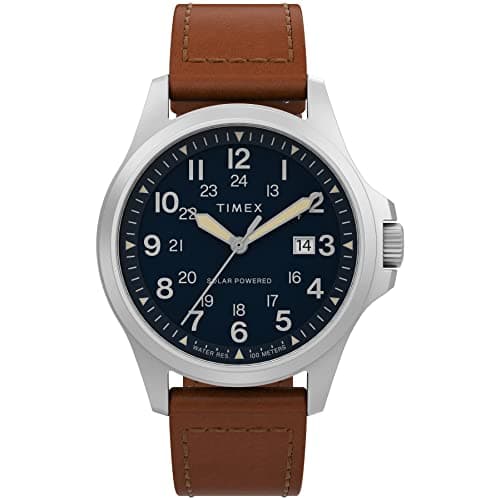
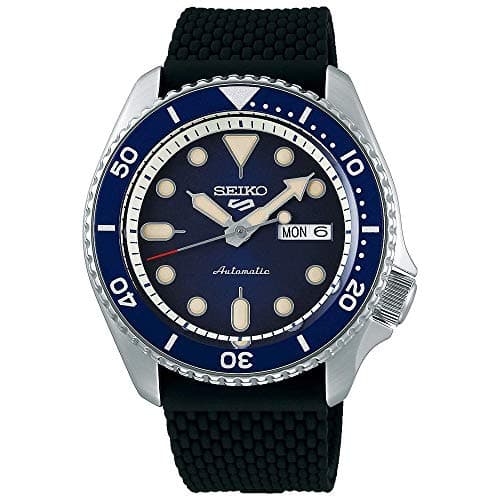
This is the point of the page, and this site's own picks illustrate it perfectly. The Seiko 5 Sports SRPD93 is rated 100m and uses a push-pull crown. The Timex Expedition North Field Post Solar is also rated 100m, with a screw-down crown and caseback. On paper they are equal. In practice the Timex is the better-sealed object, because the Seiko's rating depends on a crown that is only pushed in — and a crown that gets caught on a sleeve and pulled to its first position is a watch with an open hole in it.
Neither is a dive watch, and both are perfectly fine in the rain. But if you were choosing one to take in a pool every week, that row decides it. The ratings themselves are explained on watch water resistance explained.
The dive-watch requirement
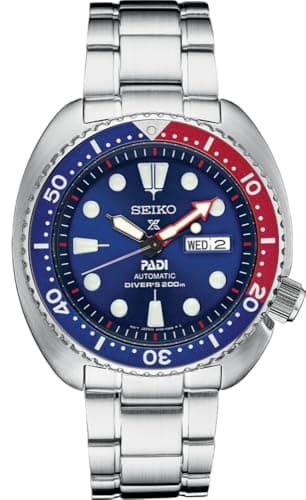
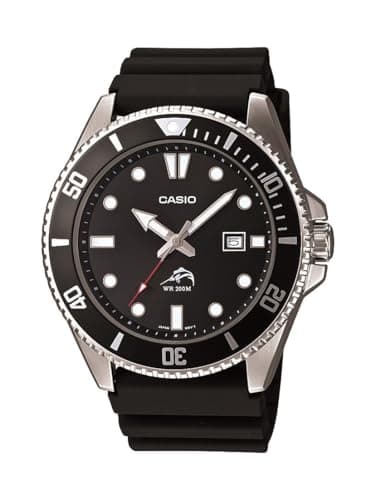
A screw-down crown is not optional on a real diver. The ISO 6425 standard that defines a dive watch covers the whole package — the rating, the bezel, the legibility, the testing — and the watches that meet it seal the crown positively. The Seiko Prospex Turtle on this page is ISO 6425 at 200m with a screw-down crown. The Casio Duro is the proof that it is not a price feature: a 200m quartz diver with a screw-down crown, for less than most straps we rank. What qualifies a watch as a diver is set out on what is a dive watch.
What you give up
Three small things, all real. Setting is slower: unscrew, pull, set, push, screw back. On a hand-wound watch you do this every day. Cross-threading is possible: the single most common self-inflicted damage on a dive watch is forcing a crown onto its threads at an angle. The crown should catch with almost no pressure — if it resists, back it off and start again. You have to remember to do it: a screw-down crown left unscrewed is less sealed than a push-pull crown pushed home, because it is standing proud of the tube.
When a push-pull crown is the right answer
More often than enthusiasts admit. On a field watch or a dress watch that will never be swum in, a push-pull crown is simpler, slimmer, and one fewer thing to get wrong. On a hand-wound watch wound every morning, a screw-down crown is genuinely tedious. And on a watch whose rating is 30m or 50m, the crown type is almost academic — a 30m watch is a dry watch whichever way the crown closes. The hierarchy that matters is: the rating first, the crown second, and your actual habits before both.
How to use a screw-down crown without damaging it
Unscrew it counter-clockwise until it springs free and stands proud of the case. Pull it out to the position you need and set the watch. To close, push the crown flat against the case and turn it counter-clockwise first until you feel the threads drop into alignment with a small click, then turn clockwise. It should tighten with fingertip pressure only. Snug is sealed; forcing it is how threads and gaskets get wrecked.
Gaskets, and the part nobody budgets for
Both crown types seal against rubber gaskets, and rubber ages. Heat, soap, sunscreen and time all harden it, which is why water resistance is a condition rather than a permanent property of a watch. A watch that is genuinely used in water should have its gaskets checked periodically; a desk watch realistically never will be, and usually does not need to be. Rinsing a watch in fresh water after the sea does more good than most owners expect.
Which watches here have which
Screw-down: the Orient Kamasu (200m, sapphire), the Seiko Prospex Turtle (200m, ISO 6425), the Casio Duro (200m) and the Timex Expedition North (100m, screw-down caseback too). Push-pull: the Seiko 5 Sports line, including the SRPD93 here, which is 100m. For the wider picture, our dive rankings start at best dive watches under $500 and the budget end is best dive watches under $300.
What we are not claiming
We have not pressure-tested any of these watches. Every crown type and rating above is taken from the manufacturer's published specification for the exact listing linked, and anything we could not verify is a dash in the spec table rather than an assumption. Water resistance also depends on the age and condition of a specific watch, which no published figure can tell you. Our method is on how we review.