A dive watch is a watch built to be worn underwater and to time a dive safely. In practice that means four things: a water-resistance rating of at least 200 meters, a screw-down crown that seals the case, a unidirectional rotating bezel for timing elapsed dive time, and luminescence strong enough to read in darkness. Everything else — the styling, the bracelet, the brand — is optional.
The formal version of that definition is ISO 6425, the international standard a watch must pass to be legally marked "Diver's 200m." Plenty of excellent watches meet the spirit of it without paying for certification, and plenty of watches with bezels and diver styling meet none of it. Knowing the four requirements is how you tell them apart in a listing.
1. Water resistance, and what the numbers mean
The rating is a pressure test, not a depth you can swim to. It is measured statically in a lab, while a moving arm underwater generates far higher momentary pressure. That is why the practical guidance is more conservative than the number suggests:
- 30m — splash resistant. Rain and hand-washing. Do not swim in it.
- 50m — showers, rain, a brief accidental dunk. Not for swimming laps.
- 100m — genuine swimming and snorkelling. Fine for the pool and the sea.
- 200m — the dive-watch threshold. Scuba, hard use, and the minimum for ISO 6425.
A watch that says only "water resistant" with no figure is telling you it has no figure worth printing.
2. The screw-down crown
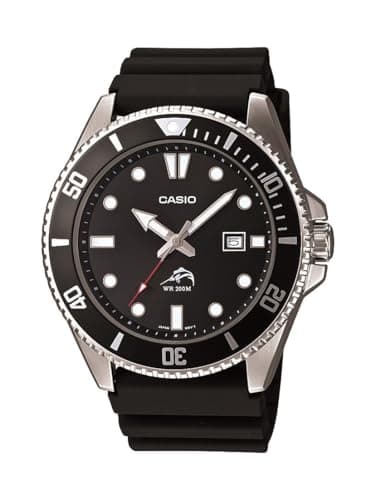
The crown is the only deliberate hole in a watch case. A push-pull crown relies on a gasket alone; a screw-down crown threads shut against a tube, compressing the gasket and physically locking the crown closed. That does two things: it seals better under pressure, and — just as importantly — it stops the crown being knocked out to the time-setting position underwater, which would flood the watch instantly. ISO 6425 requires it, which is why the excellent Casio Duro carries a real 200m rating but is not certified.
3. The unidirectional bezel
The rotating bezel is a timer. You align the zero marker with the minute hand when you descend, and the elapsed minutes are then readable straight off the bezel. It rotates in one direction only — counter-clockwise — for a safety reason that is elegant once you see it: if the bezel gets knocked, it can only ever make your elapsed time look longer than it is, never shorter. A bezel that spins both ways could tell a diver they have air they do not have. That is the whole argument, and it is why a bidirectional bezel disqualifies a watch.
4. Legibility in the dark
ISO 6425 requires that the time be readable in total darkness at 25cm, that the minute hand be distinguishable from the hour hand, and that the bezel's zero marker be visible too. In practice that means a lot of luminous material, applied thickly. Seiko's lume is the industry benchmark in affordable watches, and it is a genuine functional advantage rather than a marketing point. If you want the mechanism — what lume actually is, why it is bright at 11pm and dim at 4am, and how it differs from tritium tubes and a backlight — we have written it out in full.
What ISO 6425 also tests
Beyond those four, the standard checks resistance to magnetism, shock, salt water corrosion and thermal shock, and requires the watch to be reliably readable and to have an end-of-life or running indication. Certified watches are tested individually, not by sample. That individual testing is a real cost, and it is the main reason certified divers cost more than watches with identical-looking specifications.
"Dive watch" versus "diver-styled"
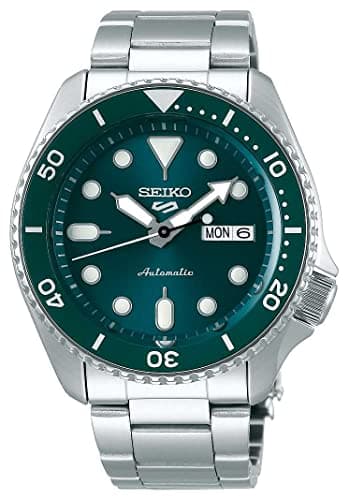
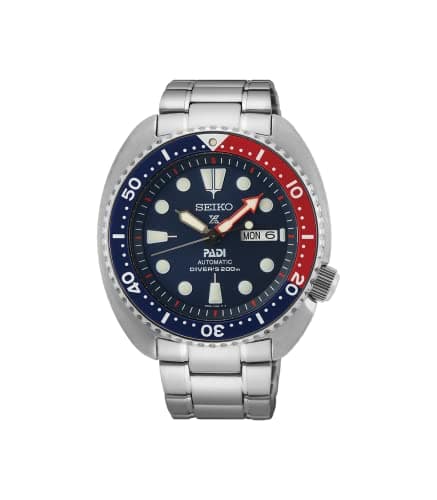
This is the distinction that costs people money, and it is easiest to see across three real watches — which is why the three below are ranked here rather than a list of the "best" anything. They are the three categories the definition produces.
- A certified dive watch. The Seiko Prospex Turtle: 200m, screw-down crown, unidirectional bezel, ISO 6425 certified. It meets every part of the definition and it is individually tested to prove it.
- A real 200m watch that is not certified. The Casio Duro MDV106: a genuine 200m rating and a unidirectional bezel, but a push-pull crown rather than a screw-down one, so it cannot be marked to the standard. It will outswim most watches that cost far more.
- A diver-styled watch. The Seiko 5 Sports SRPD: 100m, no screw-down crown. A superb everyday watch that looks like a diver and is not one. Swim in it happily; do not scuba with it.
All three are worth buying. The only mistake is buying the third while believing you bought the first.
The specs that are not part of the definition
Three things people assume are required and are not. A sapphire crystal — ISO 6425 says nothing about crystal material, only that the watch survives the tests; the certified Turtle uses Hardlex and the uncertified Orient Kamasu uses sapphire. An automatic movement — quartz divers are fully certifiable and are more accurate. A helium escape valve — that is for saturation divers living in a pressurized habitat, and on a recreational watch it is decoration.
How to check a listing in thirty seconds
Read four fields, in this order. Water resistance: is there a number in meters, and is it 200 or more? Crown: does the listing say screw-down? If it is silent, assume push-pull. Bezel: does it say unidirectional, or just "rotating"? Lume: is there any mention of luminous hands and markers, or only a luminous-looking photograph? A watch that answers all four gives you the spec; a watch that answers none is telling you something.
Do you need one?
Almost certainly not, in the literal sense. Very few owners of dive watches dive. What you are actually buying is over-engineering: a watch you never have to think about around water, with legibility that beats every other category and a design that has looked right for seventy years. That is a perfectly good reason. It just is not the same reason the specification exists — and knowing the difference is what stops you paying a dive-watch premium for dive-watch styling.
The single component that separates a diver from a watch that merely looks like one is the crown, and it is the easiest thing to check on a listing: screw-down crown vs push-pull explains what the threads do, why two 100m watches are not equally sealed, and how to close one without cross-threading it.