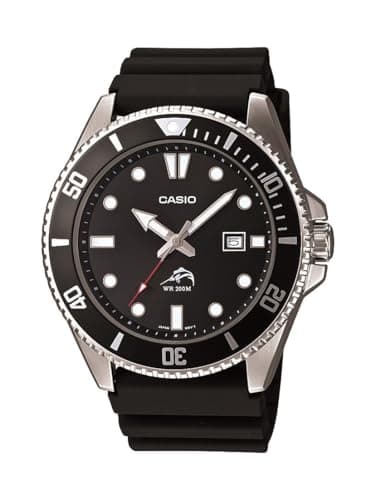
The budget end of the dive watch market is the most interesting shelf in watches and the most dishonest. For less than the price of a pair of boots you can buy a watch with a genuine 200-meter water-resistance rating and a Japanese automatic movement inside. You can also buy something that looks identical in a photograph and would flood in a swimming pool. The difference is never in the marketing copy — it is in three specs, and they are all in the table below.
Our test for this page was deliberately narrow. To make the list a watch had to be currently sold, carry a stated water-resistance rating we could verify against the manufacturer, and cost meaningfully less than the sub-$500 field we cover in the main dive roundup. We did not include anything whose "dive" credentials amount to a bezel that turns.
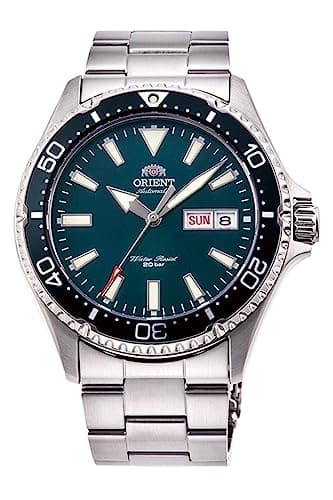
The headline result: the Casio Duro MDV106 is still the answer, and it has been for a decade. It is a real 200m watch for the price of a takeaway dinner. If you want the watch to tick mechanically rather than step, the Orient Mako III is the cheapest genuinely good automatic diver — 200m, an in-house F6922 movement, and the same case as the sapphire-crystal Kamasu one shelf up.
The three specs that separate cheap from fake
Water resistance in meters.30m means keep it dry. 50m survives rain and hand-washing. 100m is a genuine swim-and-shower rating. 200m is the dive-tool threshold. Anything that says only "water resistant" with no number is telling you it has no number worth printing.
The crown. A screw-down crown physically threads shut against the case, sealing the one deliberate hole in a watch. A push-pull crown relies on a gasket alone. The Casio Duro is the interesting exception on this page — it carries a real 200m rating without a screw-down crown, which is why it is not ISO 6425 certified even though it will comfortably outswim watches that cost five times as much.
The bezel direction. A dive bezel must be unidirectional — it can only rotate counter-clockwise. The safety logic is simple: if the bezel gets knocked underwater it can only ever make your remaining air look shorter than it is, never longer. A bezel that spins both ways is decoration.
Quartz or automatic on a budget?
On this shelf the honest answer is quartz, and most enthusiasts will still buy the automatic. A quartz movement keeps better time than any mechanical watch here, costs less, and needs nothing from you but a battery every few years. An automatic is the thing you actually want if you like watches — you can feel the rotor, you never change a battery, and a Seiko or Orient movement can be serviced for decades. Neither is wrong. Just know which one you are buying and why.
Where the money is best spent afterwards
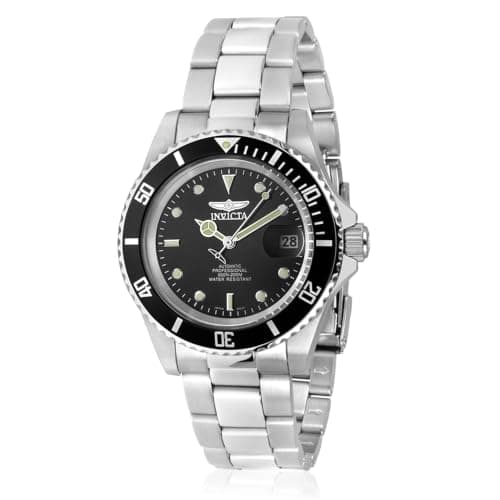
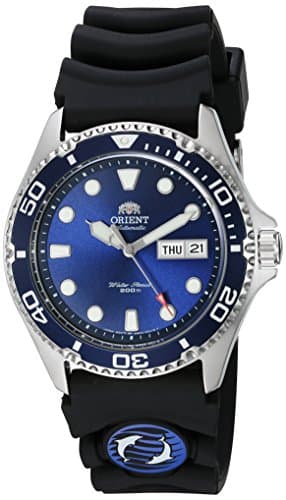
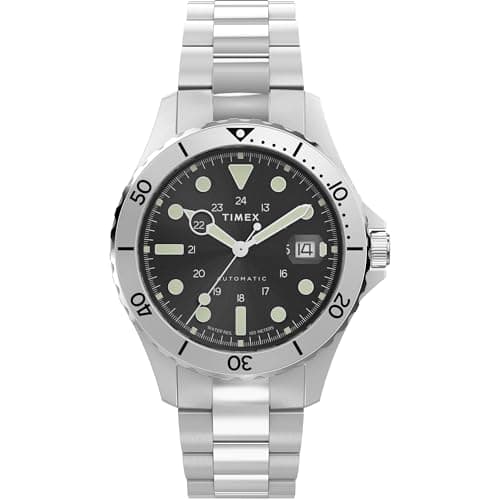
Every watch on this page ships with a bracelet or strap that is the cheapest part of it. The single highest-return upgrade is a strap: a NATO costs a fraction of the watch and transforms it. Check the lug width column above first — the Casio, Orient and Ray II all take 22mm, the Invicta and Timex take 20mm — or look your model up in the lug width chart.
What we left off, and why
The marketplace is full of sub-$50 "dive" watches from brands that exist for one season. We did not include any of them. Not because they are all bad, but because we cannot verify a water-resistance claim from a manufacturer that publishes no specifications, and a dive rating we cannot check is not a dive rating. Everything here comes from a brand with a published spec sheet and a service network.
How we picked
We do not run a testing lab
We compiled the published manufacturer specifications for every watch here — case size, lug-to-lug, lug width, water resistance, movement and crystal — did the wrist-fit and value math, and scored each pick against a published rubric. The scores are judgments from documented research — they are not measurements we took or wrist-time we logged, because we do not have these watches and we are not going to pretend we do. Where a spec could not be verified we wrote "data unavailable" rather than guessing.