Skip to content
Lug Leather

Guides · Guides & Comparisons

How to Read a Dive Watch Bezel

The most useful feature on your watch, and almost nobody uses it. Five steps, and three things it does that have nothing to do with diving.

By Stephen V.Updated How we research
#ad

We earn a commission when you buy through our Amazon links, at no extra cost to you. It never affects our picks, and we say so when the cheaper watch is the better buy. How this works.

The rotating bezel on a dive watch is a timer, and it is the single most useful feature most watch owners never touch. It needs no battery, no app and no attention — you turn it once and it tells you how long something has been going. Learning it takes about ninety seconds and you will use it weekly.

Here is the core idea. The bezel has a zero marker — usually a triangle, often with a luminous pip — and a 60-minute scale running clockwise from it. Turn the zero marker to wherever the minute hand is now, and from that moment the minute hand points at the number of minutes that have elapsed. That is the entire mechanism. There is nothing to start, nothing to stop, and nothing to reset.

It is worth understanding why it exists in that form. Before dive computers, a diver needed to know exactly how long they had been underwater, using equipment that had to work in cold water, in gloves, in poor visibility, and after being knocked against a wreck. A ring you rotate with your fingertips, that clicks positively into place, that can only turn one way, and that is read by looking at a hand you are already looking at — that is a remarkably good answer to a hard problem, and it is why the design has not needed changing since the 1950s.

Two watches are ranked below as examples of the mechanism done properly: both have a true 120-click unidirectional bezel and the luminous zero pip that makes it readable in the dark. The five steps that follow work identically on any dive watch you already own.

The short answer

Quick picks

#WatchBest forScorePrice
01
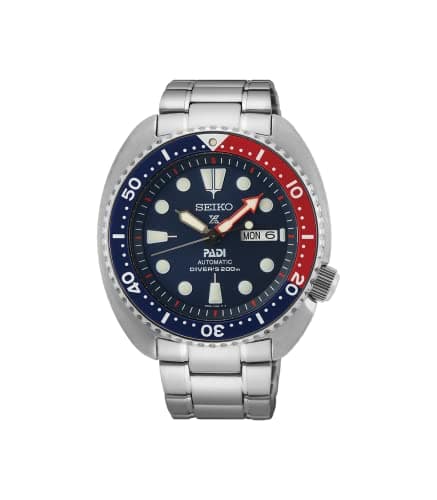
Seiko Seiko Prospex Turtle (SRPE)
Seiko Prospex Turtle (SRPE)

A real ISO 6425 200m diver with a cult-favorite cushion case. The value benchmark.

A real dive tool under $500
8.2
$488.00Amazon
02
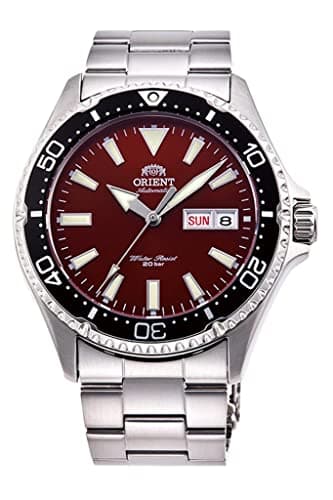
Orient Orient Kamasu
Orient Kamasu

A 200m automatic diver with a sapphire crystal at a price that shouldn't allow it.

The value pick
8.6
$329.84Amazon

#ad · Live prices from the Amazon Product API, as of Sep 5, 2026. Where we have no verified live price, we show none — we would rather leave a gap than print a number that has rotted.

Side by side

The spec table

Every published number that decides fit and function — including the lug width, so you know which strap fits before you buy.

WatchCaseLug-to-lugLug widthWater resMovementCrystal
Seiko Prospex Turtle (SRPE)45mm48mm22mm200m (ISO 6425)Seiko 4R36 automaticHardlex
Orient Kamasu41.8mm46.8mm22mm200mOrient F6922 automaticSapphire

In detail

The picks, in full

01
Seiko Seiko Prospex Turtle (SRPE)

A real dive tool under $500

Seiko Prospex Turtle (SRPE)

45mm cushion22mm lug200m ISO4R36 automatic
8.2/10

A real ISO 6425 200m diver with a cult-favorite cushion case. The value benchmark.

Legibility
9
Build
8
Movement
8
Versatility
7
Value
9

Pros

  • Certified to ISO 6425 with a screw-down crown — this is a genuine dive tool, not diver styling
  • The cushion case wears smaller than 45mm suggests thanks to the short, downturned lugs
  • Legendary Seiko dive lume

Cons

  • Still a big, tall watch — check the 48mm lug-to-lug against your wrist first
  • Hardlex, not sapphire, at this price

Skip this one if…

you have a wrist under about 6.5 inches. The 48mm lug-to-lug is the number that matters here and it will overhang a smaller wrist — look at the 41.8mm Orient Kamasu instead.

$488.00View on Amazon

Price as of Sep 5, 2026. Prices change — Amazon's is the one that counts.

#ad · we may earn a commission from this link to Seiko Prospex Turtle (SRPE)

02
Orient Orient Kamasu

The value pick

Orient Kamasu

41.8mm22mm lug200mF6922 · sapphire
8.6/10

A 200m automatic diver with a sapphire crystal at a price that shouldn't allow it.

Legibility
8
Build
8
Movement
8
Versatility
9
Value
10

Pros

  • Sapphire crystal — the one durability upgrade most worth having — at a sub-$300 price
  • The F6922 hacks and hand-winds, matching Seiko's 4R36 feature-for-feature
  • 41.8mm case and 46.8mm lug-to-lug fit a wider range of wrists than the bigger Seikos

Cons

  • The bracelet and clasp are a step below Seiko's on the same shelf
  • Orient's dealer and service network is thinner than Seiko's in the US

Skip this one if…

brand recognition matters to you. Orient is Seiko-owned and superb value, but nobody at the bar will know the name the way they know Seiko.

$329.84View on Amazon

Price as of Sep 5, 2026. Prices change — Amazon's is the one that counts.

#ad · we may earn a commission from this link to Orient Kamasu

Step by step

How to time an elapsed period with a dive watch bezel

  1. 1

    Find the zero marker

    Look for the triangle, arrow or luminous pip at the top of the bezel. This is the zero point of the scale, and everything is read relative to it.

  2. 2

    Turn the bezel to the minute hand

    At the moment you want to start timing, rotate the bezel counter-clockwise until the zero marker sits exactly over the tip of the minute hand. On a proper dive bezel it will only turn this way, and it will click into place.

  3. 3

    Read the elapsed minutes off the bezel

    As the minute hand moves, it now points at the number of minutes that have passed on the bezel scale. If the minute hand points at 20 on the bezel, twenty minutes have elapsed. There is nothing to start or stop.

  4. 4

    Use the numbered first 15 minutes for short timings

    The first quarter of most dive bezels is marked in individual minutes rather than five-minute increments. That is because the most safety-critical part of a dive is its first fifteen minutes — and it is also what makes the bezel useful for short everyday timings.

  5. 5

    Use it as a countdown by working backwards

    To count down instead of up, align the bezel number equal to your duration with the minute hand. For a 20-minute countdown, place the 20 marker over the minute hand: when the minute hand reaches the zero marker, your time is up.

Why the first fifteen minutes are marked individually

On almost every dive bezel, the first 15 minutes carry individual minute markers while the rest of the scale is marked every five. The diving reason is that the early portion of a dive — descent and the first phase at depth — is where precise timing matters most, and where a decompression stop is timed on the way back up. The practical reason for the rest of us is that short timings are the ones you actually do: a parking meter, a rest interval, tea.

Unidirectional, and why that matters even on land

A dive bezel only rotates counter-clockwise. If it gets knocked, the elapsed time it shows can only ever grow, never shrink — so a diver is warned early rather than late. On land the same property means a bumped bezel never quietly under-reports how long your parking has run. It is a small piece of design that has saved lives, and the reason a bidirectional bezel is not a dive bezel. See what is a dive watch for the full specification.

Three everyday uses that are not diving

Parking and meters. Set the bezel when you park; a glance tells you how long you have been there. Cooking and workouts. Count down by aligning your duration with the minute hand. Travel. Set the bezel at wheels-up and you have flight time without unlocking a phone.

Bezels that are not timing bezels

Not every rotating ring is a dive bezel. A GMT bezel is marked to 24 hours and is for reading a second timezone, not elapsed time. A slide-rule bezel on a pilot watch (like the Citizen Nighthawk) is a logarithmic calculator. And a tachymeter on a chronograph bezel converts elapsed seconds into a rate per hour. Only the 60-minute counter is a dive bezel.

Bezel action, and what a good one feels like

A quality dive bezel has 120 clicks — one every half-minute — with minimal back-play, so the marker lands exactly where you put it. Cheaper bezels use 60 clicks and often have a degree or two of slop. It is the most-touched moving part on a dive watch and the one whose quality you notice daily. Rinse it under fresh water after the sea: salt crystals in the mechanism are what make a smooth bezel grind.

Reading it in the dark

The zero marker on a proper dive bezel carries a luminous pip, and that is not decoration — it is what makes the bezel usable at night or underwater. Charge it the same way you charge the dial: a few seconds under any bright light. If your watch has a lumed pip, the whole system works in darkness, because you only ever need to see two things at once — the pip and the minute hand.

The most common mistake

Setting the bezel against the hour hand instead of the minute hand. The scale is 60 minutes, so it tracks the minute hand and only the minute hand. If your elapsed times keep coming out wildly wrong, that is almost always why. The second most common mistake is expecting the bezel to be exact to the second — it is not, and it was never meant to be. Align it to the nearest half-minute click and accept that resolution.

Bezel inserts, and swapping them

The printed ring on top of the bezel is a separate part called the insert, and on popular watches — the Seiko divers especially — it is replaceable. Aluminum inserts fade and mark over time; ceramic inserts do not, and are the more expensive option. If a bezel insert has gone shabby on an otherwise good watch, replacing it is a far cheaper fix than replacing the watch, and it is a common first modification for Seiko owners.

Now put it on the right strap

A bezel you use is a bezel you touch with wet hands, so the strap matters. Rubber and single-pass nylon both grip when wet and dry fast — see our dive strap picks. Both watches ranked here use a 22mm lug width, and the lug width chart has the figure for dozens more models.
How we picked

We do not run a testing lab

We compiled the published manufacturer specifications for every watch here — case size, lug-to-lug, lug width, water resistance, movement and crystal — did the wrist-fit and value math, and scored each pick against a published rubric. The scores are judgments from documented research — they are not measurements we took or wrist-time we logged, because we do not have these watches and we are not going to pretend we do. Where a spec could not be verified we wrote "data unavailable" rather than guessing.

Questions

Frequently asked

How do you use a dive watch bezel?
Turn the bezel counter-clockwise until its zero marker — the triangle or luminous pip — lines up with the minute hand at the moment you start timing. From then on, the minute hand points at the number of elapsed minutes on the bezel scale. Nothing needs to be started or stopped.
Why is the first 15 minutes of a dive bezel marked differently?
Those minutes are marked individually rather than in five-minute increments because the early phase of a dive, and the decompression stops on ascent, are where precise short timings matter most. For everyday use it is also the part of the scale you use for short timings like parking or cooking.
Can you use a dive bezel as a countdown timer?
Yes. Instead of aligning the zero marker with the minute hand, align the bezel number equal to your duration. For a 20-minute countdown, put the 20 marker over the minute hand — when the minute hand reaches the zero marker, the time is up.
Why does a dive watch bezel only turn one way?
So that a knock can only ever increase the elapsed time it displays, never decrease it. That fails safe: a diver is warned that time is up earlier than reality rather than later. A bezel that turns both ways is decorative, not a dive bezel.

Keep reading

Receipts

Sources

We do not run a testing lab, and we do not pretend to. Every spec above traces to a manufacturer listing or a named standard; where we could not verify something, we say so on the page rather than quietly leaving it out. Read our full method.