A GMT watch shows you a second timezone at a glance. A fourth hand sweeps the dial once every 24 hours rather than every 12, and you read it against a 24-hour scale on the bezel or the dial. If you travel, work across time zones, or have family somewhere else in the world, it is the single most genuinely useful complication in watchmaking — and until recently it was also one of the most expensive.
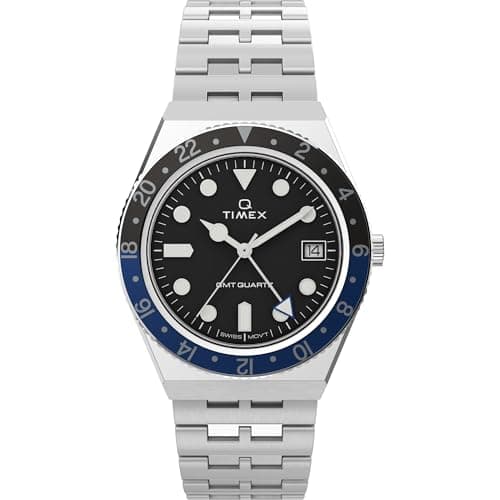
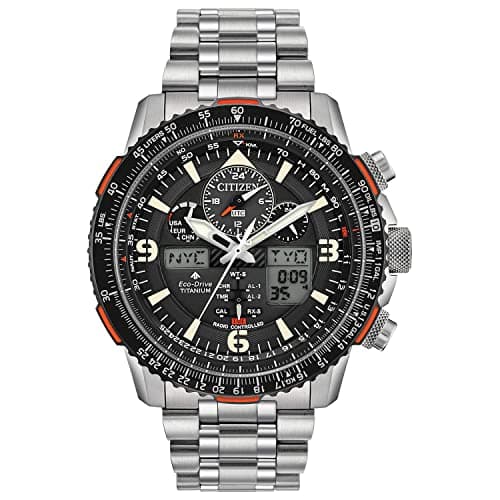
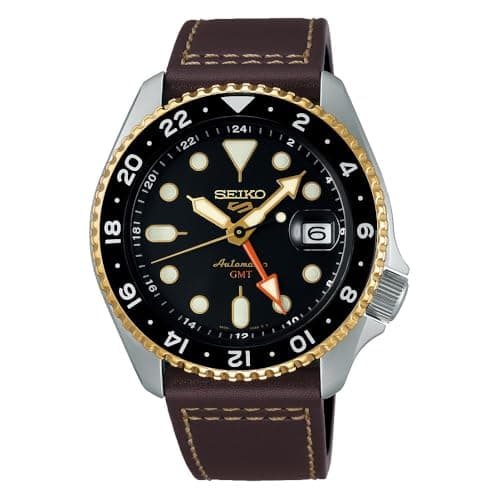
That changed. The Seiko 5 Sports GMT put a real mechanical GMT movement on the market for a few hundred dollars, a price that was flatly impossible a decade ago. Below it, the Timex Q GMT does the same job with quartz for a fraction again. Above both, Citizen's solar pilot watches add atomic timekeeping and world time in exchange for a much busier dial.
Read the buyer's guide below before you choose, because there is a real distinction the marketing blurs: a true GMT, a caller GMT and a dual-time watch are three different things, and only one of them is convenient for someone who actually flies.
True GMT vs caller GMT: the distinction that matters
On a true (or "flyer") GMT, the local hour hand jumps independently in one-hour steps. You land, click the hour hand to local time, and the 24-hour hand keeps showing home. That is the layout a frequent traveler wants.
On a caller GMT— which is what the Seiko 5 Sports GMT is — the 24-hour hand is the one you set, and the local hour hand moves normally. That is ideal if you stay put and want to keep an eye on a timezone elsewhere (hence "caller": you are calling someone abroad). It is less convenient if you cross zones constantly, because you reset the main time the slow way. Neither is wrong; they suit opposite users, and the Seiko being a caller is the honest caveat on an otherwise remarkable watch.
Dual time is not the same as GMT
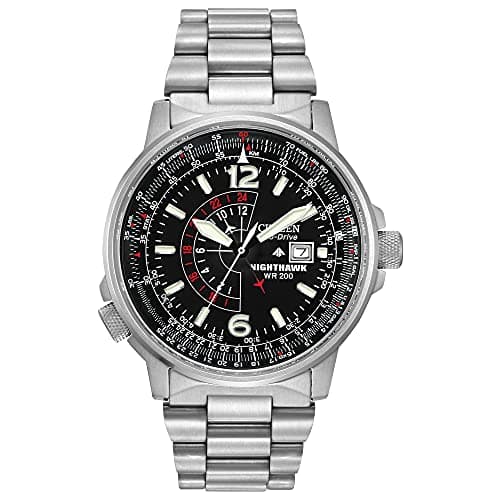
The Citizen Nighthawk and Skyhawk are dual-time pilot watches — they show a second zone, but through their own layout rather than the classic GMT hand-and-bezel arrangement. That is not a criticism, it is a different design. The Skyhawk goes further and syncs itself by radio signal to atomic clocks across 43 world cities, which means it is correct to the second without you ever setting it. If accuracy across time zones is the actual goal rather than the mechanical charm, that is the most capable watch on this page by a distance.
Mechanical or quartz for a GMT?
The mechanical GMT is the enthusiast's answer and the Seiko is the only affordable one worth having. But a GMT is a functional complication, and quartz does functions better: the Timex Q GMT costs a fraction, keeps far better time, and shows the same second timezone. If you are buying this for travel rather than for the hobby, quartz is the rational pick and we would not talk you out of it.
How to actually use the 24-hour hand
The 24-hour hand points to the hour on a 24-hour scale, so 14:00 sits where 2 o'clock would be on the outer track but reads as 14. On watches with a rotating 24-hour bezel you get a third timezone for free: rotate the bezel by the offset you want, and read the 24-hour hand against the bezel instead of the dial. That is the trick most owners never learn, and it is genuinely useful; our GMT explainer walks through setting and using one step by step.
Straps
The Seiko GMT is 22mm, the Timex Q GMT is 18mm, and the Citizen pilots have integrated or limited fitments, which is their biggest practical drawback — a Nighthawk is not a strap-swapping watch. Check the lug width column above, then see the lug width chart.