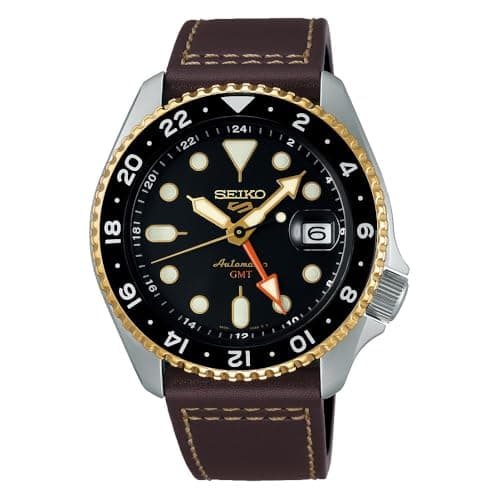
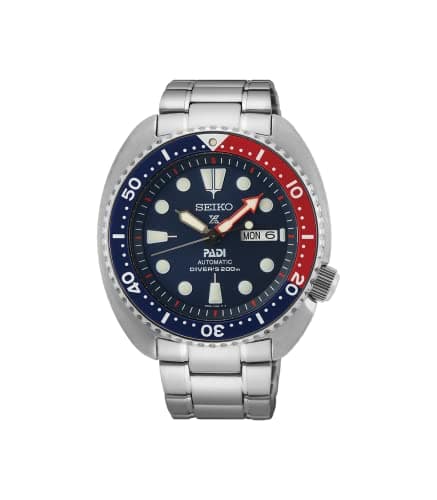
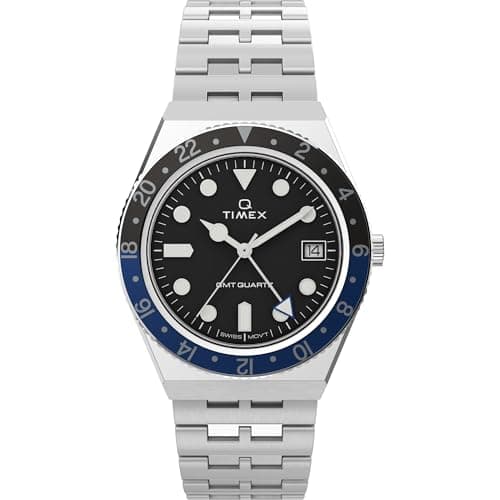
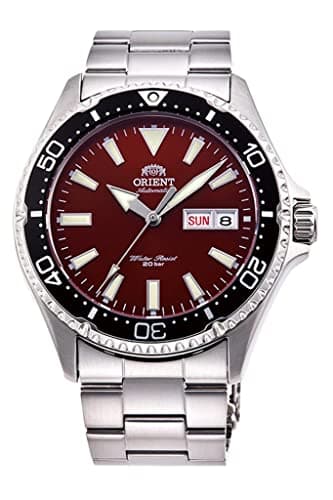
From two feet away a dive watch and a GMT watch look like the same object: a steel sports watch with numbers around the bezel. They do completely different jobs. A dive bezel measures an elapsed interval. A GMT bezel or chapter ring reads a second time zone. Neither is a substitute for the other, and buying the wrong one is the most common mistake in this part of the market.
Below we set out exactly what separates them — the bezel mechanics, water resistance, legibility, and which is genuinely more useful in a normal week — and then rank two strong examples of each so you can see the divergence in the spec table rather than in the abstract.
The short version: buy the dive watch if you want one tough, water-resistant watch and you would use a countdown timer more than a second time zone. Buy the GMT if you travel, work across time zones or call people abroad, because tracking a second zone is the more genuinely useful complication for most people who never dive.
What a dive bezel actually does
A dive bezel is a 60-minute countdown scale that turns in one direction only. You align the zero marker with the minute hand at the start of a dive and read elapsed minutes directly off the bezel from then on. The unidirectional part is a safety requirement: if the bezel is knocked it can only rotate to show more elapsed time than has actually passed, never less. On land it is a first-class kitchen timer, parking meter and laundry timer.
What a GMT bezel does instead
A GMT watch adds a hand that sweeps the dial once every 24 hours, read against a 24-hour scale — so 15:00 sits where 3 o'clock would be on the main dial. Set it to your home zone and you can read two times at once. If the 24-hour scale is on a rotating bezel, you can turn it to track a third zone as well. This is the more useful complication for anyone whose life crosses time zones.
Water resistance usually favors the diver
Divers are built around the rating: 200m with a screw-down crown is the baseline, and ISO 6425 certification is available. GMTs are usually built around the movement instead — the Seiko 5 Sports GMT is 100m and the Timex Q GMT is 50m. That is not a flaw, it is a different brief, but it matters if the watch has to survive a summer of swimming as well as a business trip.
Legibility: the diver wins, quietly
A dive watch is designed to be read in dark water, which means maximum contrast, oversized markers and strong lume on the hands, the dial and the bezel pip. A GMT dial has a fourth hand and a 24-hour scale on it, which is inherently busier. If you want the watch you can read fastest in bad light, that is the diver — every time.
Caller versus traveler, if you go GMT
Worth knowing before you buy. A traveler GMT lets you jump the local hour hand forward or back in one-hour steps without stopping the watch, which is what you want when you land. A caller GMT keeps the local hands fixed and adjusts the 24-hour hand instead, which suits someone who stays put and calls elsewhere. Affordable mechanical GMTs, including Seiko's 4R34, are callers.
The honest recommendation
If you are buying one steel sports watch and you do not fly often, buy the diver. It is tougher, more legible, more water resistant, and the bezel is more useful in a normal week than most people expect. If your week genuinely involves another time zone, buy the GMT — and know that you are trading some water resistance and dial clarity for it. If you want both, a diver plus a second strap is cheaper than a second watch, but it will not tell you the time in Tokyo.