Skip to content
Lug Leather

Dive · Dive Watches

Seiko Turtle vs Samurai

Two 200m Prospex divers, one decision. Here is what actually separates them — and it is not what the forums say.

By Stephen V.Updated How we research
#ad

We earn a commission when you buy through our Amazon links, at no extra cost to you. It never affects our picks, and we say so when the cheaper watch is the better buy. How this works.

The Turtle and the Samurai are the two Seiko Prospex divers most people end up choosing between, and most comparisons make the decision sound more technical than it is. Both are genuine 200m dive watches. Both use a 4R-series Seiko automatic. Both have a screw-down crown, a unidirectional bezel, Seiko's excellent lume and a 22mm lug width. On the specs that decide whether a watch can dive, they are the same watch.

What actually differs is three things: the shape of the case, the exact movement reference, and the price. That is it. Everything else you will read about these two is taste dressed up as engineering, and we would rather tell you that plainly than pad this page out.

The short answer: buy the Turtle if you want the most dive watch per dollar and you like a soft, rounded, vintage-flavored case. Buy the Samurai if you want sharp, faceted, modern lines and you are willing to pay a little more for them. Neither choice is wrong and neither is a compromise.

The short answer

Quick picks

#WatchBest forScorePrice
01
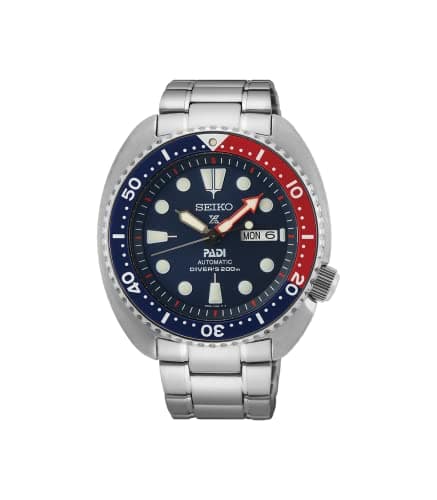
Seiko Seiko Prospex Turtle (SRPE)
Seiko Prospex Turtle (SRPE)

A real ISO 6425 200m diver with a cult-favorite cushion case. The value benchmark.

A real dive tool under $500
8.2
$488.00Amazon
02
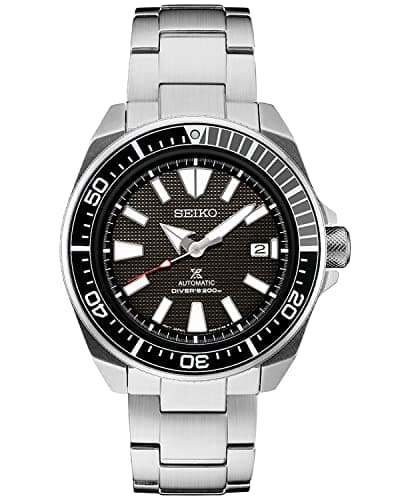
Seiko Seiko Prospex Samurai
Seiko Prospex Samurai

The angular, sharp-cased 200m Prospex for people who find the Turtle too round.

A modern-looking Prospex
7.6
$519.00Amazon

#ad · Live prices from the Amazon Product API, as of Sep 5, 2026. Where we have no verified live price, we show none — we would rather leave a gap than print a number that has rotted.

Side by side

The spec table

Every published number that decides fit and function — including the lug width, so you know which strap fits before you buy.

WatchCaseLug-to-lugLug widthWater resMovementCrystal
Seiko Prospex Turtle (SRPE)45mm48mm22mm200m (ISO 6425)Seiko 4R36 automaticHardlex
Seiko Prospex Samurai43.8mm47mm22mm200mSeiko 4R35 automaticHardlex

In detail

The picks, in full

01
Seiko Seiko Prospex Turtle (SRPE)

A real dive tool under $500

Seiko Prospex Turtle (SRPE)

45mm cushion22mm lug200m ISO4R36 automatic
8.2/10

A real ISO 6425 200m diver with a cult-favorite cushion case. The value benchmark.

Legibility
9
Build
8
Movement
8
Versatility
7
Value
9

Pros

  • Certified to ISO 6425 with a screw-down crown — this is a genuine dive tool, not diver styling
  • The cushion case wears smaller than 45mm suggests thanks to the short, downturned lugs
  • Legendary Seiko dive lume

Cons

  • Still a big, tall watch — check the 48mm lug-to-lug against your wrist first
  • Hardlex, not sapphire, at this price

Skip this one if…

you have a wrist under about 6.5 inches. The 48mm lug-to-lug is the number that matters here and it will overhang a smaller wrist — look at the 41.8mm Orient Kamasu instead.

$488.00View on Amazon

Price as of Sep 5, 2026. Prices change — Amazon's is the one that counts.

#ad · we may earn a commission from this link to Seiko Prospex Turtle (SRPE)

02
Seiko Seiko Prospex Samurai

A modern-looking Prospex

Seiko Prospex Samurai

43.8mm22mm lug200m4R35 automatic
7.6/10

The angular, sharp-cased 200m Prospex for people who find the Turtle too round.

Legibility
8
Build
8
Movement
8
Versatility
7
Value
7

Pros

  • Faceted, all-angles case that photographs and wears sharper than the Turtle
  • Full 200m dive spec with a screw-down crown
  • Excellent bracelet with a genuine ratcheting diver's clasp on most references

Cons

  • Sits above the Turtle in price without a functional upgrade to justify it
  • 4R35 (no day) rather than the 4R36 — a minor spec step down

Skip this one if…

you want the most watch per dollar. The Turtle does the same diving job for less; the Samurai is a styling choice you pay a premium for.

$519.00View on Amazon

Price as of Sep 5, 2026. Prices change — Amazon's is the one that counts.

#ad · we may earn a commission from this link to Seiko Prospex Samurai

The case: cushion versus faceted

The Turtle's cushion case is the whole point of it. There are barely any lugs — the case curves down directly to the strap — which is why a 45mm watch has only a 48mm lug-to-lug and wears far better than the diameter suggests. It is soft, round and unmistakably a 1970s Seiko shape.

The Samurai does the opposite. At 43.8mm across and a 47mm lug-to-lug it is fractionally smaller on paper, but the case is all flat planes and sharp brushed facets. It catches light in a way the Turtle never does and photographs sharper. On the wrist the Samurai reads more angular and modern; the Turtle reads friendlier.

The movement: 4R36 versus 4R35

The Turtle uses Seiko's 4R36; the Samurai reference here uses the 4R35. The difference is one complication: the 4R36 shows the day as well as the date, the 4R35 shows date only. Both hack (the seconds hand stops when you pull the crown) and both hand-wind. Accuracy, power reserve and serviceability are identical. If you use the day window, that is a genuine point for the Turtle. If you find day windows cluttered, it is a point for the Samurai.

Price, and the honest conclusion

The Turtle typically sells for less than the Samurai. Given that it also has the more featured movement and the shorter lug-to-lug, the value argument is one-sided: the Turtle is the better buy on paper. The Samurai's case is the reason to override that, and it is a perfectly good reason — you wear the case, not the spec sheet. What you should not do is talk yourself into the Samurai believing it is the more capable diver. It is not. They dive identically.

Both take the same straps

Both are 22mm, which is the most common lug width in the dive world and the reason a Seiko is such an easy watch to live with. One drawer of 22mm straps serves either watch — and if you later add the Seiko 5 SRPD or a Casio Duro, those are 22mm too. Start with our NATO picks or the dive strap guide.

How we picked

We do not run a testing lab

We compiled the published manufacturer specifications for every watch here — case size, lug-to-lug, lug width, water resistance, movement and crystal — did the wrist-fit and value math, and scored each pick against a published rubric. The scores are judgments from documented research — they are not measurements we took or wrist-time we logged, because we do not have these watches and we are not going to pretend we do. Where a spec could not be verified we wrote "data unavailable" rather than guessing.
Questions

Frequently asked

Is the Seiko Turtle or Samurai better?
The Turtle is the better value: it usually costs less, uses the 4R36 movement with a day-and-date display, and has a cushion case that wears smaller than its 45mm diameter. The Samurai is the better-looking watch to a lot of people, with a sharp faceted case. Both are genuine 200m Prospex divers with identical diving capability.
What is the difference between the Seiko 4R35 and 4R36?
The 4R36 adds a day display alongside the date; the 4R35 shows the date only. Both hack and hand-wind, and both share the same accuracy, power reserve and service intervals. It is a display difference, not a performance one.
Does the Seiko Turtle wear big?
Less than the 45mm diameter suggests. The cushion case has almost no lugs, giving it a 48mm lug-to-lug — long, but not extreme for the size. It is a tall watch though, so if your wrist is under about 6.5 inches, look at the Orient Kamasu or the 38mm Seiko 5 SRPK31 instead.
Do the Turtle and Samurai use the same straps?
Yes. Both use a 22mm lug width, so any 22mm strap fits either watch — as does anything you buy for a Seiko 5 SRPD or a Casio Duro. That shared width is one of the quiet advantages of buying into Seiko.

Keep reading

Receipts

Sources

We do not run a testing lab, and we do not pretend to. Every spec above traces to a manufacturer listing or a named standard; where we could not verify something, we say so on the page rather than quietly leaving it out. Read our full method.