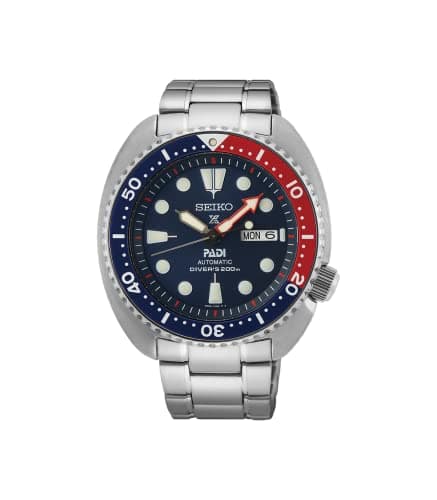
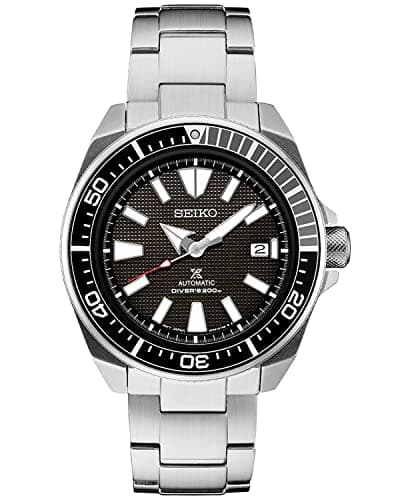
The Samurai is the Prospex for people who find the Turtle too soft. Where the Turtle is all cushion and curve, the Samurai is faceted — hard angles down the case flanks, sharp lug tips, a bezel that looks machined rather than rounded. It is the most aggressive affordable Prospex Seiko makes, and that is essentially the whole reason it sells.
A note on what this review is. We do not own this watch and we did not test it. What follows is built from Seiko's published specification sheet for the reference we link to, the live Amazon listing we verified before writing, and the arithmetic of setting it against its direct rivals — the method we describe on how we review. Where Seiko does not publish a figure, we say so instead of filling it in.
The reference this page is anchored to is the SRPF03, which was live and in stock when we checked it. One thing to know before you shop: some retailers list this reference as a "King Samurai" and some list the plain Samurai, and the names get used loosely across the line. We quote Seiko's own spec sheet for SRPF03 throughout and recommend you check the crystal line on whichever reference you are actually looking at, because that is where the line varies.
The specifications, from Seiko's own sheet
Seiko publishes the following for SRPF03: a 43.8mm stainless steel case 13.4mm thick, 22mm between the lugs, 200m / 660ft diver's water resistance, a unidirectional rotating bezel, a screw-down crown and a screw case back, a Hardlex crystal, and the 4R35 automatic with manual winding, 23 jewels and an approximate 41-hour power reserve.
Two things that list does not include. Seiko does not publish a lug-to-lug figure for this reference, which is unfortunate because it is the number that decides fit. Retailer measurements put it at roughly 48mm — level with the 45mm Turtle — and we carry that as a retailer measurement rather than a Seiko specification, which is how our Turtle vs Samurai page handles it too. And "diver's" is Seiko's own designation on its own sheet — we quote it as Seiko words it rather than claiming a certification on Seiko's behalf. What we can say is that the hardware the diver's standard exists to require is all present: the screw-down crown, the screw caseback, the unidirectional bezel and real LumiBrite. The detail of what that standard asks for is on what is a dive watch.
The 4R35, and the one spec step down
The 4R35 is Seiko's workhorse automatic: it hand-winds, it hacks so you can set the seconds precisely, and it runs about 41 hours off the wrist. It is the same movement family as the 4R36 in the Turtle and the SRPD, with one difference — the 4R35 has no day wheel. You get a date; you do not get the day. That is a genuinely small thing and a genuinely real one, because the Turtle includes it — though on current listings the Turtle is the more expensive of the two.
Accuracy expectations should be set honestly. This is a mechanical movement in an affordable watch, so a handful of seconds a day either way is normal and within spec, and it is substantially less accurate than any quartz diver on this site. If that bothers you, our best quartz dive watches page is the honest alternative, and what is power reserve explains why the 41-hour figure matters more than it sounds: it will not survive a weekend in a drawer.
Fit: read the thickness, not the diameter
43.8mm sounds large and the Samurai is large, but the number that will decide this for you is the 13.4mm thickness combined with the angular case. The facets mean the case does not taper away from the wrist the way the Turtle's cushion does, so it reads bigger than its diameter from above and sits higher than a slimmer diver. Under a shirt cuff this is a watch you will notice. It is also 13.4mm of solid steel, so if weight rather than size is your complaint about big divers, the alternative is a lighter case metal — titanium vs stainless steel covers what that actually changes.
Our working guidance: if your wrist is comfortably over 7 inches the Samurai will look intentional. Between 6.5 and 7 inches it will work on a strap but will overhang on the bracelet. Under 6.5 inches we would not. Because Seiko does not publish the lug-to-lug we will not pretend to more precision than that — measure yours with watch size for wrist and treat the thickness as the deciding spec.
The Hardlex question
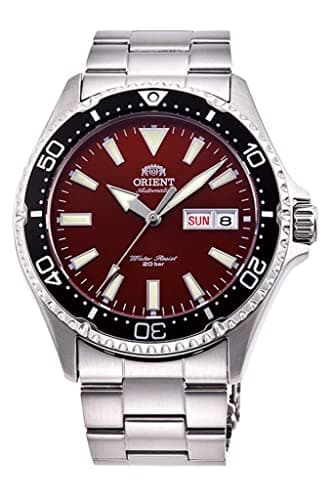
SRPF03 ships with Hardlex, Seiko's hardened mineral glass. It is tough against impact and perfectly serviceable, and it will eventually collect hairlines from doorframes and desk edges in a way sapphire does not. At this price that is the single most arguable part of the watch, because the Orient Kamasu sits below it with a sapphire crystal and the same 200m rating. If scratch resistance is what you care about most, that is the comparison to make, and we lay the two materials out on sapphire vs mineral crystal.
Samurai or Turtle?
This is the real decision, and it is close to a pure styling call. Both are 200m Prospex divers with screw-down crowns, both run a 4R-series automatic, both take 22mm straps. The Turtle gives you the 4R36 with its day display and a cushion case that wears flatter and more comfortably for its size. The Samurai gives you the sharper case, the one that photographs better and looks less like everyone else's Seiko.
Our view: on the spec sheet the Turtle is the better watch — the same capability plus a complication — but check the live prices, because the only buyable Turtle listing is the PADI special edition and it currently costs more than the Samurai. If you are choosing because you like how the Samurai looks, buy the Samurai and do not feel talked out of it. We take that fight apart in more detail on Seiko Turtle vs Samurai.
Samurai or Seiko 5 SRPD?
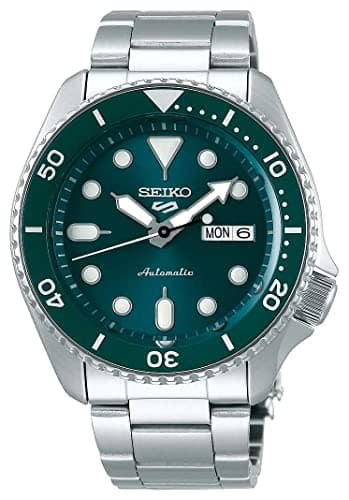
Not close, if you intend to go near water. The SRPD is a diver-styled watch: 100m, a push-pull crown, Hardlex. The Samurai is the real thing at 200m with a screw-down crown. The SRPD is substantially cheaper, substantially more wearable at 42.5mm, and the better buy if the watch is a daily rather than a tool — but it is not the same category of object, and the reason is the crown as much as the depth rating. See screw-down crown vs push-pull.
Straps: the Samurai's best upgrade
The bracelet is a steel three-fold clasp with a diver's extension and it is fine rather than special. The 22mm lug width is the good news: it is the most common width in watches, so the entire aftermarket fits. On a case this angular a waffle or tropic rubber strap suits it better than leather, and a steel mesh softens it if you want the watch to look less like equipment. Start with best straps for Seiko divers, and best 22mm straps if you just want the width shortlist.
Who should buy it
Buy the Samurai if you want a real 200m Seiko diver and the Turtle's rounded case is not for you, your wrist is 7 inches or more, and you are content with Hardlex. Skip it if you want the most capability per dollar — that is the Turtle, or the Kamasu if you want sapphire — or if you want a watch that disappears under a cuff, which at 13.4mm this is not.