The field watch is the best strap-swapping watch ever made, and it is not close. The design is plain by intent — matte dial, big numerals, no decoration — which means it takes on the character of whatever you put it on. The same Hamilton Khaki Field reads rugged on canvas, military on a NATO, and almost dressy on brown leather. One watch, three straps, three watches.
Almost every field watch worth owning uses a 20mm lug width: the Hamilton Khaki Field in every version, the Timex Expedition Scout and Weekender, the Seiko 5 Sports Field and the 38mm SRPK33. The main exception is the Seiko SNK809 at 18mm. That consistency is why a single strap drawer serves an entire field-watch collection — check the lug width chart to confirm yours.
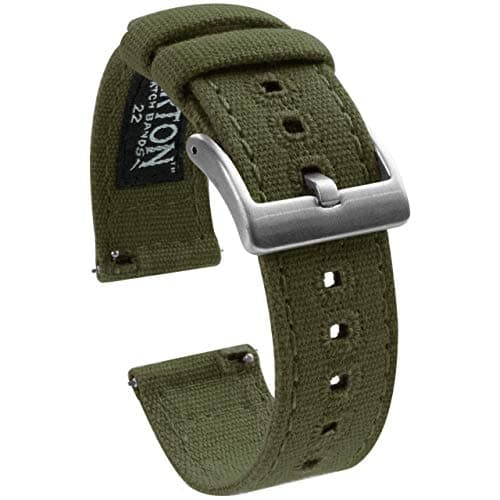
Our pick is the Barton Canvas: heavy embroidered cotton canvas, quick-release bars and a 316L steel buckle. It is the strap a field watch looks most correct on, and it is the one we would put on first.
Canvas: the one that looks right
Canvas has the visual weight a field watch wants — it reads as workwear rather than military-surplus or dress. The good ones are a heavy cotton weave with the embroidery run through it for strength, so the strap stays structured instead of going limp. It is stiff out of the box and takes a week or two to soften, which is normal. It is not a swimming strap: canvas holds moisture and dries slowly.
Ballistic nylon: the practical default
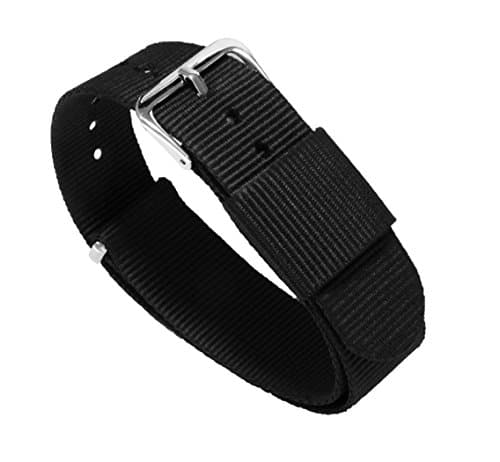
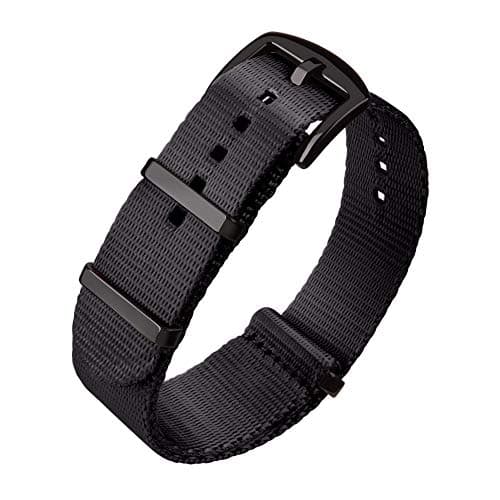
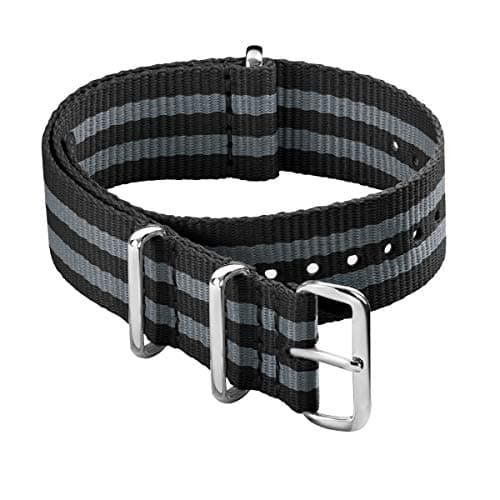
A NATO-style nylon strap is tough, washable, cheap enough to own in five colors, and survives anything. The single-pass construction means the watch stays on your wrist even if a spring bar fails. The trade-off is height: threading the strap under the caseback lifts the watch a couple of millimeters off the wrist, which on a slim field watch is noticeable. Some people love that; some find it makes the watch sit oddly under a cuff.
Leather on a field watch: pick the rugged kind
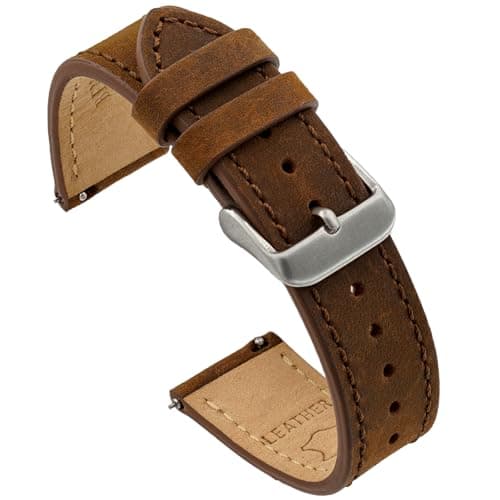
A polished dress-leather strap fights a field watch. Oiled and distressed leathers — "crazy horse" and similar — are the right register: they scuff, patinate and get better looking with abuse, exactly like the watch is supposed to. Just accept that leather and sweat do not mix; keep it for cooler months and swap to canvas or nylon when it is hot.
Two-piece or pass-through?
A two-piece strap attaches on each side and sits the watch flat against your wrist — lower profile, cleaner under a shirt cuff. A pass-through (NATO) runs under the caseback in one piece — more secure, more casual, sits a little higher. Field watches genuinely suit both, so buy one of each; between them you have covered every occasion a field watch will see.
The 18mm and fixed-bar exceptions
Two watches on this site do not follow the 20mm rule and it is worth knowing before you order. The Seiko SNK809 is 18mm, a narrower size with a smaller selection. The Bertucci A-2T uses fixed lug bars, meaning a standard spring-bar strap cannot be fitted at all — it takes pass-through straps only. Check your own watch before you buy.
Buckle and hardware matter more here
On a plain watch the buckle is a visible part of the design. Brushed stainless steel suits a field watch; polished chrome-look hardware cheapens it instantly. Both Barton straps here use brushed 316L, and the Ritche nylon ships with unusually heavy hardware for its price — which is the main reason it is on this list.
The most-asked version of this question is about one watch in particular, and the 20mm picks for it are ranked on the best straps for the Hamilton Khaki Field.