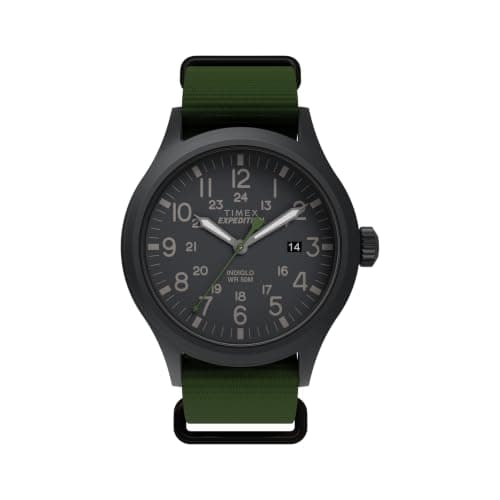
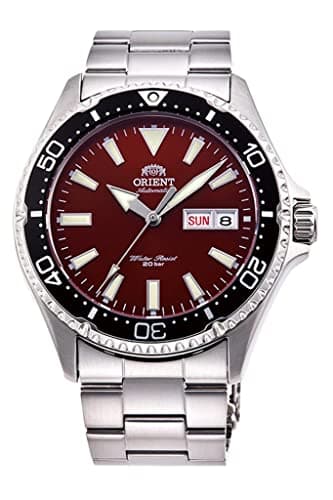
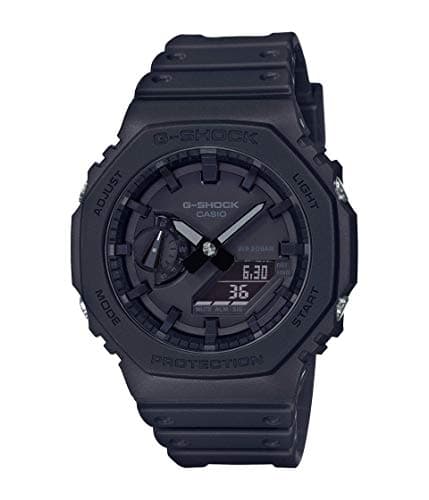
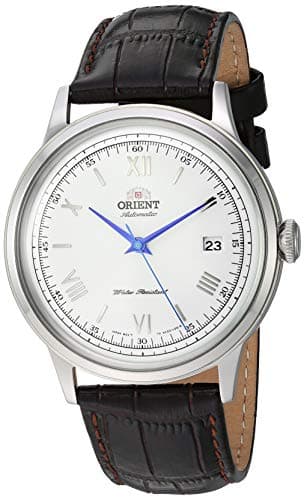
The most expensive thing about a first watch is usually the second one. Almost everyone buys something they stop wearing within a year — too big, too fragile, too specialized — and then buys again properly. This page is an attempt to skip that step, with six watches that are genuinely worth owning as a first watch and a clear account of what each is for.
A word on "entry-level luxury." That phrase usually means Swiss, and it usually means around a thousand dollars. It is a real category and the Hamilton at the bottom of this list is a legitimate entry to it. But it is not the only good answer and it is certainly not the first one — a first watch should be something you can afford to scratch.
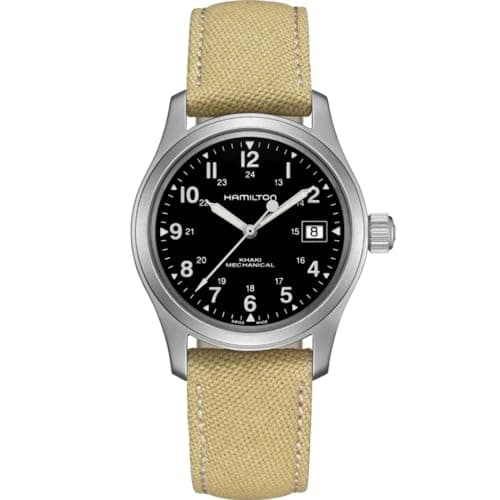
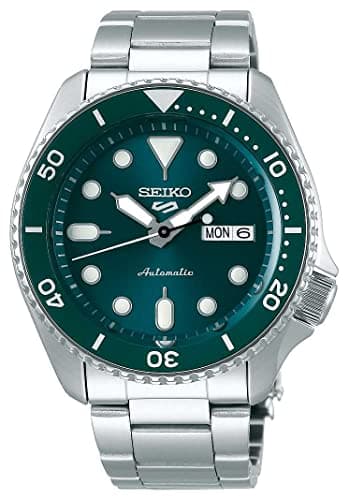
The short version: the Seiko 5 Sports SRPD is the default first automatic and has been for years. The Timex Expedition Scout is around fifty dollars and is the cheapest watch on this site we would recommend without qualification. And the Hamilton Khaki Field Mechanical is the one to stretch for if you want a Swiss watch and intend to keep it.
Buy smaller than you think
This is the single most common and most expensive beginner mistake. Watches look smaller in photographs than on a wrist, and a case that seemed impressive online can overhang badly in person. Measure your wrist, then check the lug-to-lug figure rather than the case diameter — it is the top-to-bottom length across the lugs and it is what actually decides fit. Under about 6.75 inches of wrist, treat 46mm lug-to-lug as your upper limit.
Water resistance decides whether you wear it
A watch you have to take off is a watch you eventually leave in a drawer. 100m means you never think about rain, washing up, a shower or a swim. 50m makes you think about the swim, and 30m makes you think about the sink. For a first watch, 100m or more removes an entire category of anxiety — which is why two of the picks here are dive watches even though you will never dive.
Automatic or quartz, honestly
Quartz is more accurate, cheaper and needs nothing from you. Automatic is the mechanism most people get into watches for: a rotor that winds from your movement, a sweeping seconds hand and something that can be serviced indefinitely. Neither is a mistake. If you are buying a first watch because you find watches interesting, buy the automatic; if you are buying one because you want to know the time, buy the quartz and spend the difference on straps.
What a beginner should not buy first
Three things, consistently. A chronograph, because the busy dial gets tiring and almost nobody times anything. A dress watch, because at 30m water resistance it is the most limited watch you can own. And anything over 42mm unless you have measured your wrist and know it fits. None of these are bad watches — they are bad first watches.
The cheapest real upgrade is a strap
Every watch here except the G-Shock takes a standard 18mm, 20mm or 22mm strap, and the supplied strap or bracelet is almost always the weakest part of the package. Twenty dollars on a NATO or a leather strap changes how a watch looks and wears more than the difference between any two watches on this page. Buying one watch and three straps is the cheapest way to feel like you own three watches.
About "entry-level luxury"
If what you actually want is a Swiss mechanical watch with a name people recognize, the honest entry points are Hamilton, Tissot and Certina at roughly $500 to $1,000 — the Hamilton Khaki Field Mechanical here is the classic. What you are buying at that price is finish, a sapphire crystal, an 80-hour movement and the brand. What you are not buying is better timekeeping or more water resistance than the Japanese watches above it on this list. Our entry-level luxury roundup covers that tier properly.
If you have not settled on a number yet, how much should you spend on a watch goes bracket by bracket through what each step up actually adds, and says where the upgrades stop being things you will notice.
If the shortlist has come down to two mechanical watches, the one specification that changes daily life most is whether it winds itself — set out on manual vs automatic watches.