A solar watch converts light — any light, including a desk lamp — into stored power. There is no battery to change and nothing to wind. For a watch you want to simply work for the next decade without thinking about it, it is objectively the most sensible movement there is, and it is the reason Citizen's Eco-Drive line is so widely recommended.
The catch is that solar is a quartz technology, so you get quartz accuracy and quartz feel. If the appeal of a watch is the spinning rotor and the mechanical heartbeat, this is not your category — read solar vs automatic and buy a mechanical watch instead. If the appeal is a watch that just works, keep reading.
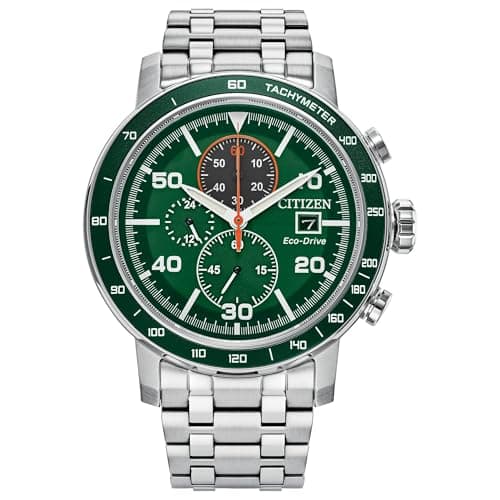
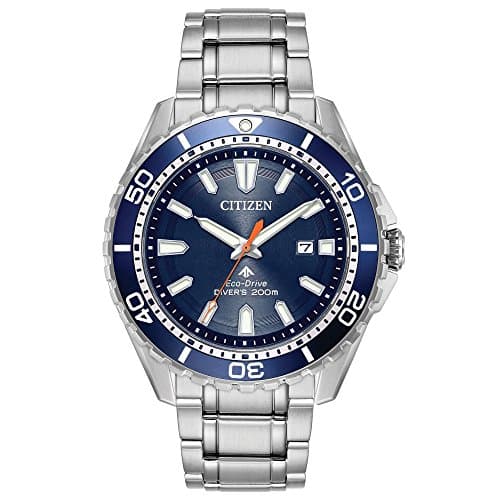
Our pick is the Citizen Promaster Dive Eco-Drive: an ISO-compliant 200m dive tool with a screw-down crown that never needs servicing for a battery, which is a genuinely excellent combination for a watch you take into water. For everyday wear, the Citizen Brycen chronograph adds a sapphire crystal and a working stopwatch for less money.
How solar watches actually work
A photovoltaic cell sits under the dial and charges a rechargeable capacitor — not a disposable battery. Normal indoor and outdoor light is enough to keep it topped up, and a fully charged Eco-Drive will typically run for months in complete darkness. Citizen states that the cell itself is designed for the life of the watch, which is why an Eco-Drive is often described as never needing a battery. The capacitor is a serviceable part after many years, but it is not the every-three-years chore of a conventional quartz battery.
Eco-Drive, Tough Solar, Seiko Solar: are they different?
Functionally, no. Citizen calls its version Eco-Drive, Casio calls its Tough Solar, Seiko simply calls it Solar, and Timex uses its own solar movements. All of them charge from light and store it in a capacitor. Citizen has the deepest and longest-running range by a distance, which is why this list leans heavily on it — not brand preference, just where the options are.
The power-reserve indicator is worth having
Better solar watches tell you the charge state, either with a small indicator or by moving the seconds hand in two-second jumps when the charge runs low. That warning is the difference between noticing a watch needs light and finding it stopped in a drawer. If you keep several watches in rotation, look for it.
Where solar genuinely beats mechanical
Three places. Diving and water sports, because there is no winding crown to worry about and no service interval creeping up. Travel, because you cannot arrive somewhere with a dead watch. And chronographs, where a mechanical equivalent costs many multiples of the price — the Citizen Brycen delivers a real working stopwatch with a sapphire crystal for less than most people spend on a strap for a Swiss chronograph.
Where it does not
A solar watch will never be an heirloom in the way a mechanical one can. The capacitor and the electronics are consumable in a way a mainspring is not, and there is no craft satisfaction in it. If you want to hand a watch to someone in forty years, buy the mechanical one. If you want a watch that works flawlessly for the next fifteen, buy from this page — and if you are really asking which watches never need a battery changed, that list ranks the solar and the mechanical answers side by side.
Straps and fitment
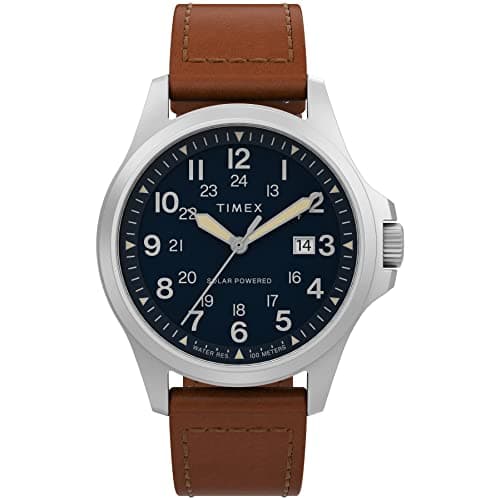
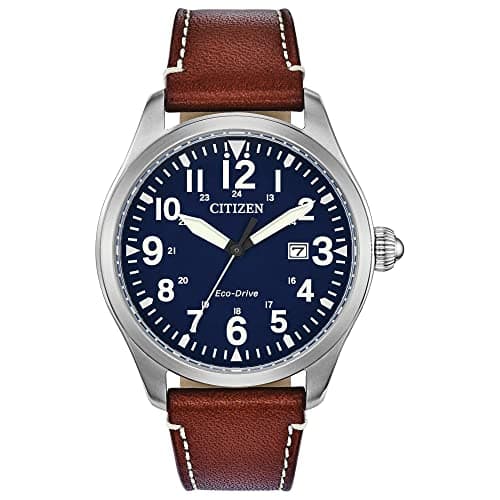
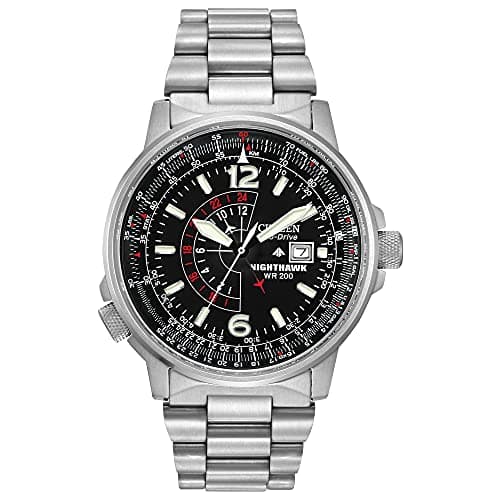
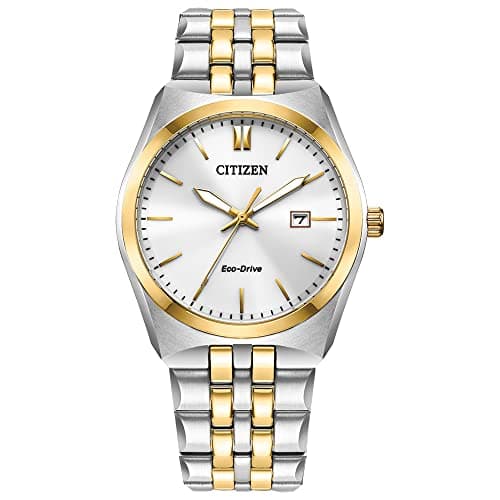
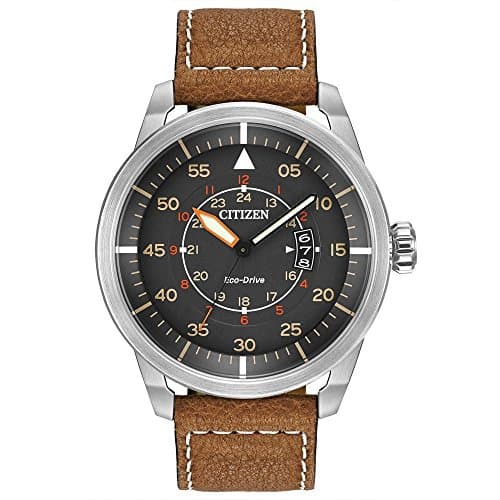
Most picks here take standard straps — the Promaster Eco-Drive is 22mm, the Timex Expedition North and Citizen Corso and Avion are 20mm. The exception is the Nighthawk, whose integrated case makes strap swapping impractical. Check the lug width column above and confirm against the lug width chart.
If you want the mechanism rather than the ranking — how a light-powered movement charges, how long it runs in the dark, and the two warning behaviours that look like faults — what is Eco-Driveexplains Citizen's system with the company's own published figures.
Solar is also the right answer in one specific job where a flat battery mid-shift is a real nuisance — the clinical case is ranked on the best watches for nurses.