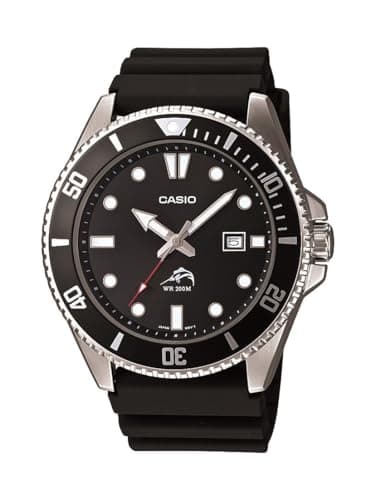
Before anything else: check your own employer's policy. Plenty of units require bare forearms for hand hygiene, which rules out a wrist watch entirely and is why fob watches exist at all. Nothing on this page overrides a local infection-control rule, and if yours says no wrist watches, the honest answer is a fob watch rather than any of these.
Where a wrist watch is permitted, the requirements are unusually specific and almost none of the usual watch-buying criteria apply. Nobody cares about the finishing. What matters is whether you can count seconds on it, whether the band can be wiped down or washed, whether it survives constant hand washing and alcohol gel, and whether losing it would ruin your month.
How this page is ranked
A usable seconds display first. Counting a pulse or respirations needs a sweeping seconds hand or a digital seconds readout you can see without squinting. Every pick here has one. A watch with no seconds indication is useless for the job, which rules out several otherwise excellent watches on this site.
Then the band. Resin and silicone wipe clean and survive alcohol gel. Nylon washes, slowly. Leather does not survive the job, and a steel bracelet is the worst of both worlds — hard to clean between the links and heavy on a twelve-hour shift. Three of the five picks here ship on resin or will take a silicone strap directly; the strap options are ranked on the best rubber and silicone straps.
Then water resistance, because hand hygiene is the single most repeated action in the job. 100m is the sensible floor and 200m is better; watch water resistance explained sets out why a 30m watch is not rated for what people assume. Then legibility at night, and then price, because a nursing watch is a consumable.
Analog or digital for counting
Both work, and the choice is personal. An analog sweeping seconds hand lets you start counting from wherever the hand happens to be, which most people find faster in practice. A digital seconds readout is unambiguous and is easier to read in poor light with a backlight behind it. If you have never tried the digital version, the digital watch roundup ranks the same Casio modules on their own terms.
What does not work is a watch without a seconds indication at all, or one with a seconds hand so thin and low-contrast that you lose it against the dial. That is a legibility judgment and it is why the high-contrast Casio dials dominate this page over prettier watches elsewhere on the site.
The band is the whole hygiene question
A watch band spends twelve hours against skin in a place where cleaning matters. Resin and silicone are the right materials: non-porous, wipeable, unbothered by soap or alcohol gel, and cheap to replace when they eventually perish. Nylon is acceptable and washes in warm water, but it holds moisture — the method is on how to clean a watch strap.
Leather is simply wrong for this job; it absorbs everything and dies within months, and the reasons are set out on how long watch straps last. A steel bracelet is the other mistake: heavy, and the gaps between links are the hardest thing on a watch to clean properly.
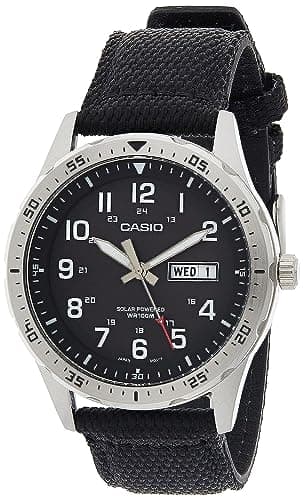
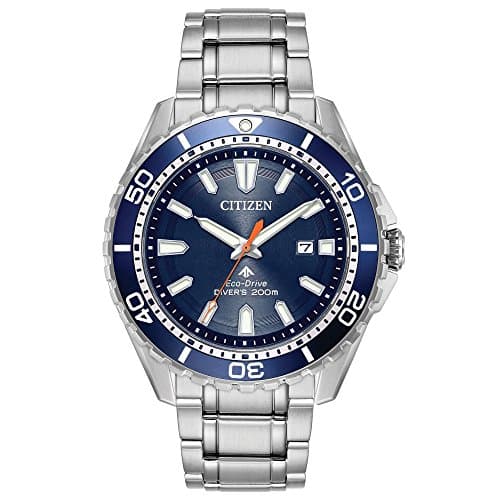
The practical move with the two analog picks here is to buy the watch and immediately fit a silicone strap in the right width — 22mm on the Casio Duro, the Casio MTP-S120L and the Citizen Promaster. Any of the quick-release silicone straps on the quick-release roundup go on in seconds with no tools.
Solar, if you never want to think about it
A dead battery mid-shift is a small, repeated annoyance, and solar removes it. The Casio MTP-S120L Solar is the cheap answer: a 100m analog field watch with a day-date and a 22mm strap for about a hundred dollars. The Citizen Promaster Dive Eco-Drive is the serious one: ISO-compliant 200m, a screw-down crown, and a charge that comes from any light including ward lighting.
The Citizen's caveat is size. At 45mm it is a lot of watch to wear under a gown sleeve for twelve hours, and the MTP-S120L's 49mm lug-to-lug will overhang a smaller wrist. Both numbers are in the table above, and how tight a watch should be covers why fit matters more than diameter on a long shift.
Why the F-91W is last and still on the list
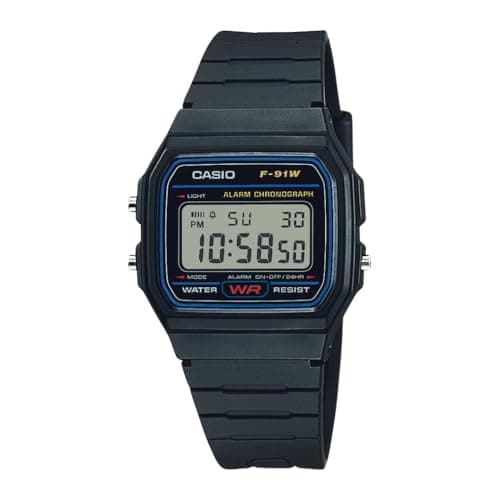
Because it is the honest cheapest answer and because the caveat is real. At 21 grams it is the lightest watch on this site, it has a backlight and an alarm, and it costs about twenty dollars. It is also rated to 30m, which is splash resistance — repeated hand washing with the watch on will eventually get inside it. People buy them anyway, because at that price the watch is a consumable and replacing one costs less than lunch.
What we would buy
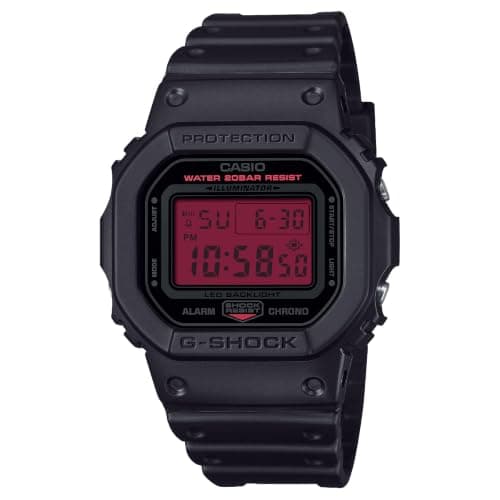
One watch for nursing: the Casio Duro, with a silicone strap fitted on day one. Night shifts and a backlight: the DW-5600. Never change a battery: the Casio MTP-S120L Solar, or the Citizen Promaster if you want ISO-rated 200m and do not mind 45mm. Absolute lowest cost: the F-91W, understanding the 30m limit.