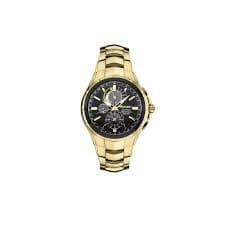
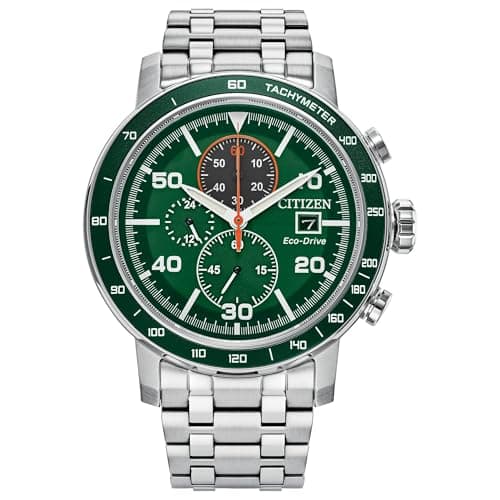
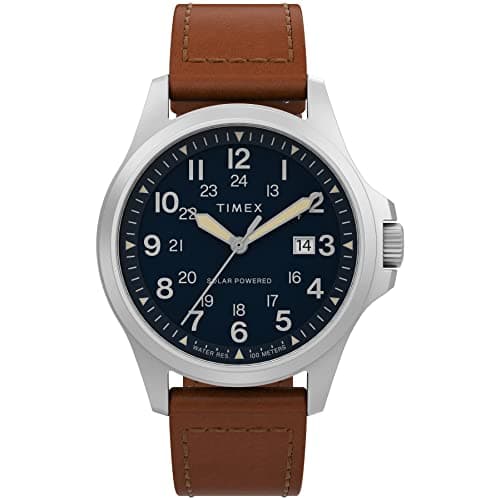
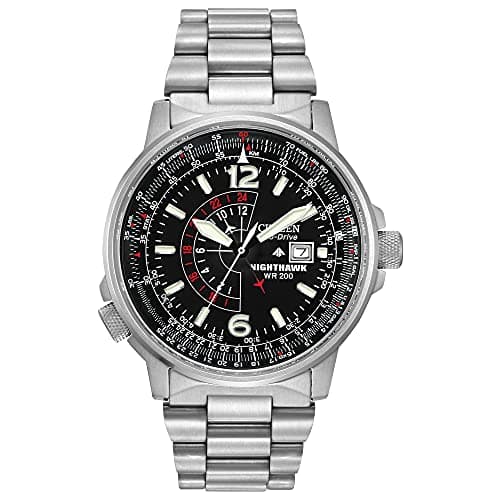
Both Citizen's Eco-Drive and Seiko's solar movements do the same thing: a photovoltaic cell under the dial converts light into electricity, which charges a rechargeable cell, which runs a quartz movement. No battery to replace, no case to open, no winding. It is quietly one of the best ideas in watchmaking and both brands do it well.
The differences are real but narrower than the marketing implies. Citizen has been at it longer, brands it harder, and puts it in a far wider range of watches — which is the single most practical difference for a buyer. Seiko's solar range is smaller and tends to appear in specific collections rather than across the board.
We have ranked the best light-powered watch from each here, plus a Timex, so the comparison is grounded in watches you can actually buy rather than in a technology argument.
How both systems work
Light passes through the dial — which is translucent even when it looks solid — and hits a solar cell underneath. The cell charges a secondary battery, sometimes called a capacitor or a rechargeable cell, and that runs the movement. Any light works: daylight charges fastest, but office lighting contributes too. Neither system needs direct sun, and neither needs you to think about it if the watch is worn in daylight regularly.
Power reserve when it is dark
Both brands publish reserves measured in months from a full charge, and both include a power-save mode: leave the watch in a drawer long enough and the seconds hand stops or jumps in intervals to conserve charge while keeping time internally. Bring it back into the light and it resumes at the correct time. In practical terms, a solar watch left in a dark drawer for a season is fine; one left in a safe for years is not, and will need a proper recharge.
The fifteen-year question
This is the real difference between light-powered watches and ordinary quartz, and it is worth understanding before you buy. The rechargeable cell is not immortal — it holds less charge as the years pass, in the same way a phone battery does. Both Citizen and Seiko treat it as a serviceable part, and replacing it is a workshop job rather than a two-minute battery swap at a counter. It is far less frequent than a battery change, but it is not never.
Where Citizen has the practical edge
Range. Citizen builds Eco-Drive into divers, pilot watches, chronographs, dress watches and field watches, so whatever kind of watch you want, there is usually an Eco-Drive version of it. Seiko's solar models cluster in fewer collections. If you have decided you want a light-powered watch and you also want a specific kind of watch, Citizen is more likely to have both in one product — which is why three of the four picks here are Citizens.
Where Seiko has the edge
Seiko's solar chronographs, particularly in the Coutura line, tend to arrive with higher-specification cases and extras like radio synchronization and sapphire, and Seiko's finishing at a given price is often a touch sharper. Seiko also has the broader mechanical range, which matters if you expect to own several watches from one brand.
Do not overlook the third option
Timex, Casio and others build perfectly good solar watches too, and the Timex Expedition North ranked here is the clearest example: sapphire, 100m, a screw-down crown and solar power, at a price below either brand's equivalent. "Eco-Drive versus Seiko Solar" is a real question, but it is not the only question — buy the best watch that happens to run on light rather than choosing the technology brand first.
The verdict
There is no meaningful technological winner; both systems are mature, reliable and do what they claim. Choose the watch, not the badge. If you are genuinely undecided and want a rule of thumb: Citizen for range and value, Seiko for a specific high-specification solar chronograph, and Timex if you want the most capable watch per dollar and do not mind that it says Timex on the dial.
If what you actually came for is how the Citizen half of this works — charge times, run time in the dark, power save and the low-charge warning, that is set out on what is Eco-Drive.