Eco-Drive is the answer to the question
Citizen's Eco-Drive converts light — any light, including indoor light — into energy stored in a rechargeable cell. There is no battery to replace, no winding, and no watch sitting dead in a drawer because you forgot about it for a season. Leave it near a window and it runs.
That matters more than it sounds. The practical annoyances of watch ownership are a battery that dies at the wrong moment on a quartz watch, and a mechanical watch that needs winding, setting and eventually servicing. Eco-Drive removes both. For a watch you want to own rather than maintain, it is the single best movement technology at this end of the market, and it is why five of the six watches below use it.
Seiko's solar movements do the same job and the comparison is genuinely close — we run it in full on Citizen Eco-Drive vs Seiko Solar. The honest summary is that Citizen committed to solar across its whole range decades before anyone else and has more of it, at more price points, than any rival.
The tool-watch credentials are real, not styling
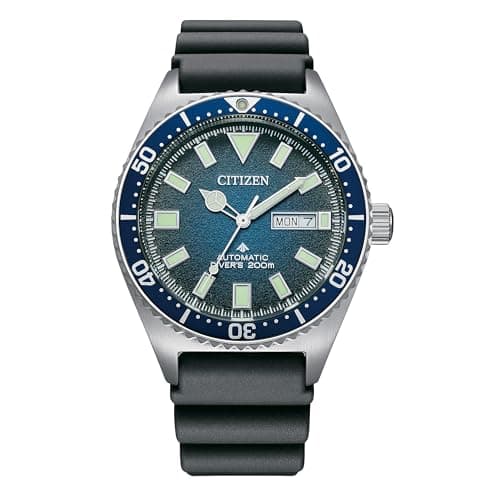
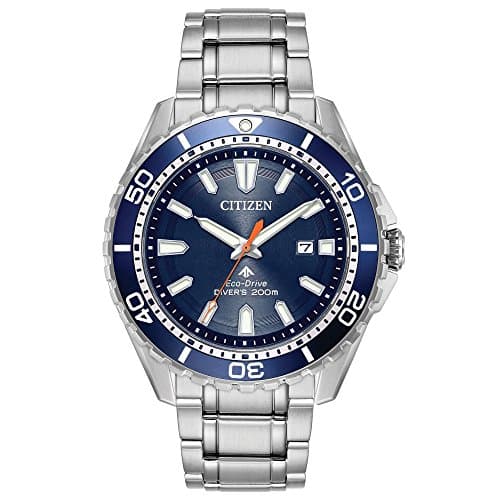
This is the half of Citizen that gets overlooked. The Promaster line is not dive-styled fashion — the Promaster Dive Eco-Drive is ISO-compliant at 200m with a screw-down crown and caseback, and the Promaster Dive Automatic carries full ISO 6425 certification. Those are the markings that separate a dive tool from a watch that looks like one, and plenty of better-known brands at the same money do not have them.
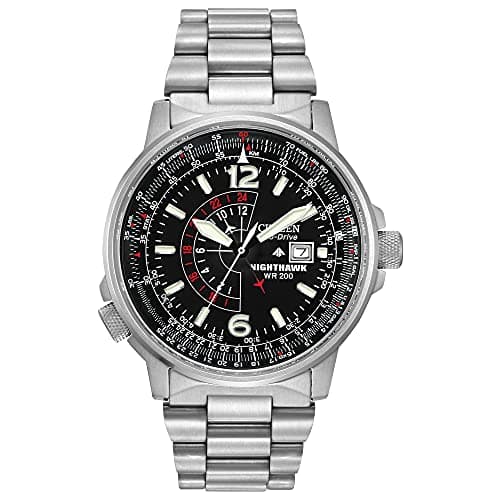
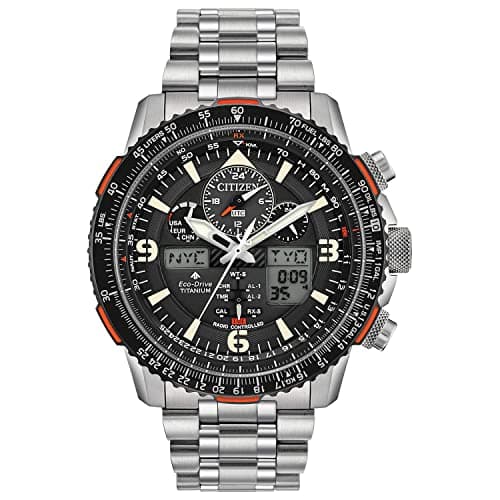
The Nighthawk makes the same point from a different direction: a pilot watch with a working slide-rule bezel, dual time, Eco-Drive, and a 200m rating. 200m on a pilot-styled watch is unusual to the point of being slightly absurd, and it is a good illustration of Citizen specifying for capability rather than for the category convention.
Miyota: Citizen makes movements for everybody else
Citizen's movement arm, Miyota, is one of the largest mechanical movement manufacturers in the world and supplies calibers to a long list of microbrands and mid-range names. When a small independent brand advertises a "Japanese automatic," there is a good chance it is a Miyota.
The practical consequence is that Citizen's own automatics are a known, serviceable, widely-understood quantity rather than something exotic. The Promaster Dive Automatic uses Citizen's 8204 automatic — and our honest note on it, carried on the product card below, is that the hand-winding action feels a touch less refined than Seiko's 4R36 at the same money. It is reliable rather than delightful.
Citizen also owns Bulova, which is why you will occasionally see the two brands cross-shopped and why Bulova's quartz chronographs sit in the same conversation. That is a corporate fact rather than a buying argument — the two ranges are run separately.
The caveat: mineral crystal, well above the price it should stop
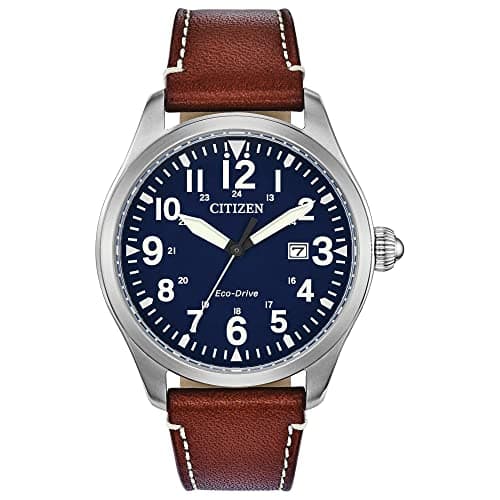
Here is the honest complaint, and it is a specification rather than an opinion. Look down the Crystal column of the table above. The Promaster Dive Eco-Drive is mineral. The Nighthawk is mineral. The Promaster Dive Automatic is mineral. The Garrison is mineral. All four sit at prices where the Orient Kamasu gives you a sapphire crystal on a 200m automatic, and where the Timex Expedition North gives you sapphire on a 100m solar field watch for considerably less.
Mineral glass is roughly 5 to 6 on the Mohs hardness scale and ordinary sand is quartz at 7, so grit scratches it — the full argument is on sapphire vs mineral crystal. On a cheap watch that is the right call. On a three-hundred-dollar watch sold on the promise that it will keep running for a decade without attention, it is the one part that will visibly age, and it undercuts the pitch.
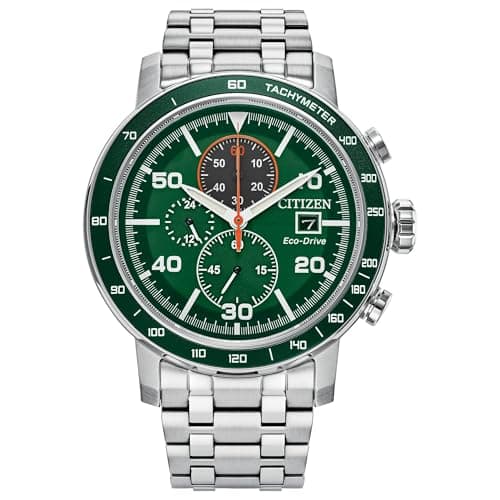
Citizen does solve it inside its own range. The Brycen chronograph and the Skyhawk A-T both have sapphire. But the watches most people buy first do not, and a buyer who cares about the crystal has to go looking rather than simply buying the flagship.
The second caveat: dial density and strap options
Citizen's tool watches tend toward busy. The Nighthawk's slide rule and the Skyhawk's analog-digital world-time display are genuinely dense instruments that reward learning and punish glancing — the Skyhawk's manual is not optional. If you want a clean dial you can read in half a second, a plain diver or field watch is the better buy and Citizen makes those too.
The related practical limit is strap swapping. Several Citizens use integrated or non-standard fittings, and the manufacturer does not publish a lug width for every reference — which is why the spec table above prints a dash on the Nighthawk and the Brycen rather than a figure we could not verify. Where Citizen does use standard lugs it uses common widths: the Garrison and Skyhawk are 22mm, the Promaster Dive Automatic 20mm, so those three drop straight into the usual strap drawer.
Citizen against Seiko, which is the real question
Most people asking whether Citizen is good are really asking whether to buy a Citizen or a Seiko, and the honest answer splits on movement type.
If you want a solar or quartz watch you never maintain, Citizen wins. The Eco-Drive range is broader, the dive credentials are stronger at the price, and the whole brand is built around that promise. If you want a mechanical watch, Seiko wins — the 4R36 is the better automatic to own and live with, the lume is better, and the enthusiast aftermarket is incomparably bigger. We argue it at length on Seiko vs Citizen.
And if the crystal is what decides it, Orient — which Seiko owns — undercuts both with sapphire at the same price, which is the uncomfortable fact sitting underneath this whole page.
So: is Citizen a good watch brand?
Yes. It is a genuinely good brand making genuinely capable watches, and Eco-Drive is the most useful piece of technology in affordable watchmaking — a watch that works for a decade with no attention is worth more to most people than a movement they can admire through a caseback.
Buy a Citizen when you want capability without maintenance: a real 200m diver, a real pilot watch, a real chronograph, all solar-powered. Do not buy one expecting the finishing, crystal or enthusiast cachet of a watch bought for the movement, and check the Crystal column before you commit. The six below are the ones we would actually buy, and the full Citizen roundup ranks the wider range including the dressier Eco-Drives.