Before anything else, the honest part. A G-Shock is extremely good at what it does. Casio publishes shock-resistant construction, a 200-meter water-resistance rating across the line, battery lives measured in years or no battery at all on the Tough Solar models, and a starting price under fifty dollars. That combination is why the line has run since 1983 and why the Mudmaster and the square are on soldiers, nurses and construction sites. Nothing on this page is here because the G-Shock is bad. Every pick on this page exists because of something a G-Shock is not.
So the useful question is which part you are trying to replace, and in practice it is almost always one of four. The look: a digital resin watch does not go with a lot of wardrobes, and no amount of specification argument changes that. The band: every G-Shock uses a proprietary resin strap bolted into the case, so a drawer of 20 and 22mm straps is useless to you. The size: Casio publishes lengths of 46.7 to 48.9mm and heights of 11.8 to 14.7mm across the models we rank, and the taller shapes are genuinely big watches. The crystal: not one G-Shock in our registry has sapphire.
The ranking below is ordered by those four things, weighted in this sequence. First, published water resistance and whether the crown screws down, because if an alternative cannot get wet it is not an alternative to a 200m watch. Second, lug width — the whole point of most of these searches is a watch that takes a normal strap, and five of the six do. Third, what keeps it running: a light-powered or automatic movement means a tough watch that never gets opened, which is the one real durability argument against a battery. Fourth, crystal, where exactly one pick here beats every G-Shock outright.
What none of them matches is the shock-resistant construction itself — a module suspended inside the case so impact energy travels through the resin rather than into the movement. That is Casio's own published construction claim, it is specific to the G-Shock line, and no watch on this page has an equivalent. If you drop tools on your wrist for a living, the honest answer is that you should buy a G-Shock, and our G-Shock roundup is the page for that rather than this one.
Five of six take a standard strap — which is the whole point
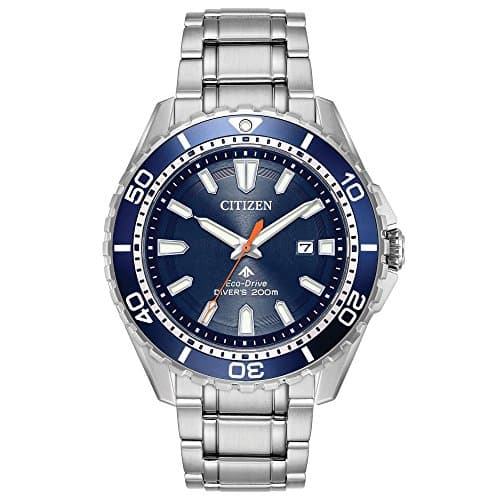
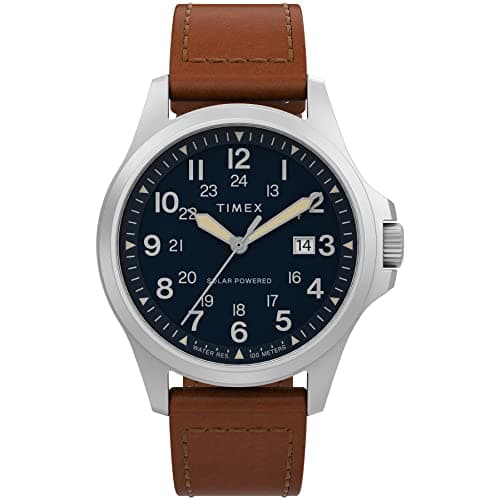
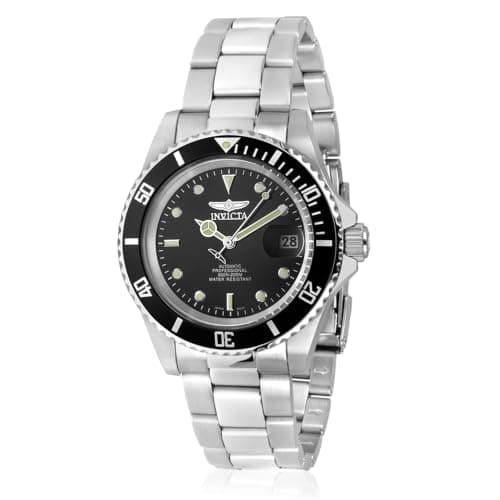
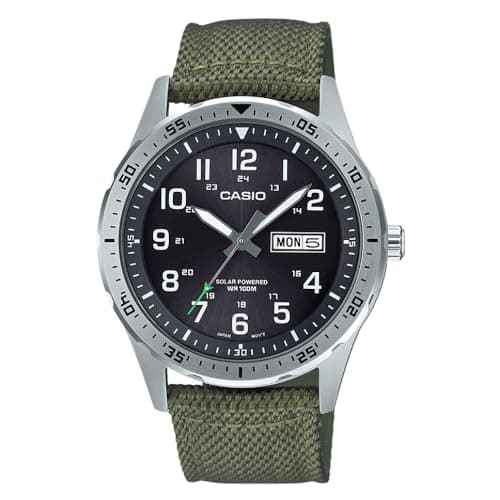
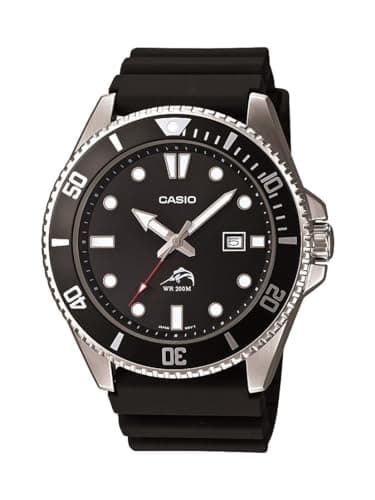
This is the criterion that separates this page from the G-Shock line most cleanly. The Casio Duro, the Citizen Promaster and the Casio MTP-S120L all take 22mm straps. The Timex Expedition North and the Invicta Pro Diver take 20mm. That means a strap from our 22mm roundup or our 20mm roundup fits, and a twenty-dollar nylon strap turns one of these into a different watch. No G-Shock in our registry can do that at any price.
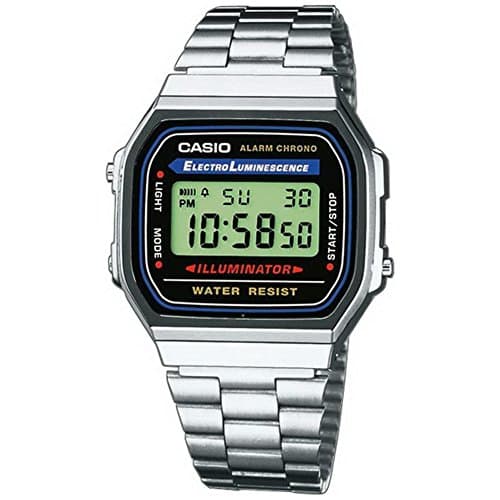
The exception is the sixth pick. The Casio A168WA-1 has an integrated bracelet, so it shares the G-Shock's band problem exactly — you cannot change it. It is on this page for a different reason: it is the one pick that keeps the cheap digital Casio character in a 38.6mm steel case rather than a resin one, at roughly a third of the price of the cheapest G-Shock. If the strap drawer is your reason for being here, skip it and buy the Duro.
Water resistance: three of six match the G-Shock's 200m
The Casio Duro, the Citizen Promaster and the Invicta Pro Diver all publish 200m, the same rating every G-Shock in our registry carries, and all three do it with a screw-down crown rather than a push-pull one — the mechanism our crown guide explains in detail. The Citizen goes one step further: its rating is published as ISO 6425 compliant, which is a stronger claim than a bare 200m number because it covers the bezel, legibility in darkness, salt water and shock resistance as well as pressure. No G-Shock we rank publishes that certification.
The Timex Expedition North and the Casio MTP-S120L publish 100m, which our water-resistance explainer treats as a swim-and-shower rating — genuinely enough for almost everyone, but a step down, and we rank them accordingly. The Casio A168WA-1 publishes 30m, which is splashes and handwashing only. That is the single biggest compromise on this page and it is the reason the cheapest pick finishes last rather than first.
The one specification where an alternative wins outright
Sapphire. Every G-Shock in our registry has a mineral crystal, and so do four of the six picks here — but the Timex Expedition North Field Post Solar publishes a sapphire crystal at around two hundred dollars, which is remarkable at that price and is the reason it ranks third despite a 100m rating. Our sapphire against mineral comparison sets out what the difference actually buys you: sapphire resists scratches far better and chips more readily, which for a watch that lives on a desk or a toolbelt is a trade worth making.
The Timex also runs on solar power, so like the Citizen it is a watch that never needs to be opened. Between the two, the Citizen is the tougher watch on paper and the Timex is the better-finished one with the better crystal and the smaller 41mm case. Neither claims shock-resistant construction.
Never opening the case: the real durability argument
A water-resistance rating is measured on a sealed case with fresh gaskets. Every time a case is opened for a battery, that seal is remade by whoever happens to be doing the work. Three of the six picks here sidestep the problem entirely. The Citizen Promaster and the Casio MTP-S120L are light-powered, so in normal use there is no cell to replace. The Invicta Pro Diver is a mechanical automatic — a Seiko NH35A, wound by your wrist — so there is no cell at all.
This is exactly the argument Casio makes for its own Tough Solar G-Shocks, and if it is the reason you are shopping, it is worth knowing that the solar G-Shocks exist too. Our list of watches with no battery to change covers the principle across every category. The Duro and the A168 are both ordinary quartz watches and will need a cell eventually; on a sixty-dollar watch that is a smaller concern than it sounds.
Fit: every one of these is smaller than a G-Shock
Published figures, by the lug-to-lug span rather than the diameter, because that is what decides overhang. The Invicta Pro Diver is a 40mm case; the Timex Expedition North is 41mm; the Casio MTP-S120L publishes 42mm with a 49mm lug-to-lug; the Casio Duro is 44mm with a 48mm lug-to-lug; the Citizen Promaster is 45mm with a 48.8mm lug-to-lug. The A168 is the smallest thing here at 38.6mm × 36.3mm.
Against that, Casio publishes 48.5mm of length for the GA-2100 and 48.9mm for the DW-5600. So on width the Citizen and the Duro are about the same size as a G-Shock, and the Timex and the Invicta are meaningfully smaller. Where the alternatives mostly lose is height: a GA-2100 at 11.8mm is slimmer than almost everything on this page. Our watch size guide explains the measurement, and the best divers for small wrists is the page to read if 48mm is already too much watch.
What is not on this page, and why
No Pro Trek, no Garmin Instinct, no Suunto, no Apple Watch. The first is a Casio and would be a fair answer; the others are a different product category — a smartwatch replaces a phone function rather than a tough watch, and our watch against smartwatch piece covers why we treat them separately. None of them has a verified live listing in our registry, and we rank only what we can price for you from the live feed.
Also absent: the Seiko Prospex Turtle and the Orient Kamasu, both of which publish 200m and both of which would beat several picks here on finishing. They are dive watches first, and at two to nine times the price of the Duro they are not answering the same question. If your budget has room, read the best divers under $500 instead.