Skip to content
Lug Leather

Guides · Guides & Comparisons

Luxury Watch vs Smartwatch

One does more things this year. The other still works in twenty. This is a real trade-off, and it is not the one most articles pretend it is.

By Stephen V.Updated How we research
#ad

We earn a commission when you buy through our Amazon links, at no extra cost to you. It never affects our picks, and we say so when the cheaper watch is the better buy. How this works.

A smartwatch is a better product than a mechanical watch by every measure a product review normally uses. It does more, it costs less than an equivalent-feeling traditional watch, and it tells the time more accurately than any mechanical movement ever built. If you are weighing this decision on features, stop — the smartwatch wins and it is not close.

The reason people still buy traditional watches is that they are not really competing. One is a consumer electronics device with a service life measured in a handful of years; the other is an object designed to be repaired rather than replaced, worn without charging and, in the mechanical case, handed on. Those are different categories of purchase.

Below we set out the honest trade-offs — lifespan, charging, repairability, resale, attention — and then rank three traditional watches for anyone who decides that is the side they are on. We do not sell or recommend smartwatches, so treat the comparison as an explanation rather than a shootout.

The short answer

Quick picks

#WatchBest forScorePrice
01
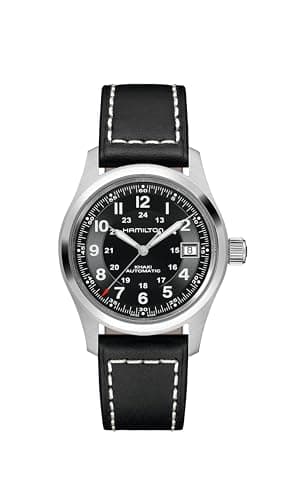
Hamilton Khaki Field Automatic (38mm)

The Khaki Field for people who never want to wind a watch. Same brilliance, plus a rotor.

A set-and-forget field watch
9.0
Check price →
02
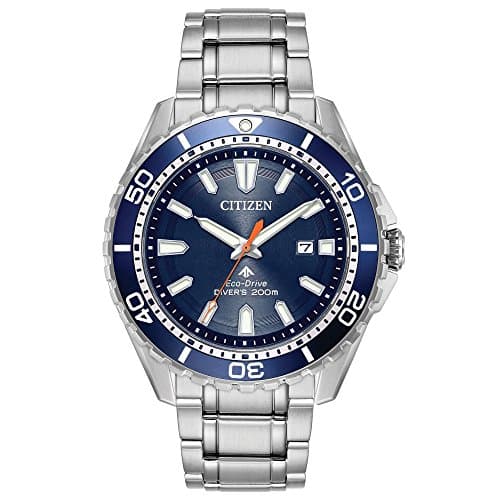
Citizen Citizen Promaster Dive Eco-Drive (BN0191)
Citizen Promaster Dive Eco-Drive (BN0191)

An ISO-compliant 200m diver that never needs a battery or a wind. The set-and-forget diver.

A no-maintenance dive tool
8.0
$356.25Amazon
03
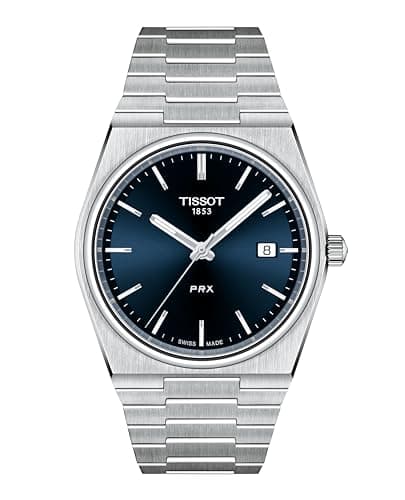
Tissot Tissot PRX Quartz (40mm)
Tissot PRX Quartz (40mm)

The integrated-bracelet Swiss watch that started the trend — brilliant, and strap-proof.

Entry-level Swiss style
7.8
$450.00Amazon

#ad · Live prices from the Amazon Product API, as of Sep 5, 2026. Where we have no verified live price, we show none — we would rather leave a gap than print a number that has rotted.

Side by side

The spec table

Every published number that decides fit and function — including the lug width, so you know which strap fits before you buy.

WatchCaseLug-to-lugLug widthWater resMovementCrystal
Hamilton Khaki Field Automatic (38mm)38mm46.5mm20mm50mHamilton H-10 automatic (80h)Sapphire
Citizen Promaster Dive Eco-Drive (BN0191)45mm48.8mm22mm200m (ISO compliant)Citizen E168 Eco-Drive (solar)Mineral
Tissot PRX Quartz (40mm)40mmIntegrated (no standard lug)100mSwiss quartzSapphire

In detail

The picks, in full

01

A set-and-forget field watch

Hamilton Khaki Field Automatic (38mm)

38mm20mm lug50mH-10 · 80h auto
9.0/10

The Khaki Field for people who never want to wind a watch. Same brilliance, plus a rotor.

Legibility
10
Build
9
Movement
9
Versatility
9
Value
8

Pros

  • The 80-hour automatic H-10 movement means it keeps running through a weekend off the wrist
  • Same 38mm case, sapphire crystal and field-correct dial as the mechanical
  • Genuine Swiss-made value at its price point

Cons

  • Sits a fraction thicker than the hand-wound version to fit the rotor
  • Costs more than the mechanical for the same look

Skip this one if…

you actually enjoy the hand-winding ritual — the mechanical version is thinner, cheaper and more tactile if that's you.

Check price on Amazon →

We don't have a verified live price for this right now, so we aren't showing one.

#ad · we may earn a commission from this link to Hamilton Khaki Field Automatic (38mm)

02
Citizen Citizen Promaster Dive Eco-Drive (BN0191)

A no-maintenance dive tool

Citizen Promaster Dive Eco-Drive (BN0191)

45mm22mm lug200m ISOEco-Drive
8.0/10

An ISO-compliant 200m diver that never needs a battery or a wind. The set-and-forget diver.

Legibility
9
Build
8
Movement
8
Versatility
7
Value
8

Pros

  • ISO-compliant 200m dive credentials with a screw-down crown and caseback
  • Eco-Drive runs on light — no battery to die mid-trip and no winding to remember
  • 22mm lugs, so it shares the strap drawer with every Seiko diver on this site

Cons

  • 45mm with a 48.8mm lug-to-lug — this is a big watch and it wears like one
  • Mineral crystal rather than sapphire at this price

Skip this one if…

your wrist is under about 7 inches. The 48.8mm lug-to-lug is the number that decides it, and it will overhang — the Orient Kamasu is the smaller 200m answer.

$356.25View on Amazon

$495.0028% off

Price as of Sep 5, 2026. Prices change — Amazon's is the one that counts.

#ad · we may earn a commission from this link to Citizen Promaster Dive Eco-Drive (BN0191)

03
Tissot Tissot PRX Quartz (40mm)

Entry-level Swiss style

Tissot PRX Quartz (40mm)

40mmIntegrated bracelet100mSwiss quartz · sapphire
7.8/10

The integrated-bracelet Swiss watch that started the trend — brilliant, and strap-proof.

Legibility
8
Build
9
Movement
7
Versatility
7
Value
8

Pros

  • A genuinely well-finished Swiss watch with a sapphire crystal and 100m water resistance
  • The 70s tonneau case and integrated bracelet look far more expensive than the price
  • Quartz means it is thinner and more accurate than the automatic version, for much less money

Cons

  • The integrated bracelet is the whole design — there is no standard lug width, so aftermarket straps do not fit
  • Quartz, so no mechanical charm; the automatic PRX costs substantially more

Skip this one if…

you want to swap straps. This is the one watch on the site that cannot take a normal strap, which for a site built around lug width is worth saying plainly.

$450.00View on Amazon

Price as of Sep 5, 2026. Prices change — Amazon's is the one that counts.

#ad · we may earn a commission from this link to Tissot PRX Quartz (40mm)

Lifespan is the real difference

A smartwatch is a computer: it has a sealed lithium battery that degrades with every charge cycle, an operating system that eventually stops receiving updates, and a screen that will not be replaced economically. A working service life of several years is normal. A mechanical watch can be serviced indefinitely, and a solar quartz watch like the Citizen Promaster here will run for decades on light alone. That is the entire argument, and it is a strong one.

Charging, and the friction it creates

A smartwatch is a device you manage: on the charger overnight, off your wrist while it charges, sometimes flat when you want it. A mechanical watch winds itself as long as you wear it. A solar watch charges from the light already in the room. Neither of those is a feature anyone lists, but the absence of a nightly routine is the thing traditional-watch owners notice most when they switch back.

Repairability and what you actually own

A mechanical watch is made of individually replaceable parts, and a competent watchmaker can keep a fifty-year-old movement running. A smartwatch is a sealed assembly with a service window and a support horizon set by its manufacturer. If the idea of owning something you can have fixed rather than replaced appeals to you, that instinct is the honest reason to choose a traditional watch.

What a smartwatch genuinely does better

Almost everything measurable. Notifications, navigation, payments, workout tracking, heart rate, sleep, fall detection, and time that is always exactly right because it syncs from the network. If any of those change how you go about a day — and for a lot of people the health features genuinely do — no argument about heritage should talk you out of it.

Resale and the cost of ownership

A smartwatch depreciates to near zero over its support life, in the way electronics do. A well-chosen traditional watch holds a fraction of its value, and a small number hold most of it. That is not a reason to buy a watch as an investment — treating watches as investments is a reliable way to lose money — but it does change the real cost of five years of ownership more than the sticker price suggests.

The answer most people actually land on

Both, worn for different things: a smartwatch for training and travel, a traditional watch for the rest of the week. It is a slightly unsatisfying conclusion, but it is what happens in practice, and it is why the market for mechanical watches grew rather than collapsed after smartwatches arrived. If you can only have one and you want the health tracking, buy the smartwatch — and know that the watch you buy afterwards will still be running long after it stops.
How we picked

We do not run a testing lab

We compiled the published manufacturer specifications for every watch here — case size, lug-to-lug, lug width, water resistance, movement and crystal — did the wrist-fit and value math, and scored each pick against a published rubric. The scores are judgments from documented research — they are not measurements we took or wrist-time we logged, because we do not have these watches and we are not going to pretend we do. Where a spec could not be verified we wrote "data unavailable" rather than guessing.

Questions

Frequently asked

Is a luxury watch or a smartwatch a better buy?
On features, the smartwatch, comfortably. On lifespan, repairability and cost of ownership over decades, the traditional watch. A smartwatch has a service life of a few years limited by battery degradation and software support; a mechanical watch can be serviced indefinitely and a solar quartz runs for decades on light.
How long does a smartwatch last compared to a mechanical watch?
A smartwatch's working life is typically measured in a handful of years, limited by a sealed battery that degrades with charge cycles and by the end of software support. A mechanical watch is designed to be serviced rather than replaced and can run indefinitely with periodic maintenance.
Do people still buy mechanical watches?
Yes, and in greater numbers than before smartwatches existed. The two are not really substitutes: one is a consumer electronics device and the other is a repairable object worn for reasons that have little to do with features. Most people who own both wear them for different things.
Can a traditional watch do anything a smartwatch cannot?
Work for twenty years without charging, be repaired instead of replaced, and hold some resale value. A solar quartz watch will run for decades on ambient light; a mechanical one winds itself from your movement. Beyond that, a smartwatch does more of everything measurable.
What is the best traditional watch to buy instead of a smartwatch?
It depends on what you want from it. The Hamilton Khaki Field Automatic is the mechanical answer, with an 80-hour reserve and a sapphire crystal. The Citizen Promaster Eco-Drive is the low-maintenance answer, running on light with a 200m case. The Tissot PRX is the answer if you want Swiss styling on an integrated bracelet.

Keep reading

Receipts

Sources

We do not run a testing lab, and we do not pretend to. Every spec above traces to a manufacturer listing or a named standard; where we could not verify something, we say so on the page rather than quietly leaving it out. Read our full method.