A thousand dollars is the most interesting ceiling in watches, and also the most misunderstood. Below about $500 every extra dollar buys you a measurably better watch — sapphire instead of mineral, 200m instead of 50m, an automatic instead of a quartz. Between $500 and $1,000 that stops being true. The movements do not get much more capable, the water-resistance ratings do not climb, and what you are actually buying is one specification that cheaper watches do not offer at all. So the right way to shop this bracket is to decide which specification you want, and then buy the cheapest honest watch that has it.
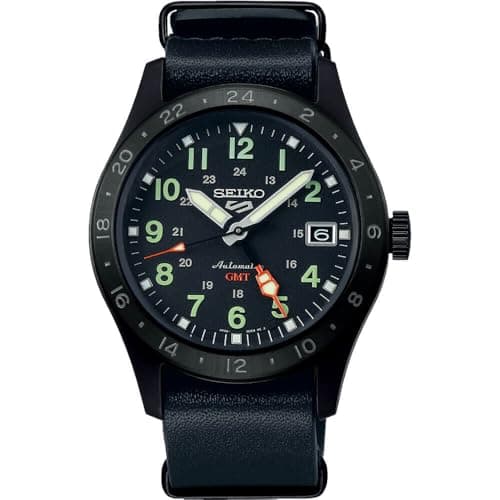
That is how this page is built. It is the top rung of a ladder — under $200, under $300, under $500 and now this — and it is deliberately one pick per specification rather than seven similar watches. In order, the seven specifications are: an 80-hour Swiss automatic, radio-set atomic world time, a certified ISO 6425 dive rating, a sapphire-crystal chronograph, a titanium case, a mechanical GMT hand, and the cheapest thing on the page that already does the job.
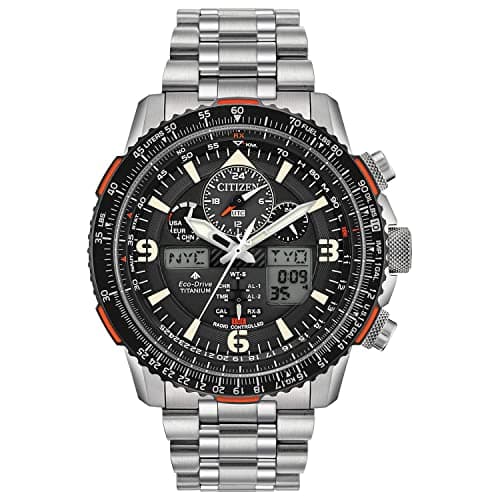
The ranking criteria, in the order we applied them: whether the watch delivers a specification you genuinely cannot get for less; then published water resistance and whether the crown screws down; then crystal; then fit, measured as case size, lug-to-lug and lug width. Every figure in the spec table is a published manufacturer specification. Several makers here publish no lug-to-lug — Citizen for the Skyhawk and the Super Titanium, Seiko for the Coutura, Hamilton for the Murph — and those cells read "—" rather than a number we invented.
One thing this page will not do is tell you to spend the budget. Four of the seven picks cost a fraction of the ceiling, and the cheapest watch here beats most of the others on the single specification a watch is most often asked for. If you are not sure the money is worth it, how much should you spend on a watch is the honest version of that argument.
What $1,000 actually buys that $300 does not
Four things, and it is worth being precise about them because the marketing in this bracket is vague.
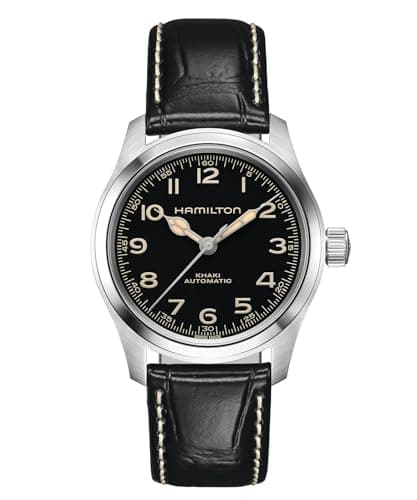
- A long power reserve. Most affordable automatics publish about 40 hours, which means a watch left off on Friday has stopped by Sunday. Hamilton's H-10 is published at 80. That is a genuine engineering difference and the clearest thing the Murph gives you over a Seiko 5.
- Swiss case and dial finishing. Hard to quantify and easy to see in person: edge definition, hand polishing, dial printing. We are not going to score it and we are not going to pretend it is nothing.
- Function density. The Skyhawk sets itself by radio signal, holds world time and UTC, and adds a perpetual calendar and chronograph on solar power. Nothing at a third of the price comes close on function count.
- Materials. Titanium and sapphire both appear reliably here and only occasionally below $300. Our titanium roundup and sapphire roundup cover each one on its own.
What it does not buy is accuracy. A solar quartz on this page keeps far better time than the Swiss automatic above it, for a quarter of the money. That is not a flaw in the Hamilton — it is what mechanical watches are, and quartz vs automatic sets out the trade properly.
The sixty-dollar argument
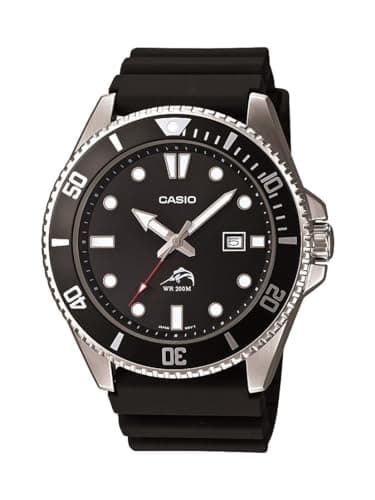
The Casio Duro is on this page on purpose. It publishes a 200m water-resistance rating, the highest figure on this page alongside the Turtle, the Skyhawk and the Super Titanium, and higher than the Hamilton, the Coutura and the Seiko 5 Sports Field GMT. It is a quartz, so it keeps better time than the mechanical picks. Its crystal is mineral, its bezel action is scratchy, and its bracelet is the first thing owners replace — all true, and none of it touches the rating.
We are not claiming the Casio is the equal of a Swiss automatic as an object. It plainly is not. We are saying that if your reason for shopping this bracket is "I want a watch I can swim with," you can satisfy that reason for about six percent of the ceiling and spend the rest on something else. Buying up from there should be a decision about the object, not about capability. That is the whole reason this site prints the ratings.
Check the top pick's live price before you commit
One practical note on the Murph: it is the only pick here that uses nearly the whole budget, and live Amazon pricing moves. If the figure in the table has drifted over $1,000 by the time you read this, the Hamilton Khaki Field Automatic is the same H-10 movement, the same sapphire crystal and the same 38mm case for meaningfully less — you are giving up the display caseback and the Interstellar dial, not the engineering. Everything on this page is priced from the live feed with its "as of" timestamp printed under the table, so the number you see is the number we last read.
ISO 6425 is the strongest water-resistance claim here
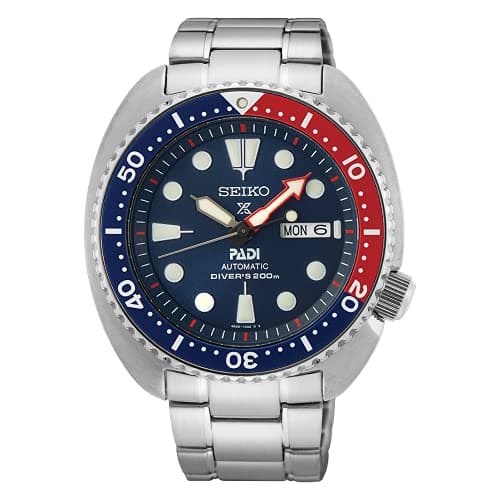
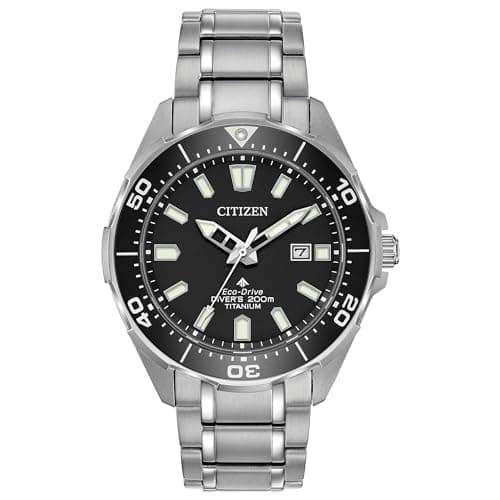
Two picks carry it: the Seiko Prospex Turtle, published as a Diver's 200m to ISO 6425, and the Citizen Promaster Dive Super Titanium, published as ISO-compliant at 200m with a screw-down crown and a screw-down caseback. That standard is not only about pressure — it specifies the crown, the bezel, legibility in darkness, shock, magnetism and salt water, and it requires the watch to keep working rather than merely survive a test. The Casio publishes 200m without the certification, which is a genuine specification and a weaker claim. What makes a watch a dive watch has the full requirement list, and water resistance explained covers what each number actually permits.
Mechanical or light-powered, at this price
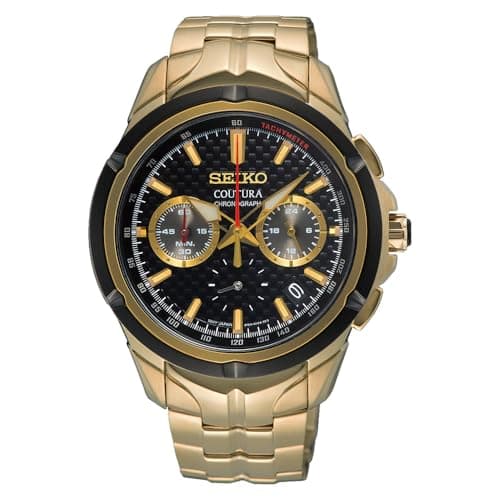
Three picks here are mechanical — the Murph, the Turtle and the Seiko 5 Sports Field GMT — and all three hack and hand-wind. Two run on light: Citizen's Eco-Drive in the Skyhawk and the Super Titanium means no battery to replace and, just as importantly, no case opened every few years by whoever changes it. That is a quiet durability argument for a watch bought for its water resistance, and it is the reason the no-battery roundup exists. The Coutura chronograph is the one pick that will need a battery change, which is its honest cost of entry.
If you only want mechanical watches in this bracket, the better page is our automatic watch roundup, or automatics under $1,000 for this exact ceiling.
Fit, and the two big ones
Case sizes here run from 38mm to 45mm, which is a wide spread, and the two Citizens are the big ones: 45mm for the Skyhawk and 44mm for the Super Titanium, with the Turtle also at 45mm and a published 48mm lug-to-lug. At the other end the Murph is 38mm with 20mm lugs and the Seiko 5 Sports Field GMT is 39.4mm with a published 47.9mm lug-to-lug — longer across the wrist than its diameter suggests, which is exactly the trap watch size for your wrist warns about.
Lug widths are 20mm on the Murph, the Coutura and the Seiko 5 GMT, and 22mm on the Turtle, the Casio, the Skyhawk and the Super Titanium — so this page splits cleanly down the middle of the two most common widths, and anything you buy will have a deep strap aftermarket. The figures for all seven are in the spec table and in our lug width chart.
Where the category pages go deeper
This is a cross-category page, which means for any single category there is a better ranking elsewhere on the site: dive watches under $1,000, field watches under $1,000 and tool watches under $1,000 each rank their own bracket in detail. If you are shopping Swiss specifically, the best luxury watches under $1,000 is the page built around that constraint.
What is not on this page, and why
No Tissot PRX, no Hamilton Jazzmaster, no Seiko Prospex Samurai. The first two are ranked on our Swiss-leaning luxury under $1,000 page and would have made this one a duplicate of it; the PRX also takes no standard strap, which on a site built around lug width is a real mark against it. The Samurai's listing currently returns no buyable price, so it is excluded rather than ranked on a figure we cannot show you. Everything here was verified as live and priced before publication.