An automatic watch winds itself. A weighted rotor spins as your wrist moves, that motion tensions a mainspring, and the spring drives the watch — no battery, no daily winding, and no reason to open the case for years at a time. That is the whole appeal, and it is why this page exists: the site has a roundup for automatic divers, a roundup for automatic field watches and two price brackets for automatics, and nothing that simply answers "which automatic should I buy?"
Here is the thing most roundups get wrong. "Automatic" is not a quality level, it is a winding mechanism, and the gap between two automatics at the same price can be larger than the gap between an automatic and a quartz. So we rank on what the movement actually does for you, in this order:
- Does it hack? Pull the crown and the seconds hand should stop, so you can set the watch to the second. The movement in the old Seiko SKX could not do this and owners complained about it for twenty years — which is half the reason our SKX alternatives page exists.
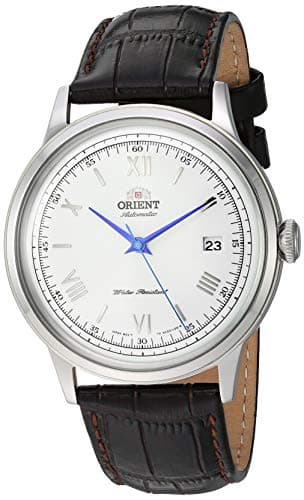
- Does it hand-wind? A watch that has sat in a drawer should start with a few turns of the crown rather than a shake. Six of the seven picks here do; the seventh, the Orient Bambino, is the one that does not hack.
- What is the published power reserve? This is how long the watch keeps running after you take it off. Roughly 40 hours means it is dead on Monday morning; around 80 hours means it survives a weekend in a drawer.
- Then the watch around it — published water resistance and whether the crown screws down, then crystal, then fit measured as case size, lug-to-lug and lug width.
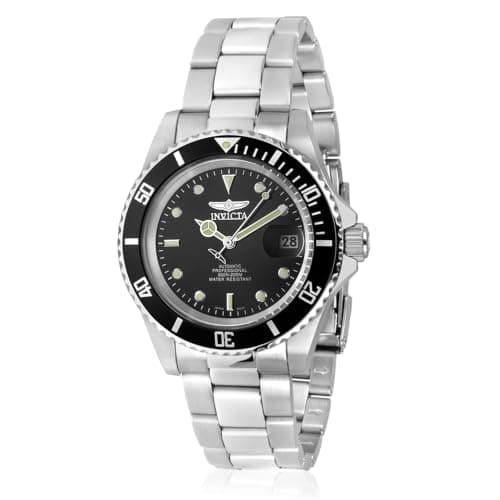
Every figure in the spec table is a published manufacturer specification. Where a maker publishes no lug-to-lug — Invicta does not publish one for the Pro Diver — the cell reads "—" rather than a number we invented. What is deliberately absent from this page is any accuracy claim we cannot source: a mechanical watch is specified in seconds per day, a quartz in seconds per month, and that comparison is argued properly in quartz vs automatic.
The honest case against buying one
An automatic watch is less accurate, less convenient and more expensive than a quartz watch of the same quality. A twenty-dollar Casio will keep better time than every watch on this page, will never stop in a drawer, and will not need a service in a decade. If accuracy or convenience is what you are shopping for, you want a solar quartz or a plain quartz, and we would rather tell you that here than sell you the wrong thing.
What you buy an automatic for is the object: a mechanism of a few hundred parts that runs on your own movement, that you can hear if you hold it to your ear, and that can be serviced indefinitely rather than thrown away when a battery contact corrodes. That is a perfectly good reason. It is just not a performance reason.
Power reserve is the specification that changes your week
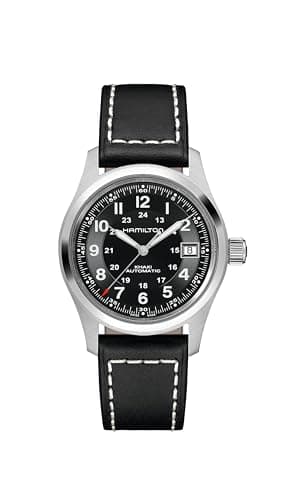
Of all the numbers on this page, published power reserve is the one owners notice most. Two of the picks run Seiko's 4R36, published at about 41 hours: wear it Friday, take it off, and by Sunday morning it has stopped and needs resetting. The Hamilton's H-10 is published at 80 hours, which is the difference between a watch you reset every Monday and a watch that is simply still running. Our power reserve explainer covers how the figure is measured and why it drops as a spring ages.
The workaround if your reserve is short is a habit rather than a purchase: wind the crown twenty turns on a Sunday evening and the watch is ready for Monday. You do not need a watch winder for a watch with no calendar complications, and we are not going to recommend one.
Where the money actually goes
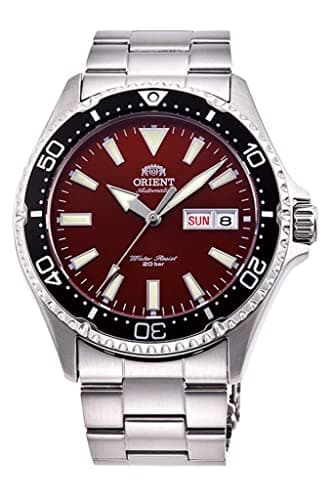
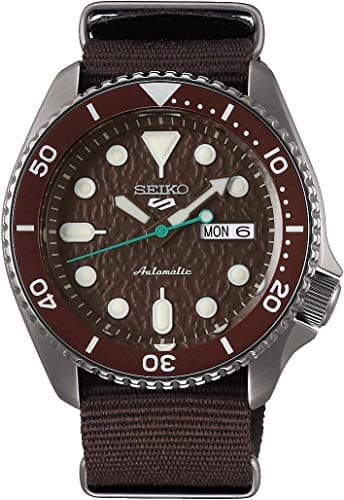
From under a hundred dollars to Swiss, this page spans about a tenfold price range, and the movement is not where most of that difference lands. The Invicta at the bottom runs a Seiko NH35A — the same movement family as the Seiko 5 Sports at four times the price. What the extra money buys, in rough order: finishing on the case and bracelet, crystal (the Orient Kamasu is the cheapest sapphire here and the Hamilton the only other one), the published reserve, and the dial's own design rather than a homage to something else.
That is why the Invicta is our budget pick and also why it is ranked last. It is the cheapest honest route into a mechanical watch and the movement inside it is genuinely good. It is also an unapologetic Submariner homage with variable quality control, and an original design is a better thing to own. If the look is what you want, the fuller argument is on Rolex Submariner alternatives.
One automatic, or the right automatic for the job?
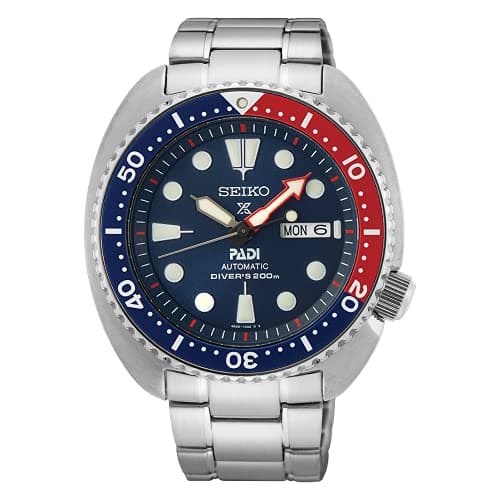
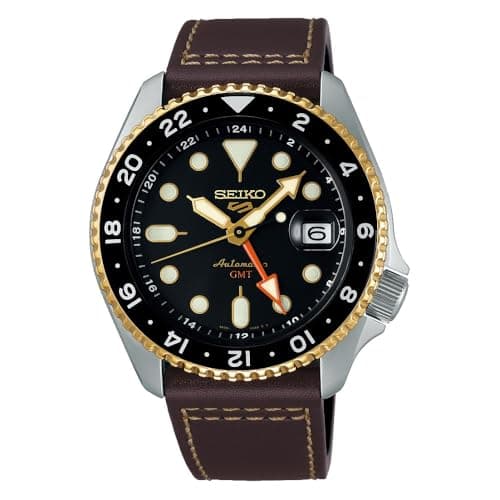
The picks here deliberately cover four different jobs rather than seven versions of the same watch. The SRPD85 is the all-rounder — diver-styled but rated 100m, which is what an everyday watch actually needs. The Kamasu and the Turtle are real divers — 200m, screw-down crowns, and in the Turtle's case a published ISO 6425 specification, which is the standard explained in what is a dive watch. The Hamilton is a 38mm field watch and the most wearable thing on the page. The Seiko 5 Sports GMT is the only pick that tracks a second timezone with a mechanical hand. The Bambino is a dedicated dress watch — and at 30m water resistance, the one watch here you should take off before washing your hands.
If you only want one, buy the one whose job you actually do most days. If you are building a small collection, the sensible order is an all-rounder first, then a diver, then a dress watch — which is roughly the order of this list.
Fit, and the number that decides it
Case diameter is the number brands print and lug-to-lug is the number that decides whether a watch overhangs your wrist. The spread here is wide: 38mm on the Hamilton with a published 46.5mm lug-to-lug, 40mm on the Invicta, 40.5mm on the Bambino at 47mm across, 41.8mm on the Kamasu at 46.8mm, 42.5mm on both Seiko 5 Sports picks at 46mm, and 45mm on the Turtle at 48mm. Read the lug-to-lug column, not the case column — watch size for your wrist explains why.
Lug widths run 20mm, 21mm and 22mm, which matters the first time you want to change the strap. The Bambino's 21mm is the awkward one: it is a genuinely uncommon width and the strap choice is thinner than at 20 or 22. Our lug width chart lists the figure for every watch on this page and dozens more.
Price brackets, if that is how you are shopping
This page ranks automatics irrespective of price, which means the top picks are not all affordable and the cheapest pick is not the best. If your budget is the starting point rather than the movement, the two bracket pages are better entry points: the best automatic watches under $500 covers the band where Seiko and Orient dominate, and the best automatic watches under $1,000 is where Swiss finishing and the 80-hour reserves appear, and the best watches under $1,000 opens that same ceiling up to quartz and solar. For a specific job, go to automatic dive watches or automatic field watches instead.