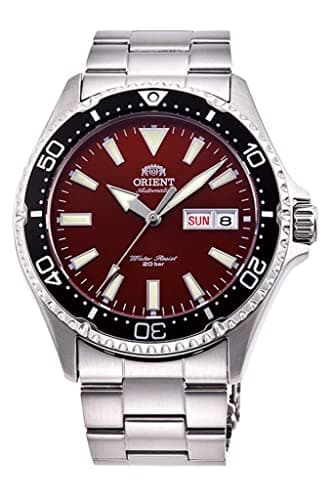
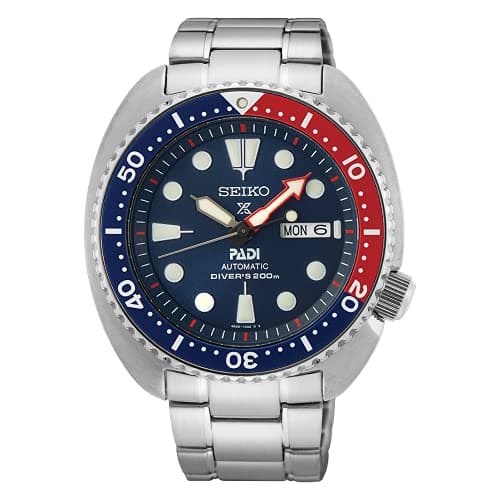
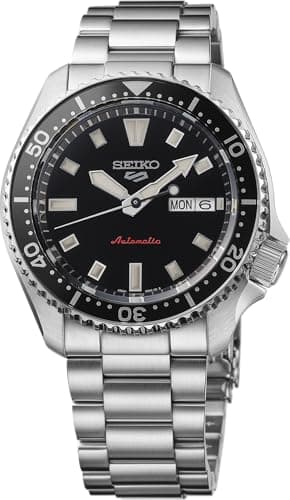
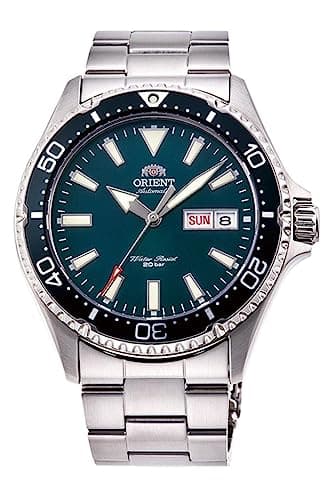
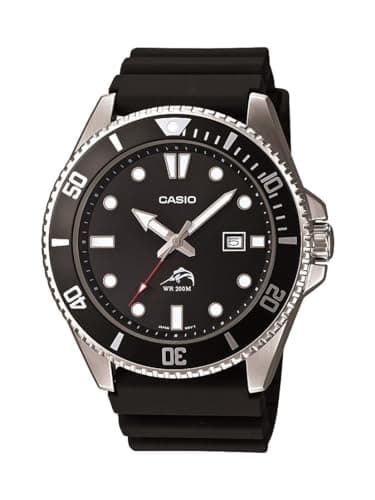
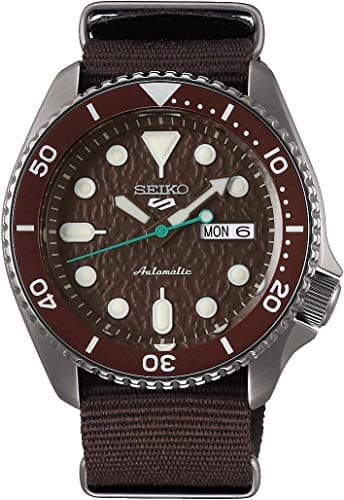
The Seiko SKX007 and SKX009 are out of production. The reporting dates the end of the line to the second half of 2019, and the reference is no longer part of Seiko's current catalog — which is why "Seiko SKX alternatives" is a search at all. Nobody looks for a replacement for a watch they can still walk in and buy. This page is for the person who read a decade of forum posts calling the SKX the only dive watch anyone needs, went to buy one, and found it gone.
Before picking a replacement it is worth being precise about what is being replaced, because "the SKX" is four separate things and most people only want two of them. The published figures: a 42.5mm steel case with a 46mm lug-to-lug and a 22mm lug width, a 200m water-resistance rating that met ISO 6425, a mineral Hardlex crystal, and the Seiko 7S26 automatic — a movement that notably did not hack and did not hand-wind. Then add the fifth thing, which is not a specification at all: the largest strap and modding aftermarket of any affordable watch ever made.
So the ranking below is organized around one question — which of those properties do you refuse to give up? In order, we weight the 200m rating and the screw-down crown that makes it real; then the 22mm lug width and a lug-to-lug close to 46mm, so the straps and bracelets you already own still fit; then the movement, where every watch on this page improves on the 7S26; then crystal. Every figure in the spec table is a published manufacturer specification, and where a maker publishes none the cell reads "—" rather than a guess.
One honest note up front. Nothing here is a drop-in replacement that keeps all five properties at once. The watch built on the SKX case gives up half the water-resistance rating; the watches that keep the full 200m rating are not the SKX case. That trade is the whole page, and the picks are ordered by which side of it you land on.
The one thing every watch here does better than the SKX
The 7S26 inside the SKX was a workhorse with two real annoyances. It did not hack — pull the crown and the seconds hand kept sweeping, so you could never set the watch to the second against a clock — and it did not hand-wind, so a watch that had stopped had to be shaken awake rather than wound. Every pick on this page fixes both. Seiko's 4R36, which replaced it in the Seiko 5 Sports line, hacks and hand-winds and carries a published reserve of about 41 hours. Orient's in-house F6922 does the same. The Casio is quartz, so the question never arises.
This matters because it is the one area where nostalgia is simply wrong. People remember the SKX as unimprovable. On the movement it was not: the current equivalents are strictly better to live with, and that is not a marketing claim — it is two features the old caliber did not have. Our guide to winding an automatic explains why hand-winding is the one you notice first.
Where the SRPD gives ground: 100m, not 200m
This is the most important thing to understand about the SKX's own successor. Seiko took the 007's case, bezel and dial into the 2019 Seiko 5 Sports range, upgraded the movement — and rated the result to 100m rather than 200m. It is not sold as a dive watch and it does not claim an ISO 6425 specification. Our water resistance explainer sets out what that rating actually permits: 100m is a swim-and-shower watch, and for the overwhelming majority of owners that is genuinely enough.
But if you wanted an SKX because it was a certified dive tool at a trivial price, the SRPD is not that watch, and we are not going to pretend the two are interchangeable. The picks that keep the real rating are the Seiko Prospex Turtle, which carries a published ISO 6425 Diver's 200m specification, and the two Orients and the Casio, which publish 200m without the certification. A 200m rating without ISO is a genuine specification and all three are genuinely swimmable — it is simply a weaker claim than a certified one, and we rank it that way. The requirement list is in what makes a watch a dive watch.
Your SKX straps still fit — all six take 22mm
If you already own SKX straps, or you inherited a drawer of them, the number to check is lug width, and on this page it is the same number every time. The SRPD85, the Turtle, the SRPE steel Seiko 5, the Casio Duro, the Kamasu and the Mako III all take 22mm. That is unusual for a six-watch list and it is a real argument for staying inside it: your 22mm straps carry straight over with nothing to buy.
The one caveat is curved-end steel bracelets. A bracelet cut specifically for the SKX case — the Super-O and Super-Jubilee style end links in our bracelet roundup — is shaped to that exact case profile. The SRPD85 and the SRPE share the SKX case, so those end links seat correctly; the Turtle's cushion case and the Orients' cases are different shapes and a curved end will not necessarily sit flush. Soft straps and straight-end bracelets are fine everywhere. Our best straps for Seiko divers guide also covers the fat spring bars that catch people out on these cases.
Should you just buy a used SKX?
It is a legitimate option and we are not going to talk you out of it. What you should know first: a discontinued reference on the secondary market means no manufacturer warranty, a seller you cannot verify, and gaskets of unknown age on a watch whose entire appeal is water resistance. A 200m rating is a test result on a sealed case with fresh seals; it says nothing about a case that has been opened by a previous owner, or one that has sat in a drawer for six years. If you buy used, buy on the assumption that it needs a service and a pressure test, and budget for both.
The other thing that changed is the money. The SKX was famous partly because of what it cost while it was current, and a discontinued watch with a cult following does not stay at that price. The picks on this page are priced live precisely so you can compare what the alternatives cost today rather than against a number you remember from a forum thread.
Fit: the four cases on this page
The SKX was a 42.5mm case with a 46mm lug-to-lug — the figure that actually decides whether a watch overhangs your wrist. Two picks match it closely: the SRPD85 at 42.5mm with a 46mm lug-to-lug, and the SRPE steel Seiko 5, which Seiko publishes at 42.5mm with a notably shorter 44.6mm lug-to-lug, so it wears smaller than the watch it is based on. The Orients are both 41.8mm across, with published lug-to-lug figures of 46.8mm for the Kamasu and 47mm for the Mako III — slightly narrower, slightly longer. The Turtle is the outlier at 45mm with a 48mm lug-to-lug, though the cushion case and short downturned lugs make it wear better than those numbers read. The Casio is 44mm with a 48mm lug-to-lug.
Practical reading: if the SKX fit you, the SRPD85 and the SRPE will fit you, and the Orients will fit you slightly better. If the SKX was already at your limit, skip the Turtle and the Casio. Our watch size for your wrist guide explains why lug-to-lug beats diameter every time, and the best divers for small wrists is the page to read if 46mm is already too much.
What is not on this page, and why
No Seiko Mini-Turtle, no SRPD on the old jubilee bracelet, no Seiko Prospex Samurai. All three are reasonable answers to this question and none has a verified live listing in our registry at the time of writing — the Samurai's listing currently returns no buyable price at all, so it is excluded rather than ranked on a figure we cannot show you. We would rather publish six watches you can buy today than pad the list with a seventh you cannot. If that changes, this page changes.