This comparison comes up constantly, and it has a cleaner answer than most people expect. The SKX007 and the Prospex Turtle are both Seiko divers rated to 200 meters with screw-down crowns and ISO 6425 certification. The difference is that the Turtle is still made, and it has the movement the SKX spent its whole life without.
A note on scope. The SKX was discontinued in 2019, so this is not a buying guide for one — it is a comparison for the many people deciding whether to chase a used SKX or buy the watch Seiko currently sells. SKX specifications quoted here come from Seiko's published data for the discontinued reference; the watches ranked below are ones you can buy today.
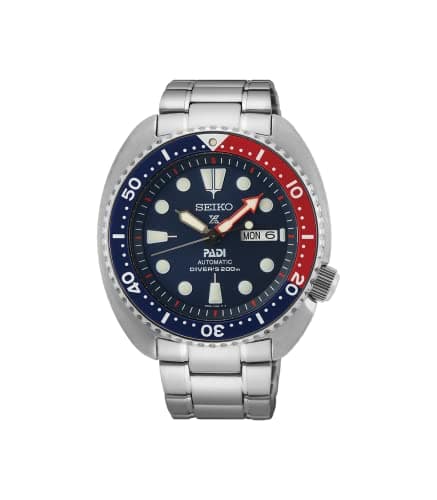
The short version: buy the Turtle. It matches the SKX on everything that made the SKX good — 200m, screw-down crown, ISO certification, Seiko lume — and beats it on the movement, with a hacking, hand-winding 4R36 in place of the 7S26. The only thing the SKX has that the Turtle does not is a 42.5mm case, and that is a real consideration if your wrist is small.
Both clear the dive standard — that is the common ground
ISO 6425 is the formal standard a watch must pass to be marked "Diver's 200m", and it covers more than pressure: legibility in total darkness, a unidirectional bezel readable in the dark, and resistance to thermal shock, magnetism and salt water, with the strap attachment tested for strength. The SKX carried that marking and the Turtle carries it now. Neither is diver-styled; both are dive tools.
The movement is where the Turtle wins outright
The SKX used the 7S26, which neither hacked nor hand-wound: no stopping the seconds hand to set the time exactly, and no starting a stopped watch without shaking it. The Turtle uses the 4R36, which does both and adds a day-date, with roughly 41 hours of reserve. Seiko rates it at minus 35 to plus 45 seconds a day. This is not a marginal upgrade; it is the two things SKX owners complained about, fixed.
Size is the one real argument for the SKX
The SKX was around 42.5mm with a 46mm lug-to-lug. The Turtle is 45mm with a 48mm lug-to-lug. That is a meaningful gap, and lug-to-lug is the figure that decides whether a watch overhangs. On a wrist under about 6.5 inches the Turtle is too much watch and the SKX was not — which is the single honest reason to prefer the discontinued one. The cushion case helps the Turtle wear flatter than 45mm suggests, but it does not make it small.
What you actually pay for a used SKX
Scarcity and reputation. Discontinued watches with a following do not get cheaper, and you are buying from a private seller with no warranty, an unknown service history, and a movement that cannot be hand-wound. Against that, the Turtle is a new watch with a warranty and a service network. For a collector who wants the specific watch, the SKX makes sense. For anyone who wants a good dive watch, it does not.
Where the Samurai fits
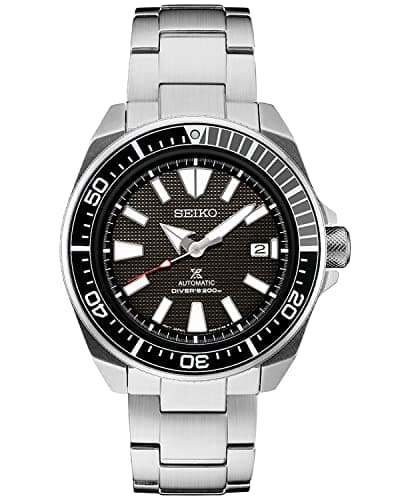
If the Turtle's round cushion case is the problem rather than its size, the Seiko Samurai is the same proposition with sharp, faceted angles at 43.8mm — marginally narrower than the Turtle, about as long lug-to-lug by retailer measurement, and considerably more modern-looking. It uses the 4R35, dropping the day complication. It is the third watch in this conversation and it gets left out of it too often; our Seiko Prospex Samurai review goes through its published specifications in full.
And if you do not need 200m at all
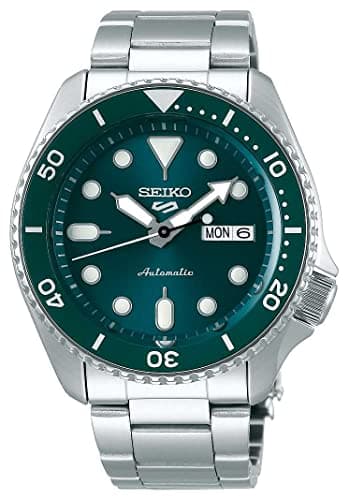
Plenty of people who chase an SKX want the look rather than the dive rating. If that is you, the Seiko 5 Sports SRPD is the direct heir to the SKX's appearance, uses the same 4R36 as the Turtle and costs less than either — at the cost of 100m water resistance and no screw-down crown. Our SKX versus Seiko 5 comparison covers that decision in full.