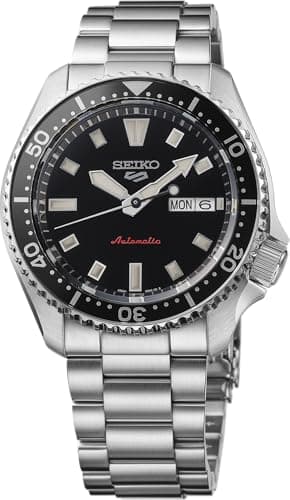
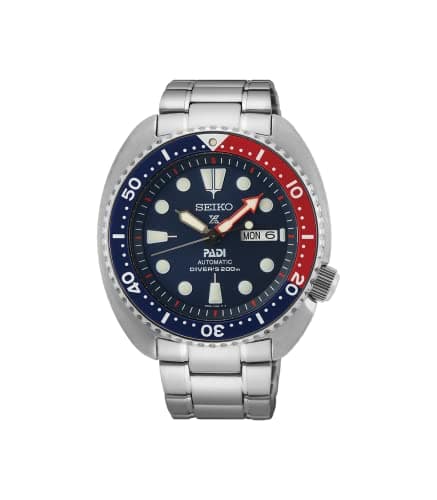
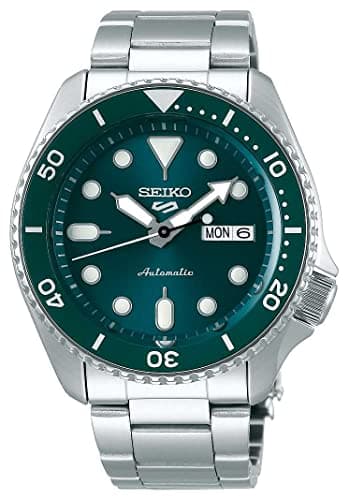
The Seiko SKX007 was discontinued in 2019 and the Seiko 5 Sports SRPD line took its place. The two look close enough that people assume the SRPD is simply an SKX with a new name. It is not. The swap traded a genuine dive specification for a better movement, and whether that was a good deal depends entirely on what you wanted the watch for.
A note on scope. The SKX is out of production, so this page is not a buying guide for one — it is an explanation of what changed, for the very large number of people who arrive at the Seiko 5 asking whether they missed out. Where an SKX specification is quoted it comes from Seiko's published data for the discontinued reference. The watches ranked below are the ones you can actually buy today.
The short version: the SKX was the better dive watch — 200m, a screw-down crown and ISO 6425 certification. The Seiko 5 SRPD is the better watch — the 4R36 movement hacks and hand-winds, which the SKX's 7S26 never did. If you want a real 200m tool, the answer to both is neither: buy the Seiko Prospex Turtle.
What the Seiko 5 gained: the 4R36
The SKX ran the 7S26, a movement that neither hacked nor hand-wound. That meant you could not stop the seconds hand to set the time precisely, and you could not start a stopped watch without physically shaking it. The SRPD's 4R36 does both, adds a day-date, and is the same caliber Seiko puts in the Prospex Turtle. On the movement alone, the newer watch is a clear upgrade.
What the Seiko 5 lost: the dive specification
This is the real cost and it is not small. The SKX was rated to 200 meters with a screw-down crown and carried ISO 6425 certification. The Seiko 5 SRPD is rated to 100 meters with a push-pull crown and is not certified. That makes the SRPD a diver-styled watch rather than a dive tool: fine for swimming and showering, not what you would strap on for scuba.
Case, crystal and the parts that stayed the same
Both are around 42.5mm with a 22mm lug width and a Hardlex crystal, and both use the same broad case silhouette and 120-click bezel look. The SRPD measures 46mm lug-to-lug. Because the lug width is unchanged, every strap and bracelet bought for an SKX fits an SRPD — which is a bigger deal than it sounds given how large that aftermarket became.
Why the SKX still costs what it does
Discontinued watches with a following do not get cheaper. Whatever an SKX is trading for on the secondary market, you are paying for scarcity and reputation rather than for specification — and you are buying a watch with a movement that cannot be hand-wound, from a private seller, with no warranty. That is a defensible purchase for a collector and a poor one for someone who wants a good watch.
If you want the dive specification, buy the Turtle
The honest resolution to this whole comparison is that Seiko still sells the watch people think they want. The Prospex Turtle is ISO 6425 certified, rated to 200m, has a screw-down crown, and uses the same 4R36 as the SRPD. It is larger — 45mm with a 48mm lug-to-lug — and costs more. But it is the SKX's actual successor in every way that matters, and it is in production.
Which to buy in 2026
If you want one affordable automatic that looks like a diver and will spend its life on land: the Seiko 5 SRPD. If you want something a bit less obviously diver-styled to wear every day: the Seiko 5 Sports SRPE in steel. If you want a genuine 200m dive tool: the Prospex Turtle, and do not look back. Buying a used SKX makes sense only if you specifically want that watch.
How we picked
We do not run a testing lab
We compiled the published manufacturer specifications for every watch here — case size, lug-to-lug, lug width, water resistance, movement and crystal — did the wrist-fit and value math, and scored each pick against a published rubric. The scores are judgments from documented research — they are not measurements we took or wrist-time we logged, because we do not have these watches and we are not going to pretend we do. Where a spec could not be verified we wrote "data unavailable" rather than guessing.