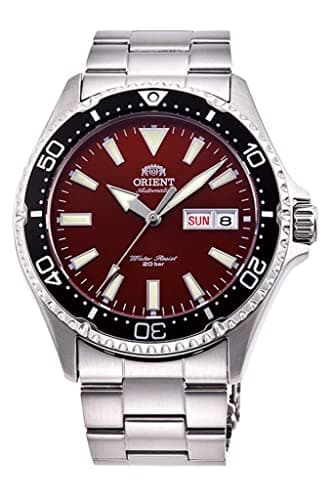
Start with what the Submariner actually is, because "alternative" is meaningless without it. Rolex publishes the reference specifications: a 41mm Oystersteel case, 300 metres of water resistance, a unidirectional rotatable bezel with a 60-minute graduated Cerachrom insert, the Triplock screw-down crown, a sapphire crystal, and an in-house automatic movement with a 70-hour power reserve carrying Rolex's Superlative Chronometer certification of −2/+2 seconds per day. It is a genuinely excellent watch and nothing on this page is better made.
What it is known for, though, divides neatly into two lists. On one side there is the engineering: the rotating dive bezel, the screwed crown, the depth rating, the sapphire, the automatic movement. On the other there is everything you cannot buy for a few hundred dollars — the case finishing, the bracelet and clasp, the chronometer certification, the resale market and the name on the dial. The first list is reproducible at these prices. The second is not, and we are not going to pretend otherwise.
So the ranking below scores each pick on how much of the first list it delivers: rotating 60-minute bezel, screw-down crown, published water-resistance rating and whether it is independently certified, crystal, then movement, then fit. Every number comes from a published manufacturer specification. Where a maker publishes no lug-to-lug, the cell reads "—".
What you can match, and roughly what it costs
The rotating 60-minute dive bezel is on all five watches here, and it is the Submariner's actual function — it times a dive, or a parking meter. Our bezel guide explains how to use one. A screw-down crown is on all five too, and it is the specification that makes a water-resistance number mean something; the cheapest watch here has one, which tells you how achievable it is.
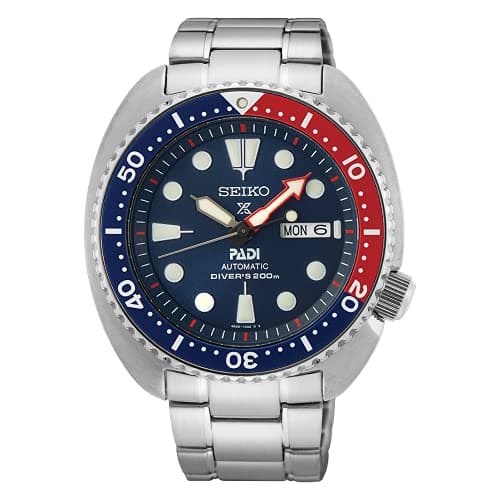
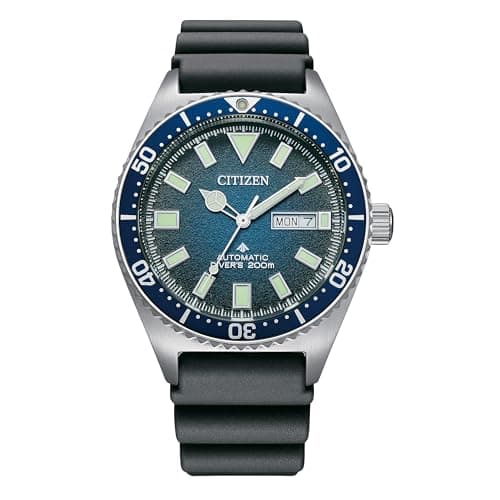
A sapphire crystal costs more: the Kamasu is the only pick on this page with one, and it is the single biggest reason it ranks first. A certified dive rating is available too — the Seiko Turtle and the Citizen NY0129 both carry published ISO 6425 or ISO-compliant specifications, which is arguably a stronger statement than a bare 300m number because it covers the bezel, the lume, shock and magnetism as well as pressure.
What you cannot match at this price, honestly
Four things. Depth rating: the Submariner is 300m where these are 200m, a difference no one on this page will ever use but which is real. Finishing: the transition between brushed and polished surfaces, the bracelet links, the clasp — this is where most of a Rolex's cost sits, and it is visible in person. Chronometer certification: −2/+2 seconds per day is roughly five times tighter than the published tolerance of the Japanese automatics here. Resale: assume these watches are worth what any used watch is worth, which is not much. If any of those four is why you want a Submariner, no amount of this page will help.
The homage question
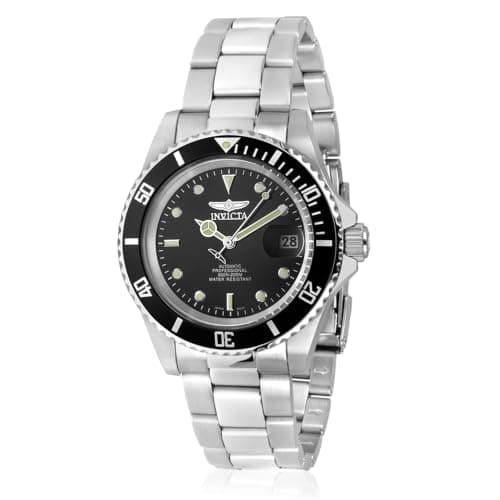
The Invicta Pro Diver 8926OB is the only watch here that is an explicit Submariner homage — 40mm, 20mm lugs, the same case and bezel proportions, an NH35A automatic, 200m. It is on this page because it is the cheapest way to get the Submariner's look, and it is ranked fourth rather than first because a copy of a design is a weaker thing to own than a watch with its own one. The Kamasu, the Turtle and the Promaster are all original designs that happen to share the Submariner's function. We think that is the better buy, and our Duro vs Pro Diver page covers the trade in detail.
The sixty-dollar argument
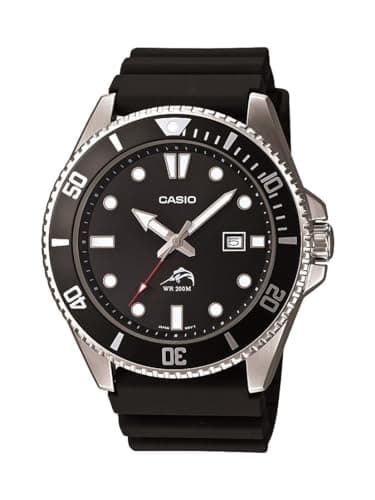
The Casio Duro MDV106 has a screw-down crown, a unidirectional bezel and a published 200m rating, and it costs less than a good strap. It is quartz, its crystal is mineral and its case finishing is what you would expect at the price. But on the one axis a dive watch is actually built for — staying sealed and timing a dive — it does everything the five-figure watch does. We would not tell you the two are equivalent objects. We will tell you the Casio is the one to buy if the function is what you are after, and that it is why it is our budget pick.
Fit, and what strap to put on it
Case sizes here run 40mm to 45mm. The published lug-to-lug figures — 46.8mm for the Kamasu, 48mm for the Turtle and the Duro, 50mm for the 41mm Citizen — matter more than diameter, and note that the Citizen inverts the order: it is the smallest-diameter watch and the longest across the wrist. Lug widths are 22mm on the Kamasu, Turtle and Duro, 20mm on the Citizen and the Invicta. A steel bracelet is the Submariner-ish choice; a NATO is the one that gets worn.