How we ranked these
Sapphire is the entry requirement, not the ranking. Every watch here has it, so the order is decided by four things, in this sequence.
1. What else the crystal is attached to. A sapphire crystal on a 200m automatic diver is worth more than the same crystal on a 30m dress watch, because the rest of the watch is built to be used. This is why the Kamasu wins.
2. Price per specification. Sapphire at $160 is a different proposition from sapphire at $995. Both can be the right buy; they are not the right buy for the same person, so we have spread the list deliberately across the brackets rather than stacking the top with expensive watches.
3. Whether the movement needs maintenance. Three of these are solar and never need a battery, two are battery quartz, two are mechanical. A scratch-proof crystal on a watch you have to service is a different ownership story from one on a watch that runs on light forever.
4. Lug width. This is a strap site, so a watch you cannot restrap is marked down for it — and one watch here genuinely cannot be restrapped at all. We say which one and why below.
What sapphire actually does, in one paragraph
Sapphire is synthetic corundum, and on the Mohs hardness scale it sits at 9 against roughly 5 to 6 for ordinary mineral glass. Practically, that means ordinary contact does not mark it: doorframes, granite worktops, car keys, a desk edge, a seatbelt buckle. Those are what put the fine hairlines on a mineral crystal over a couple of years. Sapphire shrugs them off, which is why a well-used sapphire watch still looks sharp and a well-used mineral one looks used.
The trade-off is real and small: sapphire is harder but more brittle. An impact severe enough to chip a mineral crystal can crack a sapphire one outright. In everyday wear this almost never decides anything, and we would take sapphire every time — but if your watch risk is genuinely impact rather than abrasion (building work, boat work), that is the one argument for mineral, and it is the argument the best watches for work page makes about the Casios it ranks.
Three marketing phrases that are not sapphire
This is the most useful thing on the page if you are shopping listings rather than specification sheets.
"Sapphire-coated" or "sapphire-treated" is mineral glass with a thin hard layer on top. It resists scratching better than bare mineral until the coating wears through, after which it behaves like mineral again. It is not sapphire and it should not be priced like it.
"Hardened mineral" and brand names like Seiko's Hardlex are mineral glass that has been chemically or thermally toughened. Hardlex is genuinely tougher than plain mineral glass and noticeably less scratch-resistant than sapphire. Almost every Seiko on this site uses it, including the Prospex divers — a point we make on best Seiko watches because it surprises people.
"Crystal glass" and "mineral crystal" mean ordinary mineral glass. "Crystal" is just the watch industry's word for the clear part; it carries no quality claim at all.
The other thing worth looking for, which the listings rarely mention: an anti-reflective coating. Sapphire is more reflective than mineral glass, so an uncoated sapphire crystal can be harder to read in bright light than the cheaper crystal it replaced. Two watches on this page publish an AR coating and it is a real upgrade.
The value pick, and why it wins
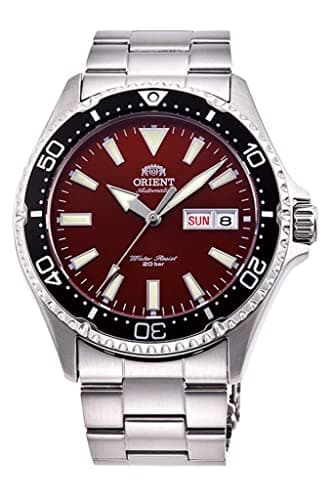
The Orient Kamasu is first because nothing else on this page or anywhere near its price does what it does. Orient publishes a 41.8mm case with a 46.8mm lug-to-lug, 22mm lugs, a 200m rating with a screw-down crown, the in-house F6922 automatic — which hacks and hand-winds, matching Seiko's 4R36 feature for feature — and a sapphire crystal.
Read that against the rest of the affordable dive field and the oddity is obvious: the Seiko Prospex divers it competes with are Hardlex, and they often cost more. We make the same point on best dive watches under $500 and the Kamasu review. The honest cons are the bracelet, which is a step below Seiko's, and Orient's thinner US service network. Neither is a reason to buy a worse crystal.
The cheapest sapphire here
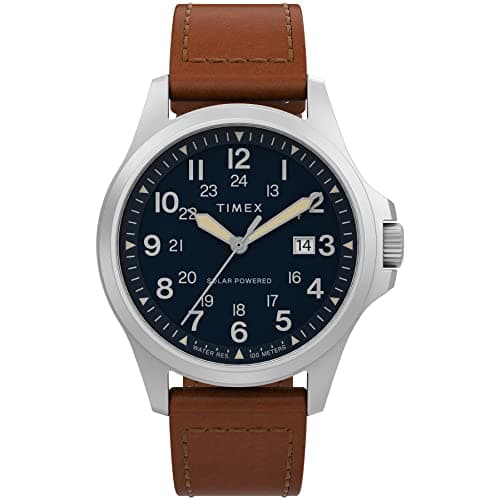
The Timex Expedition North Field Post Solar is the entry point and it is a genuinely unusual watch: a 41mm field watch with a sapphire crystal, a solar quartz movement that never needs a battery, a 100m rating and a 20mm lug width, for less than half the Kamasu. Timex does not publish a lug-to-lug for it, so that cell in the table above is a dash rather than a guess.
It is the only sapphire watch we rank under about $200, and on the field side of the site it is the only sapphire crystal in its bracket at all — the reason it leads best field watches under $500. If sapphire is the specification you came for and the budget is the constraint, stop here.
Solar chronographs: sapphire on a watch that never needs a battery
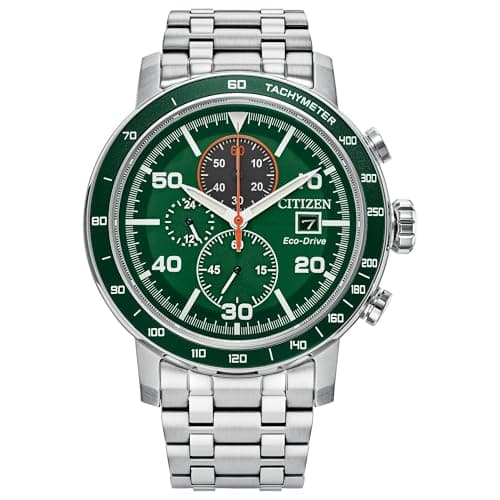
The Citizen Eco-Drive Brycen is the best combination of the two specifications most people on this page actually want: a sapphire crystal and a movement that runs on light. Citizen publishes a 44mm case, a 100m rating and an Eco-Drive solar chronograph behind sapphire. No battery changes, no winding, no scratched crystal. The mechanism is explained on what is Eco-Drive.
The honest marks against it are size and dial density — 44mm with three sub-dials is a lot of watch, and chronographs run large as a category because the sub-registers need room. If you want the same brief in a smaller case there is not a good answer on this site, which we would rather say than pretend.
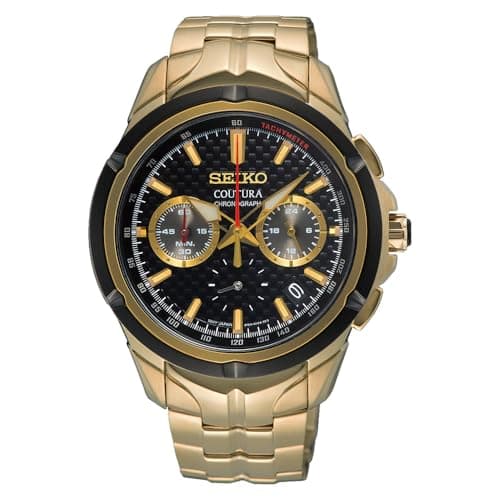
The Seiko Coutura Chronograph (SSB440) is the Seiko exception. Seiko publishes a 42mm case, 20mm lugs, 100m and the 8T63 quartz chronograph behind sapphire — the one Seiko in this registry that does not use Hardlex, and the smallest sapphire chronograph here by 2mm. It is battery quartz rather than solar, so it needs a cell every few years, and the Coutura styling is glossier and more dress-leaning than a tool chronograph. Those are the trade-offs for the smaller case and the Seiko name.
The Swiss option, and the one watch here you cannot restrap
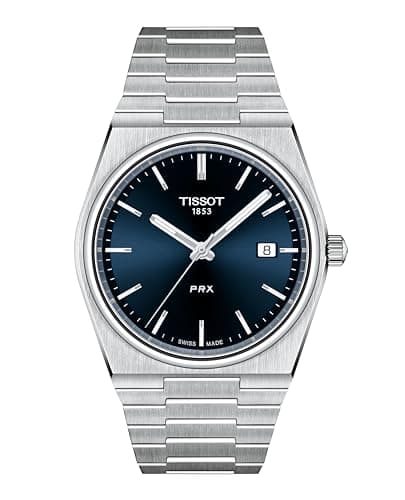
The Tissot PRX Quartz is the most fashionable watch on this page and the only Swiss one: a 40mm case, 100m, Swiss quartz, sapphire crystal, on an integrated steel bracelet. It is the watch a lot of people want on sight, and we rank it fourth rather than lower because 40mm with sapphire and 100m is a genuinely good specification.
But we have to lead with its failure on this site specifically. The PRX has an integrated bracelet and no standard lug width — the bracelet is part of the case design, not attached through lugs with spring bars. You cannot put a strap on it. On a site built around the lug width chart that is a real mark against a watch, and it is the single thing we would want a PRX buyer to know before the box arrives rather than after. If restrapping is part of the appeal of owning a watch, buy something else.
The two expensive ones, and whether they are worth it
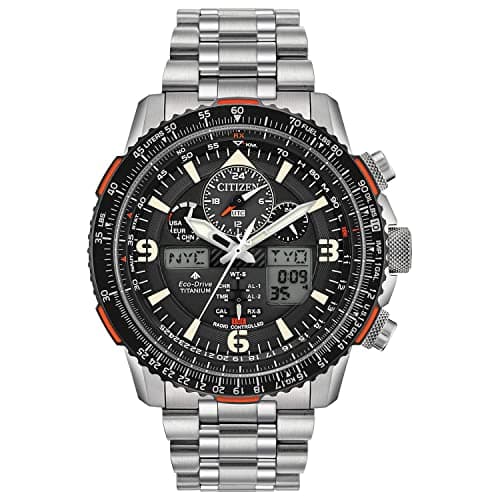
The Citizen Promaster Skyhawk A-T carries the best crystal specification here: Citizen publishes anti-reflective sapphire, which solves the one weakness sapphire has. It also brings 200m, a 22mm lug width and radio-controlled atomic timekeeping across 43 world cities. It is 45mm, dense to read and the most expensive tool watch we rank — the full argument is on the Skyhawk review. Buy it for the atomic sync; the sapphire is a bonus rather than the reason.
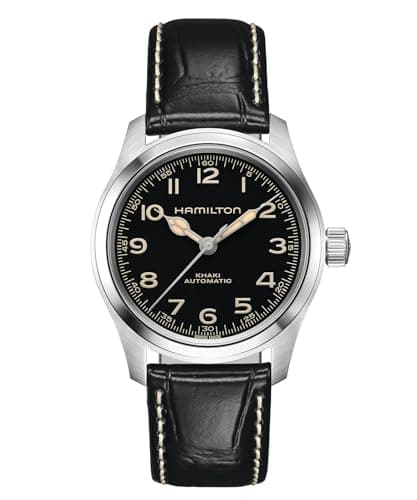
The Hamilton Khaki Field Murph is the premium mechanical answer: a 38mm Swiss field watch with sapphire, 100m, 20mm lugs and the H-10 automatic with an 80-hour power reserve — enough to sit in a drawer all weekend and still be running on Monday, which no Seiko or Orient automatic here manages. At 38mm it is also the most wearable watch on this page.
It is comfortably the most expensive watch here, and the honest framing is that you are paying for Swiss finishing, the reserve and the size — not for more capability. The Kamasu dives deeper for a fraction of the price. If 38mm and an 80-hour mechanical movement are what you want, it is excellent; the fuller comparison is on best Hamilton watches, and the watch itself gets a full write-up on our Hamilton Murph review.
What is not on this page, and why
Three absences worth explaining, because they are the watches people expect to find here.
The affordable Seikos. The Seiko 5 Sports SRPD, the Prospex Turtle, the Prospex Samurai and the Seiko 5 field watches are all Hardlex, not sapphire. They are among our favorite watches and several of them win their own categories; they do not belong on a sapphire page and we are not going to blur the distinction to pad the list.
Every Casio. The G-Shocks use mineral glass, the F-91W and A168 use resin glass, the Duro and the Edifice use mineral. Casio does not put sapphire on anything in this price range, which is part of the trade you make for the toughness and the price — the argument is on DW-5600 vs GA-2100.
Watches we could not verify. Where a manufacturer does not publish the crystal material for a reference, we leave it out rather than assume. A listing that does not say "sapphire" usually is not sapphire, and inferring it would be exactly the guess this site is built to avoid.
Our advice, stated plainly
If you are buying one watch and you want it to still look new in five years, pay for sapphire — it is the best-value specification at this end of the market and we would take it ahead of the movement, the bracelet or an extra 100 meters of water resistance.
But do not let it override the rest of the watch. A Hardlex Seiko that fits your wrist and suits your life is a better purchase than a sapphire watch that does not, and a scratched crystal is a cosmetic problem rather than a functional one. The honest ceiling on this advice: sapphire decides how a watch ages, not what it can do. Pick the right watch first and take sapphire when you can get it — which, on this page, you can from about $160.