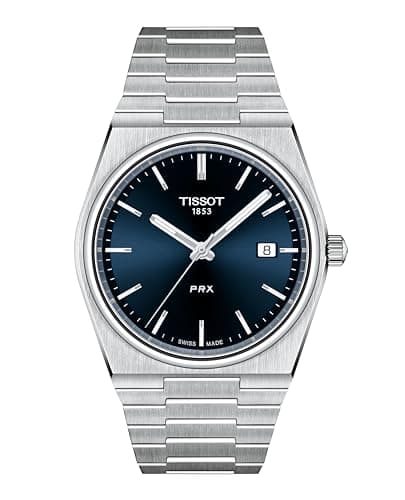
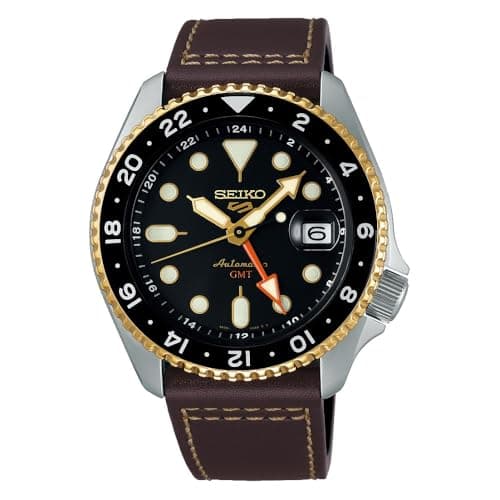
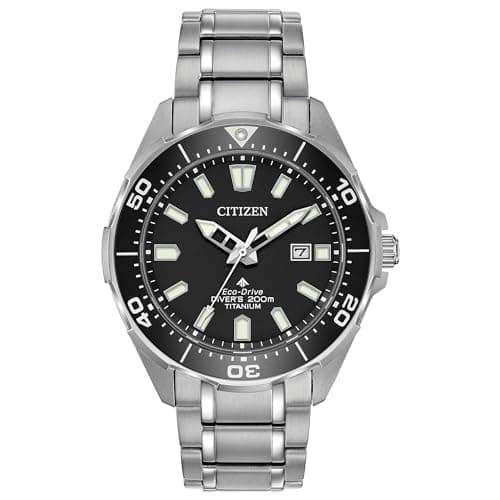
Five hundred dollars is the most interesting number in watches. Below about two hundred you are choosing which compromise to accept; above about a thousand you are mostly paying for finishing and a name. In between, and especially right at the top of this bracket, the specifications that used to be luxury-only all become available: a sapphire crystal, a titanium case, an ISO-rated 200m diver, a genuine mechanical GMT. This page picks one of each.
That is deliberate. A list of six watches that are all 40mm steel automatics answers nothing, because the real question under $500 is not which watch is best but which kind of watch to buy with the money. So each pick below owns a different specification, and the spec table lets you see the trade directly: what the Tissot's sapphire costs you in strap options, what the Citizen's titanium costs you in crystal, what the Seiko GMT's extra hand costs you in case size.
If you want the bracket below this one, we have best watches under $300 and under $200. If you only want mechanical movements at this price, go to best automatic watches under $500 instead — this page deliberately mixes quartz, solar and automatic, because at $500 the best watch in the bracket is not always the one with a rotor. If the budget stretches, the next rung up is the best watches under $1,000, where titanium, atomic world time and an 80-hour Swiss automatic come into range.
What $500 buys that $200 does not
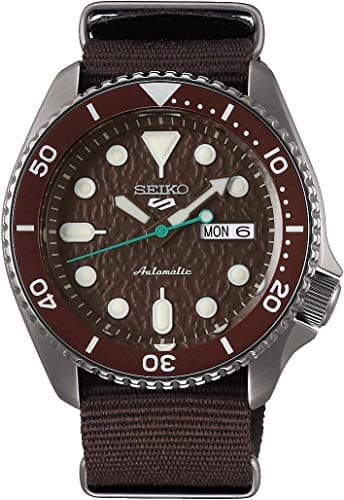
Four things, in rough order of how much they matter. A sapphire crystal, which stops being a rarity around three hundred dollars — the Tissot and the Seiko Coutura Solar both have one. A certified dive rating: the Citizen Promaster Super Titanium is ISO-compliant to 200m, a claim that covers the crown, the bezel, the lume and shock resistance, not just pressure. A complication that works, which here means the Seiko 5 GMT's true 24-hour hand rather than a printed bezel. And material: titanium, roughly 40 percent lighter than steel, at a price that used to be twice this.
The case against spending it all
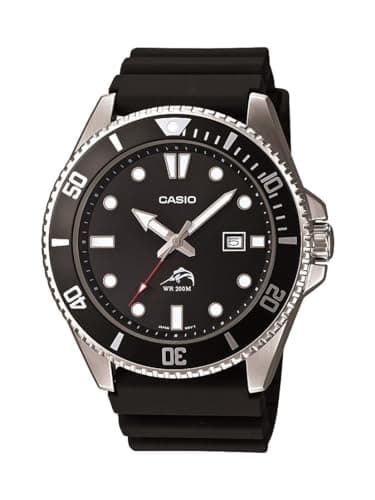
The Casio Duro is on this page at the bottom of the ranking and near the bottom of the price list for a reason: it has a screw-down crown and a published 200m rating, which is more water resistance than the Tissot, the Seiko 5 Sports and the Seiko Coutura. It costs roughly an eighth of the budget. If what you want is a watch you can swim in and stop worrying about, the honest advice is to buy the Casio and spend the difference on straps — and we would rather say that on a page designed to sell you something more expensive than pretend otherwise.
The integrated-bracelet trap
One warning specific to this bracket. The Tissot PRX is the best-looking watch on this page and it has no standard lugs: the bracelet is integrated into the case, so you cannot fit a 20mm strap to it, ever. On a site built around lug widths that is a real mark against it, and it is why the PRX is ranked second rather than first. If strap-swapping is part of why you want a watch, buy something with lugs — the spec table's lug width column is the fastest way to check.
Sizes, and the number to watch
This group runs 40mm to 44mm. The two that publish a lug-to-lug — the Seiko 5 Sports at 46mm and the Casio Duro at 48mm — are the ones you can actually size against your wrist; Tissot, Citizen and Seiko publish none for the other references, so those cells read "—". Our watch size for your wrist guide explains why lug-to-lug beats case diameter for fit, and if your wrist is under about 6.75 inches the 44mm Citizen and Coutura are the two to be careful with.
What is not here
No Hamilton. The Khaki Field Mechanical is the watch most people would expect on a $500 list and it currently trades above the bracket, so it sits on our under-$1,000 field page instead. We set the ceiling from the live price feed rather than from list prices, which means a watch drifting over $500 comes off this page rather than staying on it with a stale number attached.
How we picked
We do not run a testing lab
We compiled the published manufacturer specifications for every watch here — case size, lug-to-lug, lug width, water resistance, movement and crystal — did the wrist-fit and value math, and scored each pick against a published rubric. The scores are judgments from documented research — they are not measurements we took or wrist-time we logged, because we do not have these watches and we are not going to pretend we do. Where a spec could not be verified we wrote "data unavailable" rather than guessing.